← All IntelIntel / article
System Modeling: The Substrate for Neural Co-Evolution
- Source
- Carlos H. Morales
- Author
- Carlos H. Morales
- Date
Key takeaways · AI-distilled
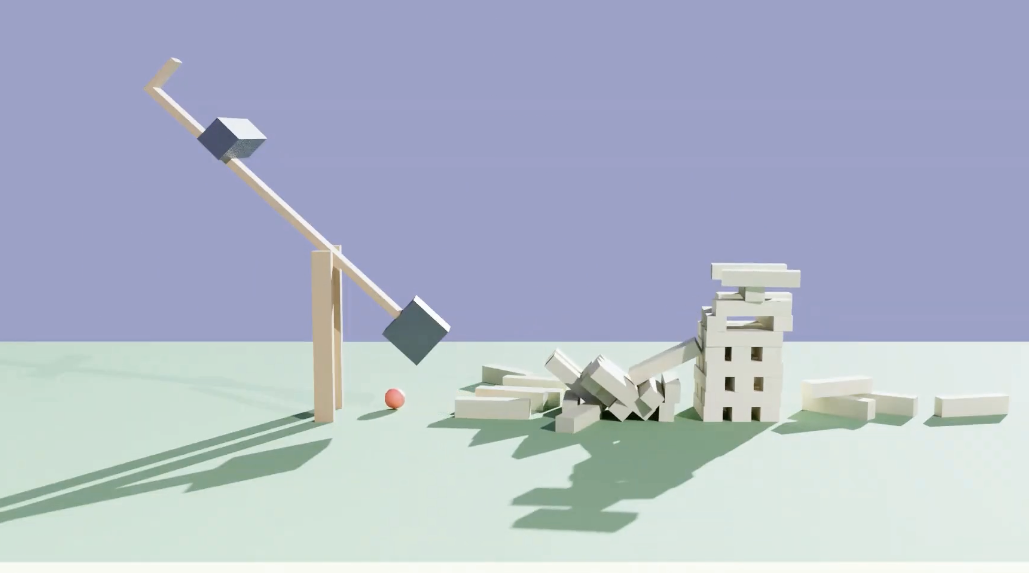
- The piece uses a double pendulum as a proxy for near-chaotic hardware: an ideal frictionless simulation and a friction-damped one started from identical conditions swing in sync briefly before wildly diverging at the 'onset of chaos.'
- The gap between an idealized simulation and a physically realistic one is largest exactly where the dynamics are most expressive, meaning a model trained only on the ideal simulation could learn to exploit a near-chaotic region that doesn't exist in real hardware.
- Numerical solver choice matters as much as physical modeling: swapping a coarse Euler-method solver for a high-order one like DoPri shifts where the simulated chaos boundary falls, since rounding error behaves like an added physical perturbation near the edge of chaos.
- The team frames its goal as finding a 'Goldilocks' level of abstraction rather than maximum fidelity, since a perfectly accurate simulation takes hours per run while their AI scientists need to run millions of passes.
Read the source ↗unconv.ai
More from Carlos H. Morales
Recommended reads

Comments
Checking sign-in…
Loading comments…