Astra vs Carbon vs Fable: five-task frontier model comparison
- Source
- youtu.be
- Author
- Peter Yang
- Date
Context
Creator Peter Yang gave three new frontier models the same five tasks and judged the results himself: Claude Fable 5.2 from Anthropic, GPT-6.2 Astra from OpenAI, and Gemini 4 Carbon, which Google released on November 10 as its strongest model for long, complex agentic work (video). No model won everything. In his view Fable made the best visual work, Carbon wrote the best essays, and Astra finished fastest but put in the least effort.
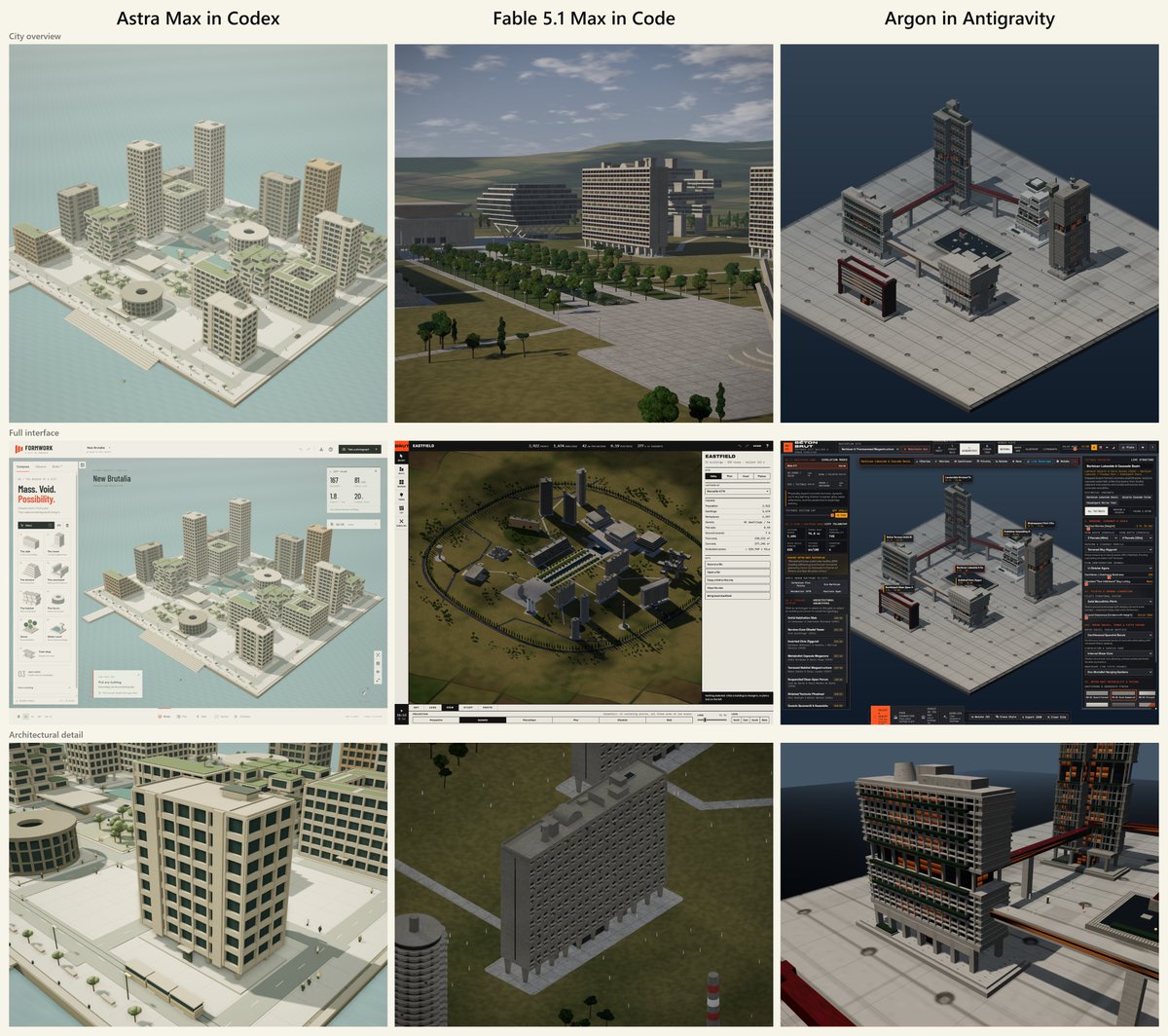
Three tasks asked for something to look at: a 20-second rainy-night travel video of Tokyo's Shibuya Crossing rendered entirely in code, a monster-rampage browser game built in Three.js (a first version, then a second shaped by his feedback), and a redesign of his own membership website. Astra finished the video in 11 minutes, the game in 13 and the website in 4. Fable took almost an hour on the video and 47 minutes on the game, and Carbon took 73 and 49 minutes. Yang ranked Fable first on the video and the game, called Fable and Astra comparable on the website (Astra cleaner, Fable more heavily animated), and put Carbon last on all three, saying its designs were cluttered and hard to follow.
The other two tasks reversed part of that order. Asked for a 300-word personal essay by a software engineer who no longer writes code, Astra's essay wandered into coffee and a hospital cafeteria, and Yang, reading the essays without model names, slightly preferred Carbon's to Fable's. Over three such rounds Carbon won two and Fable one, which he acknowledges is a small sample (his post on the writing test). In the last task each model studied his YouTube channel's public data and recommended how to grow it, and he then pushed back four ways: an emotional appeal, contrary data, advice from famous creators, and a made-up fact. Astra conceded the most, admitting it had weighted recent videos too heavily, while Fable and Carbon mostly kept their recommendations.
The result is useful as a picture of how each model behaved on open-ended work, especially the trade between Astra's speed and the slower models' thoroughness, but it is one person's judgment of a few attempts per task, not a measured comparison. The visual verdicts are Yang's own; this explanation is based on the video's captions, so they could not be checked against the footage. His overall conclusion is that Claude still has the best models, with Opus 5.5 as his daily choice and Fable for harder work, that Carbon is worth trying for writing, and that Carbon is cheaper: he lists it at $2 for input and $10 for output, about a quarter of the other two models' price until December 1 and about half afterward.
- In the video creator's five-task test, GPT-6.2 Astra was by far the fastest, taking 11 minutes on a 3D travel video versus almost an hour for Fable 5.2 and 73 minutes for Gemini 4 Carbon, yet it won none of the five tests outright in the creator's judgment.
- The creator rated Fable 5.2 best on the 3D video and the Three.js monster game, and put Gemini 4 Carbon last on both and on website design, saying it overstuffed the page with text and widgets.
- In blind essay rounds, the creator preferred Gemini 4 Carbon's writing over Fable 5.2 in two of three rounds, while Astra's first essay drifted to coffee and a cafeteria. The creator stresses this is a small sample.
- Pushed back in four ways (emotional appeal, contrary data, social proof and a false fact), Astra conceded the most, partly because its channel analysis looked mainly at recent videos. Fable 5.2 and Carbon mostly held their recommendations.
- The creator cites Gemini 4 Carbon at $2/$10 per million input/output until December 1, about a quarter of Fable 5.2 and Astra's prices, and says it stays about 50% cheaper after the discount ends.
- token — The chunk of text a model reads and writes in — roughly three-quarters of a word — and the unit AI usage is billed in.


Checking sign-in…
Loading comments…