NVIDIA Vera Rubin and Blackwell Set a New Standard for Agentic AI Performance per Watt
- Source
- developer.nvidia.com
- Author
- Elizabeth Goodman
- Date
Context
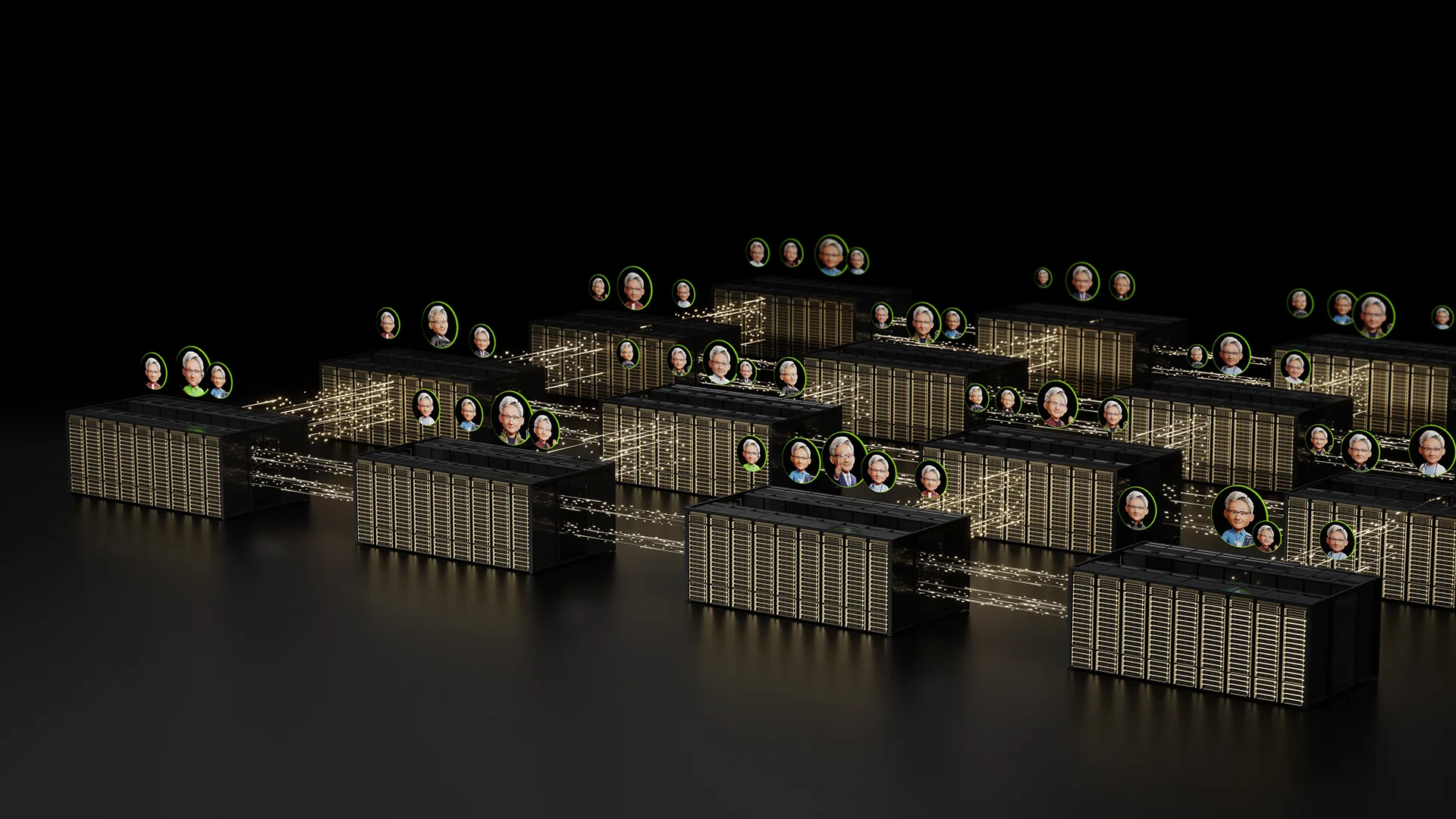
Hardware efficiency for coding agents depends on repeated requests, growing and pauses for tools. NVIDIA tested these patterns with SemiAnalysis's AgentX benchmark and reported up to 30 times the per provisioned megawatt for Vera Rubin NVL72 versus GB300 NVL72, running DeepSeek V4-Pro at 160 output tokens per second per user. Its August 24 report labels these NVIDIA measurements as pending SemiAnalysis review.
AgentX's recorded-session approach replays anonymized recordings of real coding-agent sessions on their original request schedule, preserving context reuse and traffic timing. It measures serving capacity under those conditions, rather than whether an agent solves the original programming problems correctly. The benchmark methodology describes the traces and the performance metrics.
- Context and context window — Context is the information available for a generation; the context window is the capacity available to hold it.
- throughput — How much model output a provider can generate over time, commonly measured in output tokens per second.
- subagent — A separate agent spawned by another to do one scoped piece of work in its own context, returning only the result.
- mixture-of-experts — A model built from many specialist sub-networks where only a few activate per token, giving big-model capability at small-model running cost.
 articleDiagnose Distributed AI Workload Failures with NVIDIA Attribution
 articleKeep Distributed Training Running with Automated Workload Recovery
 articleMemory-Enforced GPU Sharing in Kubernetes with NVIDIA CUDA 13.4
 articleHow NVIDIA OpenShell Reference Architecture Secures and Governs AI Agent Workloads at Scale
Checking sign-in…
Loading comments…