How coding agents track intent: a look inside Windsurf's IDE agent
- Source
- x.com
- Date

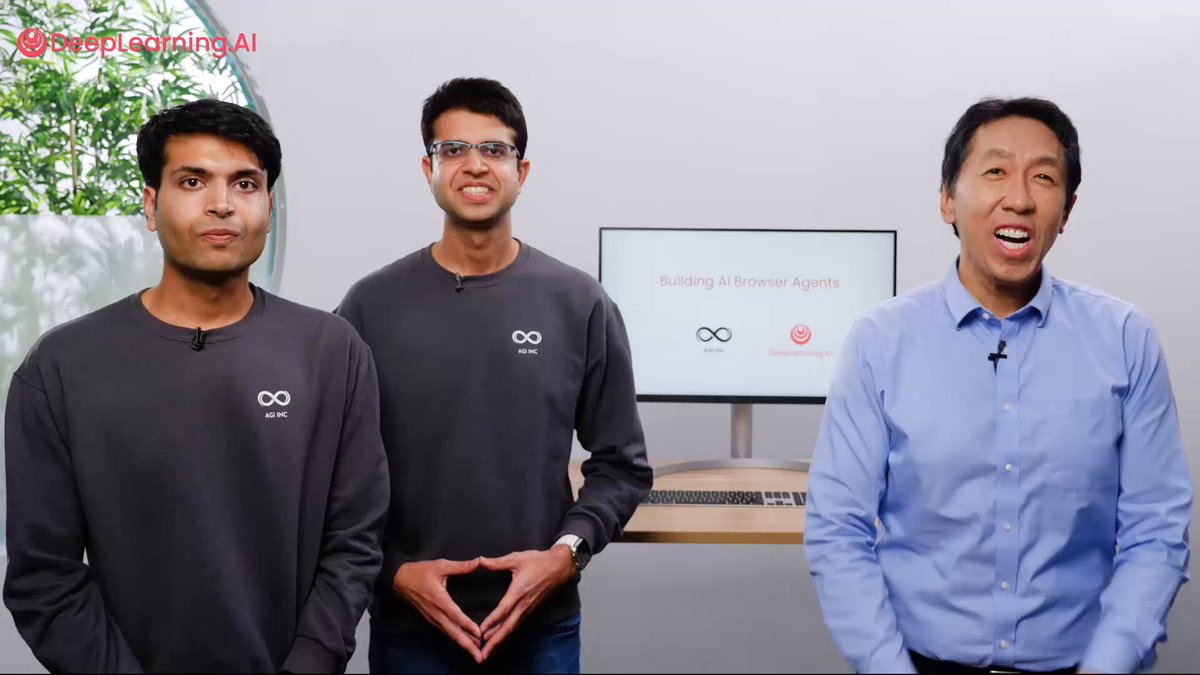
New course to bring you up to state-of-the-art at using AI to help you code: Build Apps with Windsurf's AI Coding Agents, built in partnership with WIndsurf (@codeiumdev) and taught by @_anshulr! AI-assisted IDEs (Integrated Development Environments) make developers’ workflows faster, more efficient, and much more fun. Agentic tools like Windsurf are more than just code autocomplete—they are collaborative coding agents that help you break down complex applications, iterate efficiently, and generate code that spans multiple files. Although a lot of coding assistants share the same underlying large language models for planning and reasoning, a major point of distinction is how they handle tools, keep track of context, and stay aligned with your intent as a developer. For instance, if you make modifications to a class definition in your code and make the same modifications to other classes in the same directory, you might tell the AI agent "Do the same thing in similar places in this directory." Here, tracking your intent means understanding that “the same thing" refers to that recent edit you just made, which must be followed by appropriate search and tool-calling to implement…

Context
A coding needs access to what the developer just changed to interpret a request to repeat that change elsewhere. In his Windsurf course announcement, Andrew Ng uses exactly this example: recent edits establish the intended transformation, code search locates similar places, and tools apply the changes. The course description connects human-action tracking, , and multi-step retrieval. This explains why two coding assistants using the same underlying model can behave differently: the surrounding software determines what evidence the model receives and what it can do with it.
- AI agent — An AI system that doesn't just answer once but works toward a goal in a loop — taking actions, reading the results, and deciding what to do next.
- context window — The maximum amount of text a model can consider at once — its working memory for the current conversation or task.


Checking sign-in…
Loading comments…