Upgrading to workflow 5.8 cuts per-step overhead for durable agent loops, so multi-turn agents with ToolAn operation that the software around a model makes available for the model to request, with a name, expected inputs and a kind of result.Full definition → calls and big fan-outs run faster; steps should be idempotent.
Key takeaways · AI-distilled
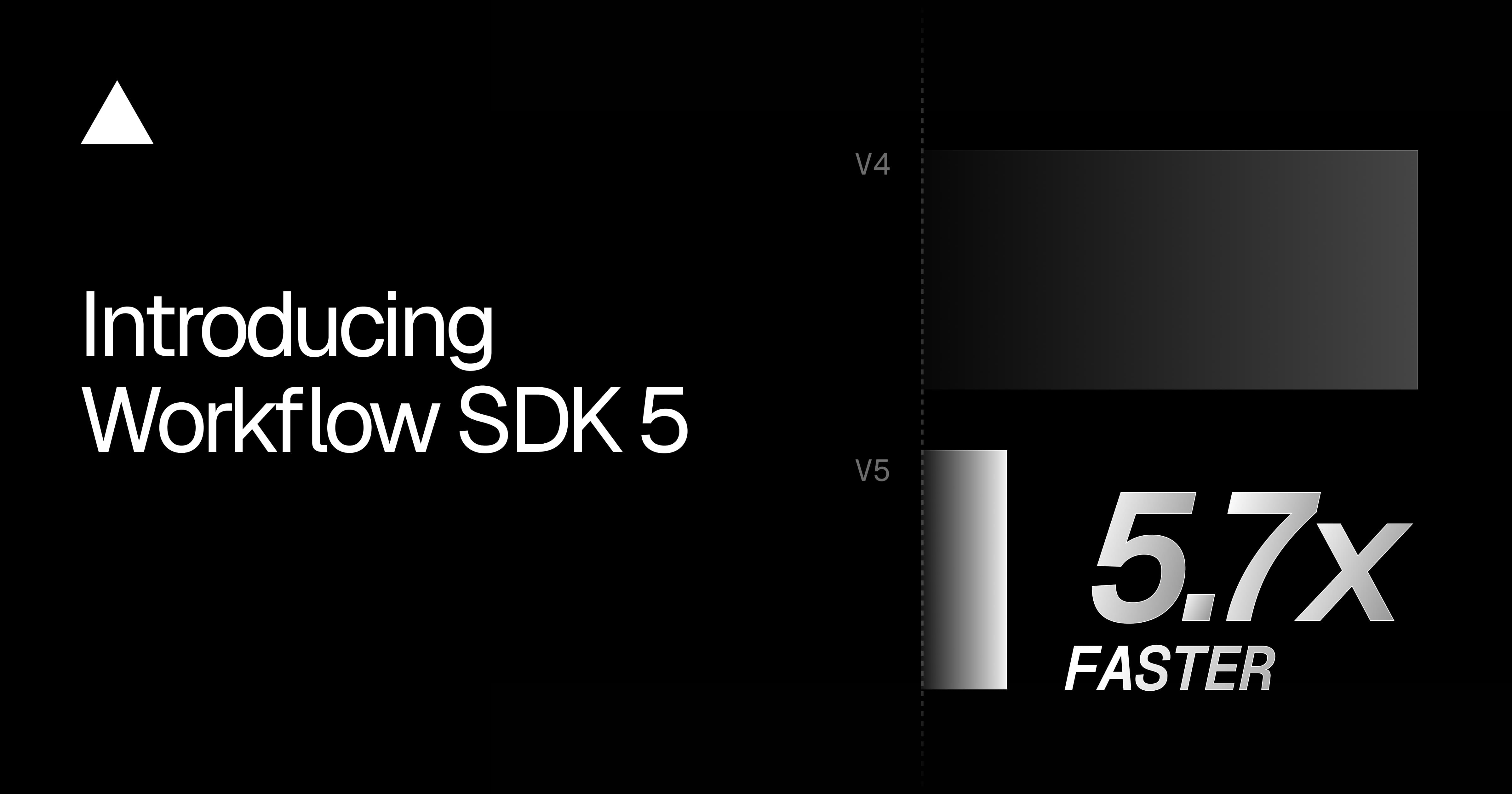
In Vercel's benchmarks of Workflow SDK 5.2.0 versus 5.8.0, p75 step-to-step overhead fell from 85 ms to 7 ms, and a median run with 102 seconds of step work finished in 111 seconds instead of 3.0 minutes.
A 256-step parallel fan-out added 2.5 seconds of overhead instead of 13.5, its median run spent 105 seconds in functions beyond step work instead of 1,446, and a five-turn streamingSending a model's response token by token as it is generated, so the reader sees text immediately instead of waiting for the whole answer.Full definition →Agent loopA cycle in which an agent observes, decides, acts, and interprets the result.Full definition → added 0.9 seconds instead of 3.0.
Runs already started on an older version keep running on it, WORKFLOW_SPEC_VERSION=8 keeps new runs on the previous engine, and a third-party World must support World spec version 9 before upgrading brings any of the improvements.
Terms in this piece · Glossary
Latency — The time between asking for a result and having it, including the model's generation time, tool calls, retries and any queueing.
Agent loop — A cycle in which an agent observes, decides, acts, and interprets the result.
Tool — An operation that the software around a model makes available for the model to request, with a name, expected inputs and a kind of result.
streaming — Sending a model's response token by token as it is generated, so the reader sees text immediately instead of waiting for the whole answer.