What NVIDIA's object-oriented agents reveal about runtimes
- Source
- x.com
- Date

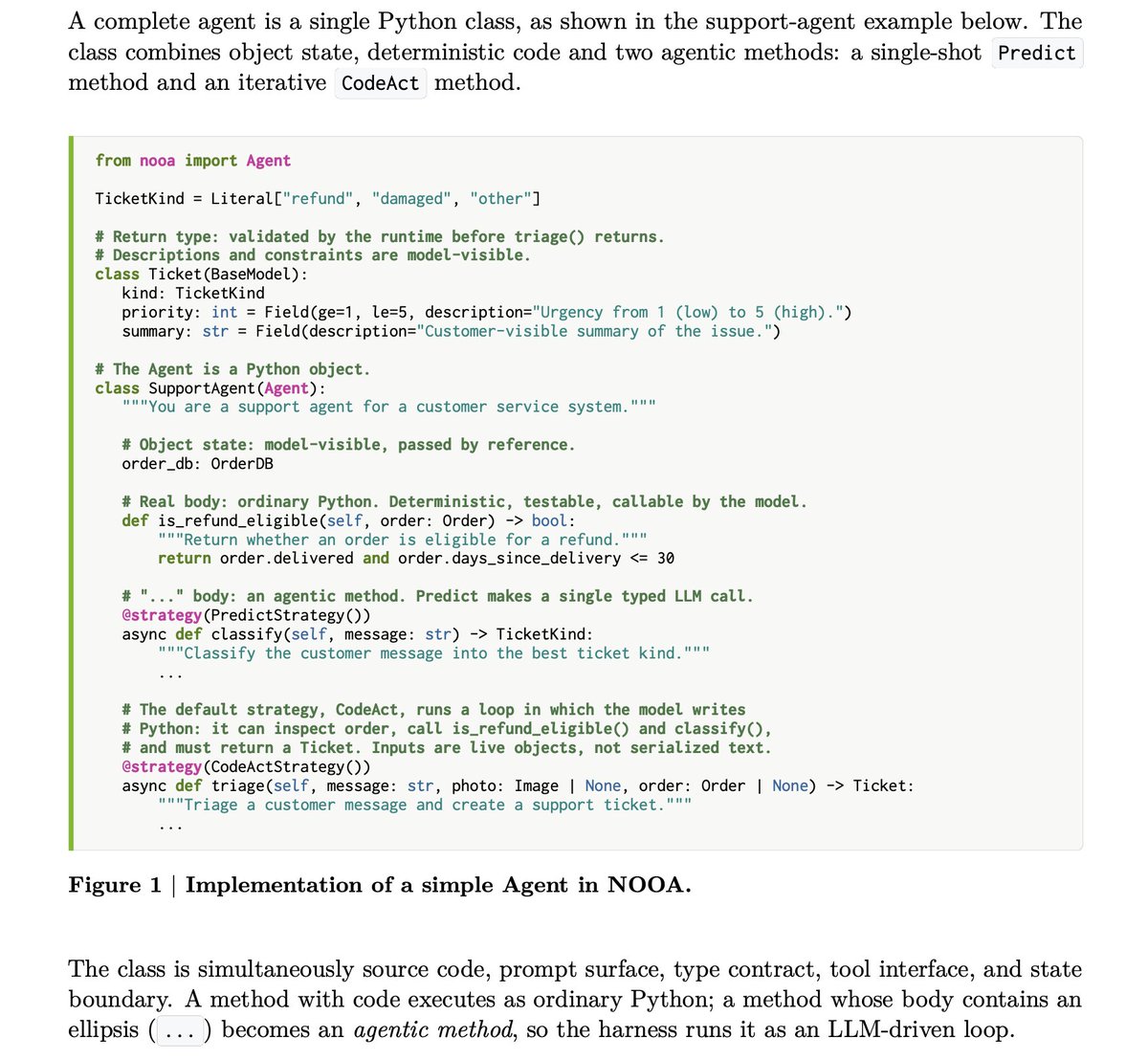
Agent frameworks keep changing because tool calling never solved the runtime. A tool schema tells the model how to call one function. It does not decide who owns the loop, where state lives, what counts as done, or how recovery works. @NVIDIAAI's NOOA takes a different approach: collapse prompts, tools, state, and model-driven loops into one Python class. Methods become actions. Fields hold state. Docstrings become prompts. Types become contracts. The interesting part is not the syntax. It is the runtime trade-off. > Typed tools keep boundaries explicit > Graph runtimes make control durable > File-based agents keep state on disk > Live objects keep rich state inside one process NOOA avoids repeated serialization by letting the model work against live Python objects through bounded methods. But that state is local. Restarts, distributed execution, replay, and checkpointing bring the serialization problem back. So the useful question is not “which agent framework is best?” It's "Who should control the loop?" And "where does the state need to survive?"
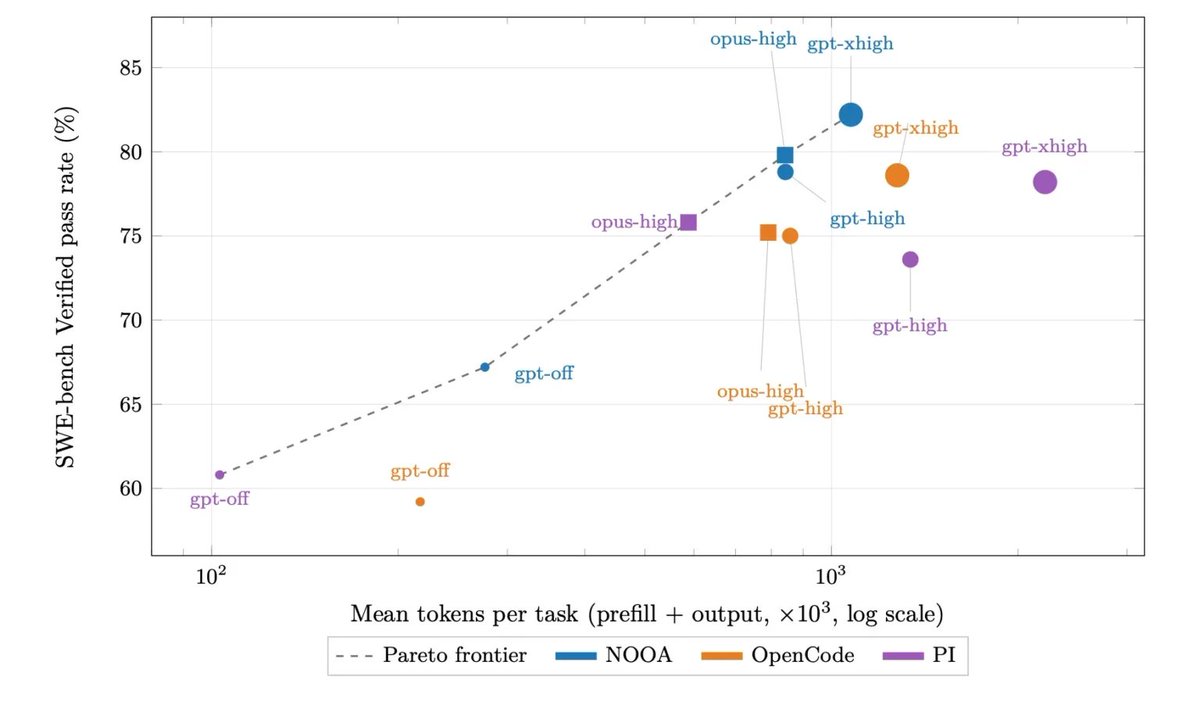
Full breakdown of what NVIDIA’s OO Agents reveal about agent runtimes: https://t.co/rtjaQaTxps
Context
AlphaSignal described NVIDIA's NOOA framework as collapsing an 's prompts, tools, and state into a single Python class: object methods become the actions the model can call, class fields hold its state, and docstrings serve as the instructions the model sees. The thread frames this as one point on a spectrum of ways agent frameworks handle state, alongside typed tool schemas, graph-based runtimes, and file-based agents that persist state to disk.
AlphaSignal's argument is that NOOA avoids the cost of repeatedly converting an agent's state into text and back, since the model works against live Python objects directly. But the thread also says that state exists only inside one running process, so restarting the process, replaying a session, or distributing the work across machines brings back the same conversion problem NOOA sidesteps during normal operation.
- AI agent — An AI system that doesn't just answer once but works toward a goal in a loop — taking actions, reading the results, and deciding what to do next.
 postpretty interesting, this new NVIDIA framework represents agents as python…Sterling Crispin 🕊️
 videoThe Log Is The Agent - Ishaan Sehgal, OmnaraAI Engineer
 articleNVIDIA AVO Reaches 100% on ARC-AGI-3, Demonstrating a Frontier-Level General-Purpose Architecture for Long-Horizon Autonomous AgentsTanya Lenz
Checking sign-in…
Loading comments…