How to Use AI Agents to Prepare 3D Scenes for Simulation
Source
Tanya Lenz
Author
Tanya Lenz
Date
Key takeaways · AI-distilled
Codex or Claude coordinates while NVIDIA NemoClaw deploys specialized Hermes subagents (inspection, labeling, materials, sensors, ovphysx, ovrtx, validation), each owning one job with its own acceptance criteria and escalating ambiguous decisions to a human.
OpenUSD is the shared contract layer because it supports layered, nondestructive composition: agents can add labels, physics metadata, and sensor definitions without flattening the original Blender artist's work, unlike fragile one-off exports.
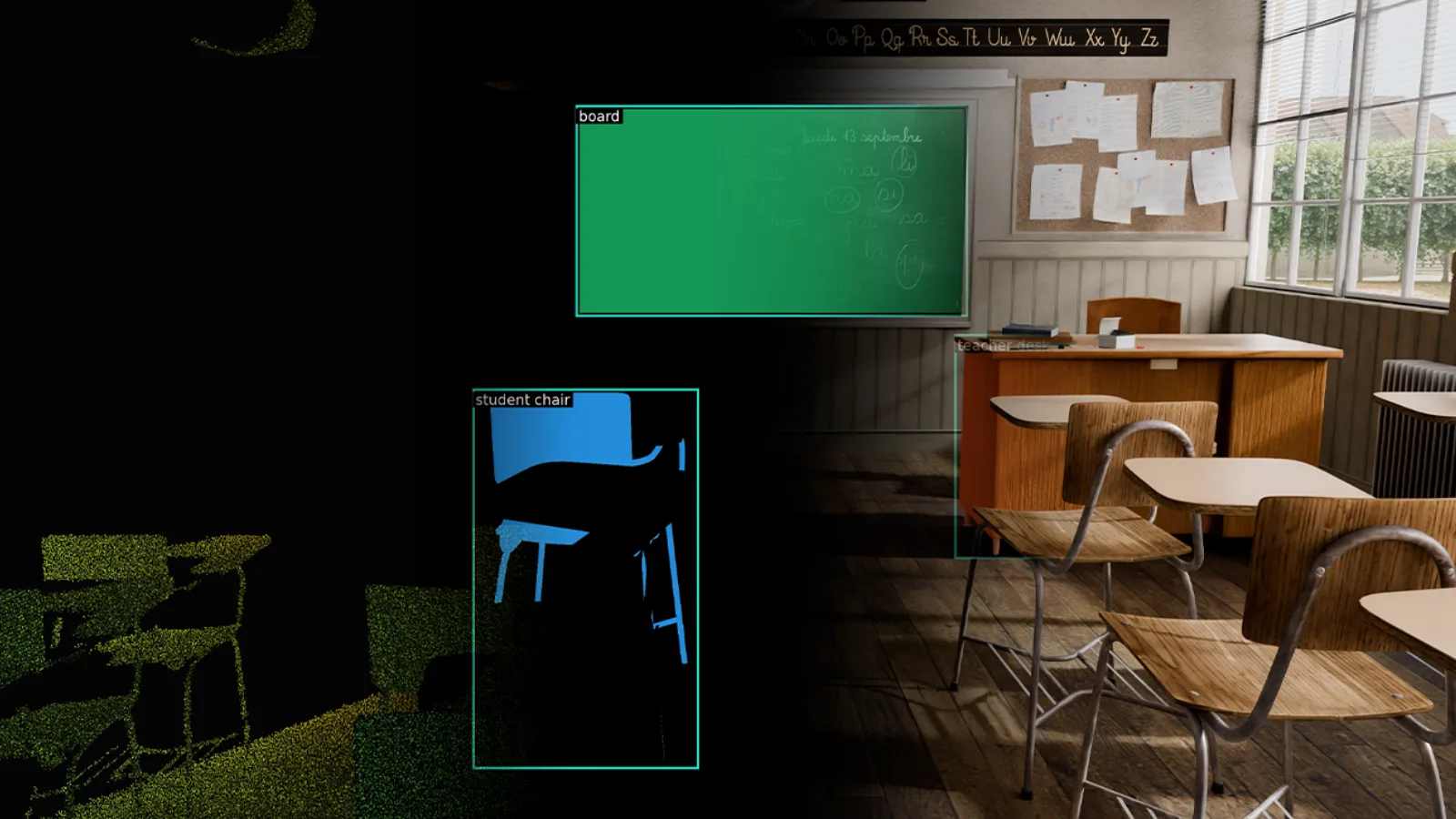
The inspection multi-agentUsing several AI agents on one problem — splitting work in parallel, checking each other, or filling different roles like planner and reviewer.Full definition → connects to Blender via a MCPThe Model Context Protocol — an open standard that lets any AI assistant plug into any tool or data source without custom integration code.Full definition → server to inventory the scene (142 objects, 37 materials in the demo) and outputs a structured 'missing' list, such as semantic_labels and collision_meshes, that seeds the rest of the pipeline.
SimReady validation is the hard acceptance gate before Isaac Sim/Isaac Lab handoff: in the demo it reported 14 issues, 10 auto-fixable and 4 requiring review, and only the auto-fixable ones get repaired without a human decision.
Rendering with ovrtx catches problems structural validation misses: it can show a labeled target invisible from a robot-camera view due to occlusion or clipping, prompting Codex to route a follow-up task to sensor or scene-inspection subagents before revalidating.
Terms in this piece · Glossary
AI agent — An AI system that doesn't just answer once but works toward a goal in a loop — taking actions, reading the results, and deciding what to do next.
multi-agent — Using several AI agents on one problem — splitting work in parallel, checking each other, or filling different roles like planner and reviewer.
MCP — The Model Context Protocol — an open standard that lets any AI assistant plug into any tool or data source without custom integration code.
Why it matters
The pipeline shows a working pattern for a coordinator AI agentAn AI system that doesn't just answer once but works toward a goal in a loop — taking actions, reading the results, and deciding what to do next.Full definition → delegating to specialized tool-using subagents with a hard validation gate before handoff, a reusable architecture beyond just robotics scene prep.