Step-Audio-R1.1 opens weights for a speech model that reasons in real time
- Source
- x.com
- Date

🎤 Introducing Step-Audio-R1.1: The New Frontier of Audio Reasoning! 🏆 We just hit No.1 on the Artificial Analysis Speech Reasoning leaderboard! Our results: ✅96.4% accuracy on BigBench Audio, setting a new record and surpassing Grok, Gemini, OpenAI, and Google models (Fig. 1). ✅1.51s TTFA (Time-to-First-Audio), fast enough to feel like a real conversation 🚀Step-Audio-R1.1 demonstrates that deep reasoning and real-time performance are no longer a trade-off. As shown in Fig. 2, it maintains the highest reasoning depth in class while staying under the critical ~1.5s latency threshold. What’s under the hood: ✔️Test-time compute scaling: Step-Audio-R1, the first audio LLM to unlock dynamic compute allocation during inference. ✔️End-to-end audio reasoning: coherent, on-the-fly reasoning with zero added latency. ✔️Scalable CoT optimized specifically for audio understanding tasks. R1.1 is the upgraded, smarter, faster evolution. Weights are OPEN. Go build something crazy. 🤗 HuggingFace: https://t.co/VZAKvk7v1h 🎤 Try it here: https://t.co/g3v0fGjX5y 🔮 ModelScope:


Context
Per StepFun's announcement, Step-Audio-R1.1 is an speech model that allocates extra computation at answer time specifically to audio reasoning, using a approach built for understanding audio rather than text. StepFun reports it topped the Artificial Analysis Speech Reasoning leaderboard, scoring 96.4 percent on the BigBench Audio benchmark and responding in 1.51 seconds measured as time-to-first-audio, its term for how long before the model starts speaking back.
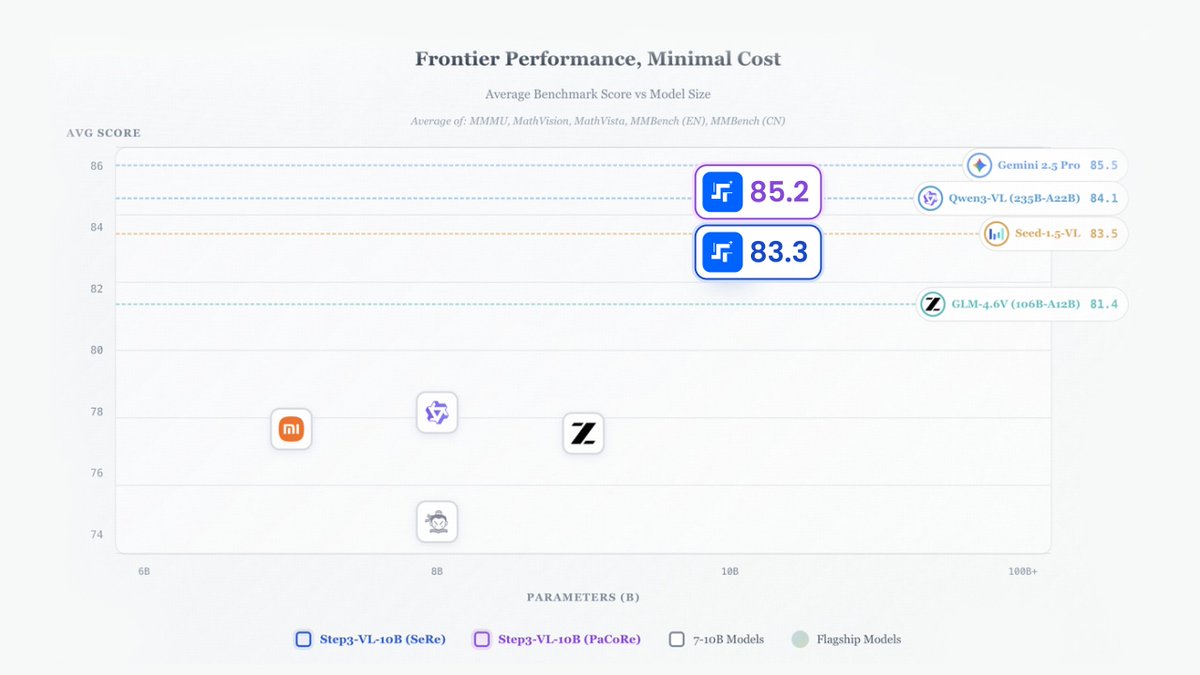
StepFun frames this as evidence that a voice model no longer has to trade reasoning depth for real-time speed, though this is the company's own unpublished internal comparison naming Grok, Gemini, OpenAI and Google models as what it surpassed, without version numbers or a published methodology, released alongside open weights so outside developers can test it themselves. The model applies the same general test-time reasoning approach StepFun open-sourced as CoPaRe (CoPaRe release) and used in its Step3-VL-10B vision- around the same period (Step3-VL-10B).
- open weights — A model whose trained parameters are published for anyone to download and run — unlike API-only models you can access but never possess.
- chain-of-thought — Having a model write out intermediate reasoning steps before its answer, which markedly improves performance on hard problems.
- LLM — A large language model — the neural network behind tools like Claude and ChatGPT, trained on huge amounts of text to predict what comes next.
- test-time compute — Spending more computation when the model answers — thinking longer, trying multiple attempts — to buy accuracy without training a bigger model.
 postStepFun Open-Sources Step Code, a CLI Coding Agent Benchmarked on Terminal-Bench
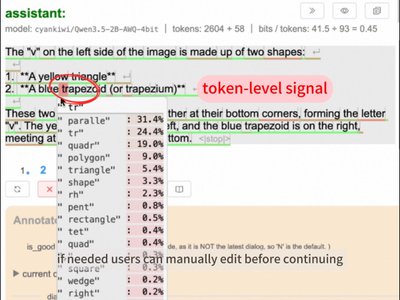 postStepFun Open-Sources onPanda, Its Internal LLM Annotation and Debug Tool
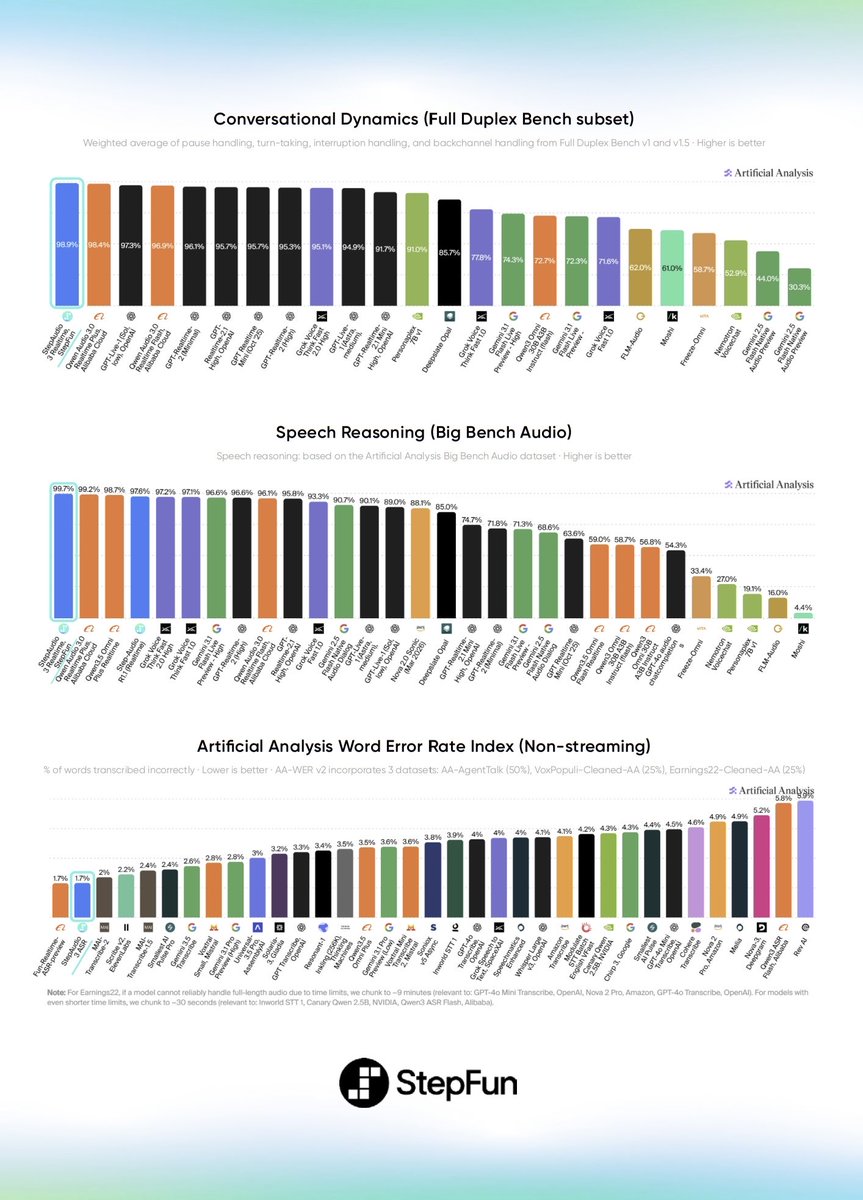 postStepFun debuts StepAudio 3 voice model family, tops real-time benchmarks
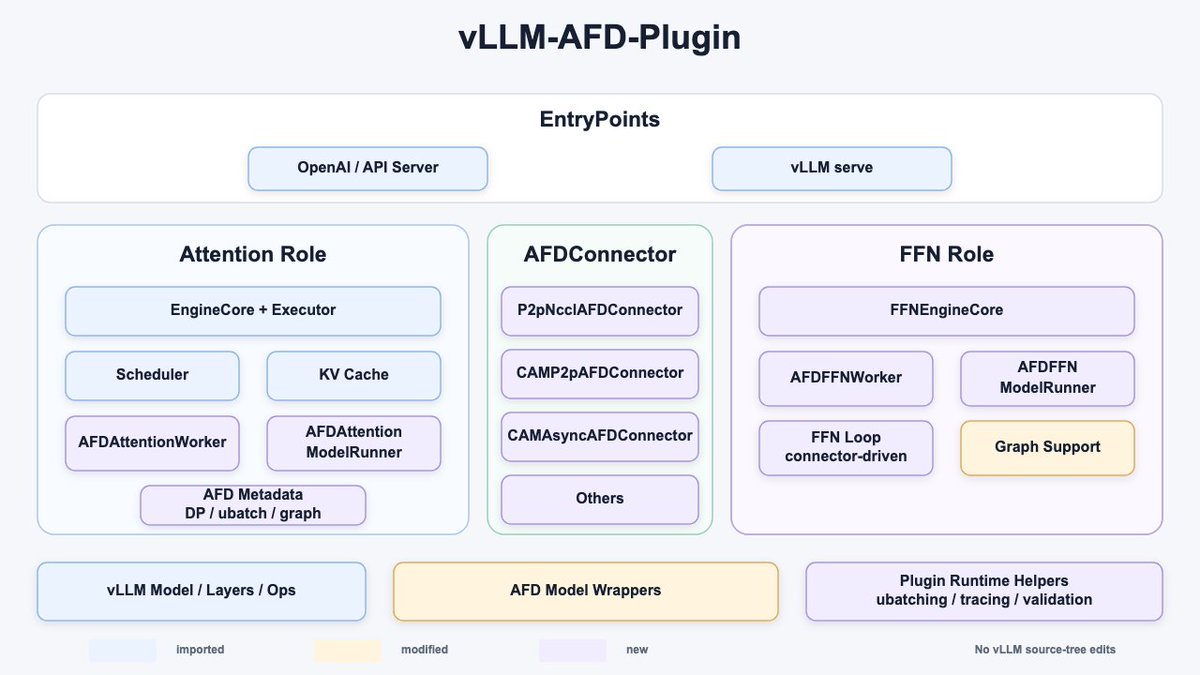 postvLLM gains an experimental Attention-FFN disaggregation plugin for MoE
Checking sign-in…
Loading comments…