What Huawei’s Horinger data center reveals about China’s compute gap
- Source
- epochai.substack.com
- Author
- Ben Cottier
- Date
Context
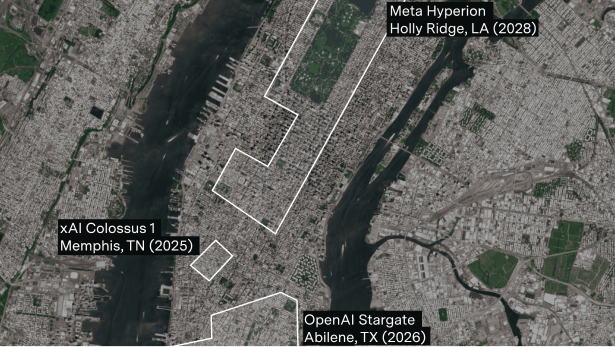
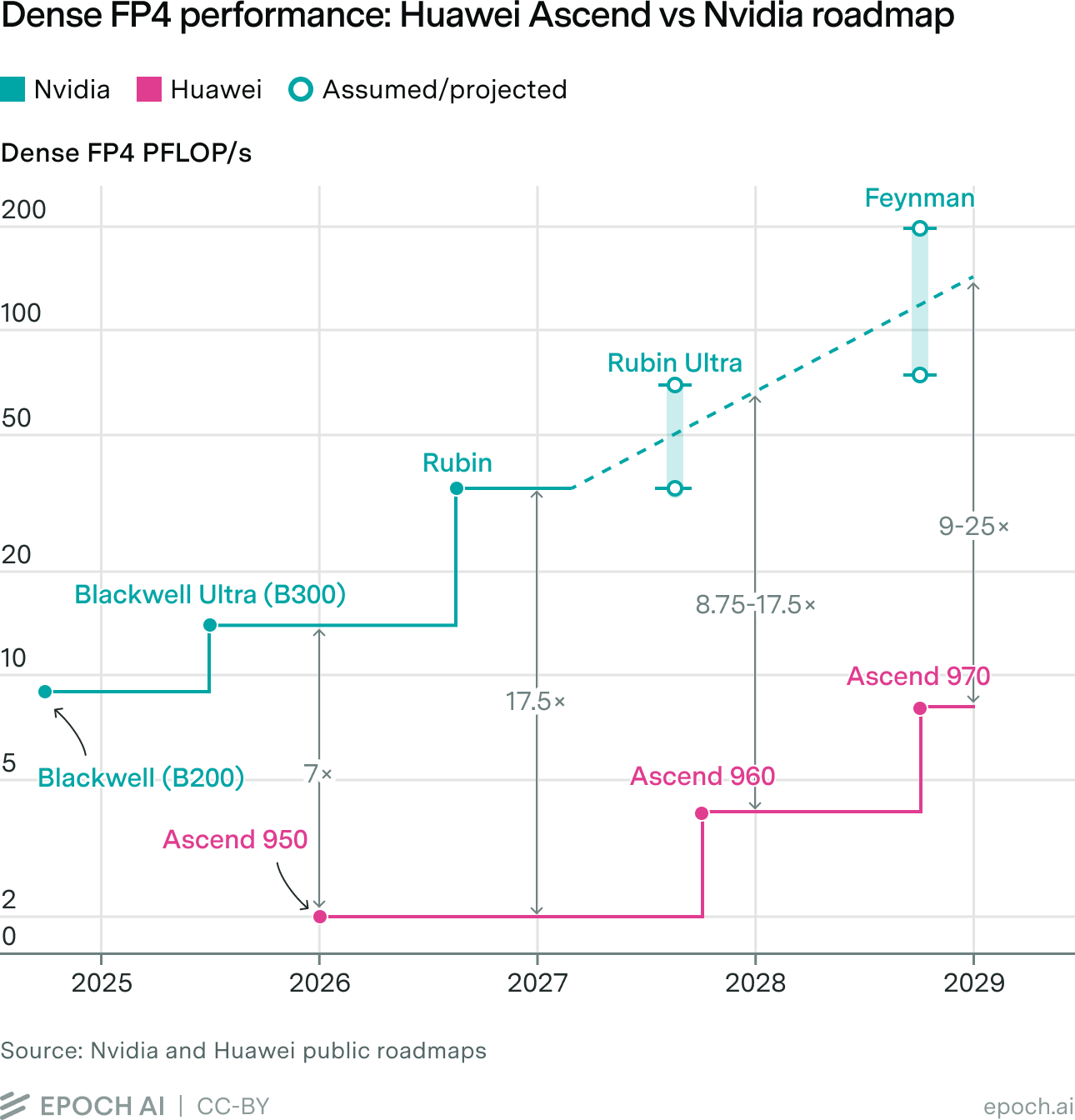
This is Epoch AI's condensed newsletter version of its report on Huawei's AI data center in Horinger, Inner Mongolia, one of the largest in China. Epoch estimates the campus holds about 81,000 H100-equivalents, a unit that rates chips against one NVIDIA H100. That is roughly 7% of the capacity of SpaceX's Colossus 2 in Tennessee, which Epoch counts as the world's largest AI data center. Its explanation is chips rather than power: China has abundant energy for data centers, but Epoch finds US AI data centers support about 2.5 times more compute per unit of power, because US export controls leave Huawei behind NVIDIA in chip performance and efficiency. Our explanation of the full report covers how Epoch sized the campus from satellite images, how Huawei's chips compare with NVIDIA's, and why a planned expansion leaves Horinger with the same share of Colossus 2 or a smaller one by 2028.
This version also spells out how Epoch checks a chip count it cannot observe directly. Epoch matched the dates when the campus's power-dense buildings came online to Huawei's chip sales over time, assuming chips go into racks about four months after they are sold, which puts the count at roughly 105,000 Ascend 910C and 8,000 Ascend 910B chips in operation. Epoch's chip-sales estimates put about 907,000 910C and 600,000 910B chips sold by the end of March 2026. Satellite imagery indicates the third AI building running by August 2026, so with the same four-month lag, Horinger would account for about 11% of the 910C stock, a figure Epoch considers plausible given total chip production and deployments at other data centers. The check supports the estimate without confirming it: each input is inferred, and Epoch's 90% interval for the campus runs from 36,000 to 141,000 H100-equivalents.
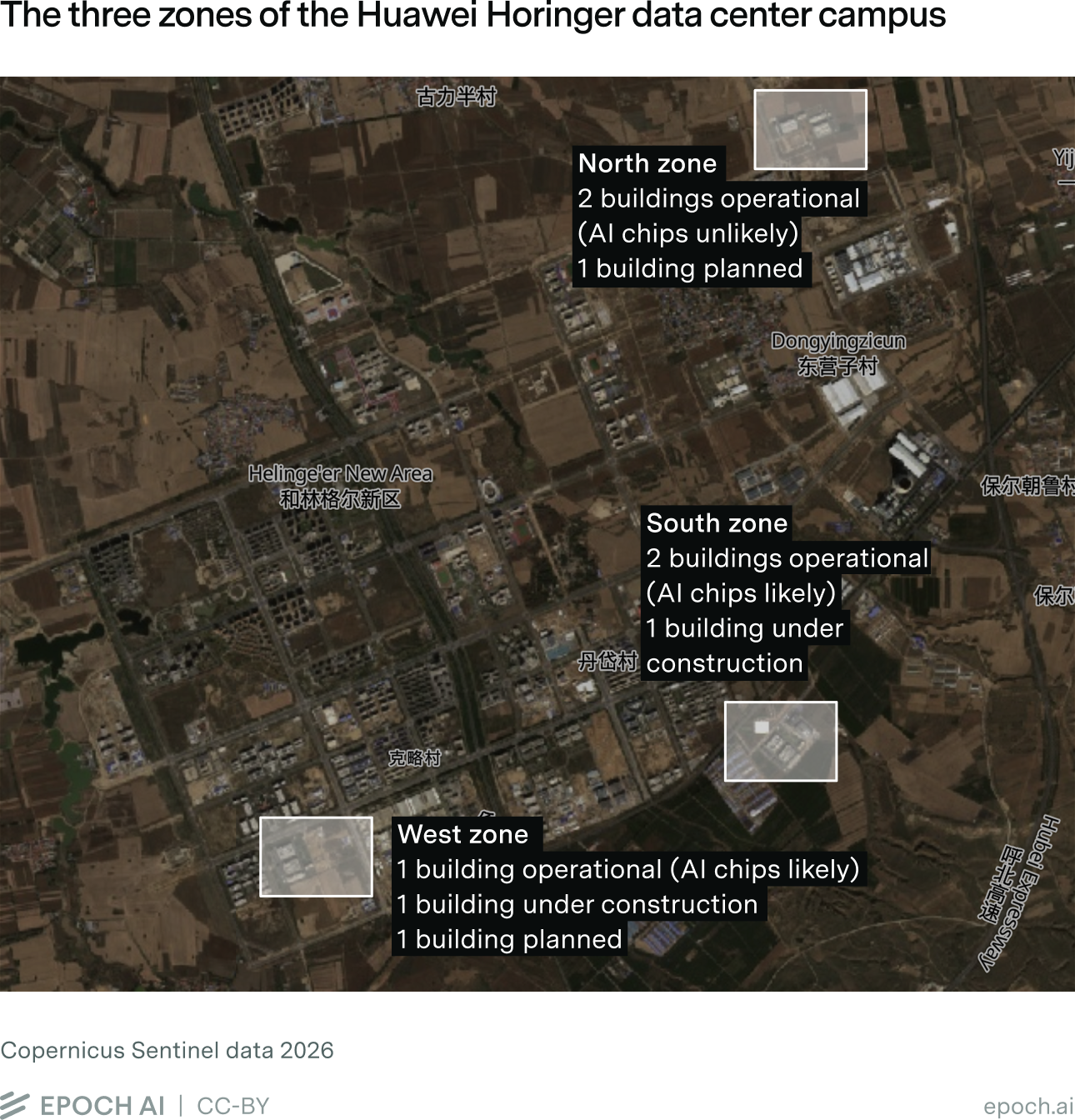
- Epoch sized the campus from satellite photos of rooftop cooling gear: the type, size and count of cooling units gives heat rejection capacity, and in turn IT power. Sparse cooling in the North zone ruled it out for AI chips, leaving four dense buildings at about 286 MW.
- Signs of operation came from imagery: vapor above an evaporative cooling tower, and colored fan "ghosts" because the sensor captures red, green and blue at slightly different moments, so moving fans glare in one color. One West zone building showed no such signs yet.
- Mapping Huawei chip sales onto the buildings with a four-month sale-to-deployment lag, Epoch estimates about 105,000 Ascend 910C and 8,000 910B chips running, roughly 81,000 H100-equivalents (90% CI 36,000 to 141,000), about 11% of the 910C stock sold.
- Epoch estimates 10% of Horinger's compute, about 8,100 H100e, is enough to train a DeepSeek-V4-Pro scale model in a month. In a very optimistic case where all of it joins one run, which split clusters may not allow, a GPT-6 Astra scale model would take a year.
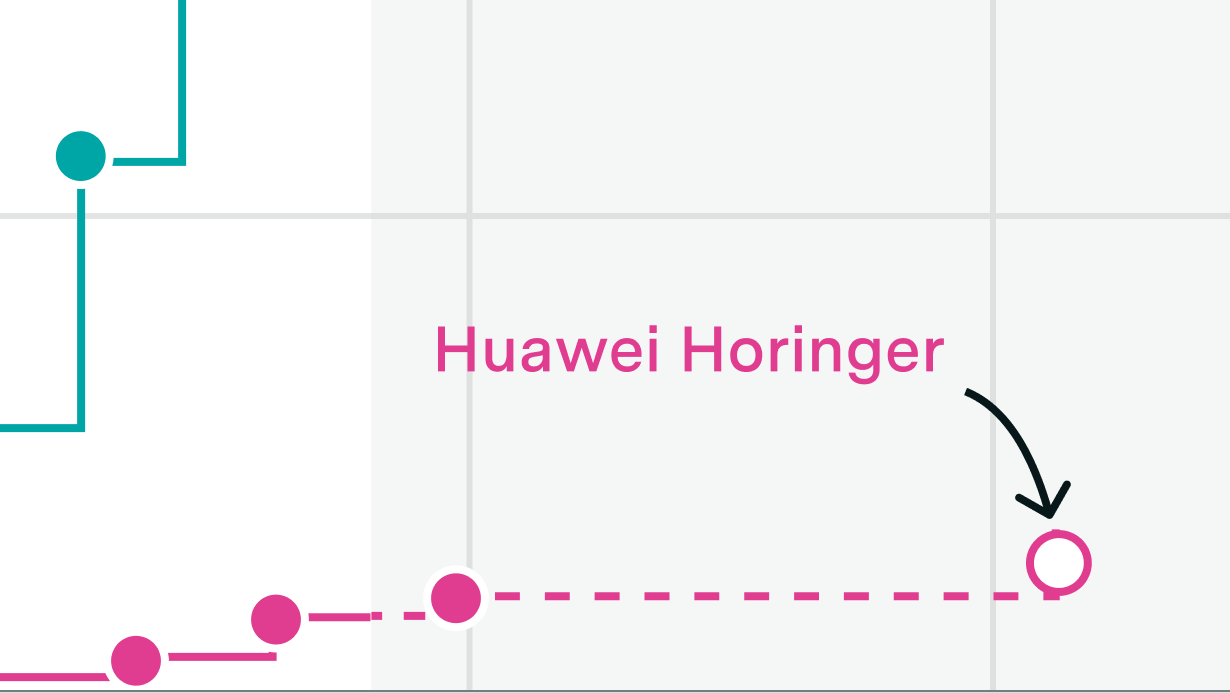
- A planned building could lift Horinger about 70% to roughly 141,000 H100e by early 2028, while Colossus 2 is expected to reach at least 1.8 million H100e. Epoch notes China has abundant energy, but US AI data centers get about 2.5 times more compute per unit of power.
Checking sign-in…
Loading comments…