Voice AI Fast-Path Architecture Update
- Source
- x.com
- Date

GPT-Live can listen while it speaks. To make that feel natural at ChatGPT scale, we rebuilt the voice stack from client to model. This new architecture keeps audio flowing continuously, so deeper reasoning and tool use don't interrupt the conversation.

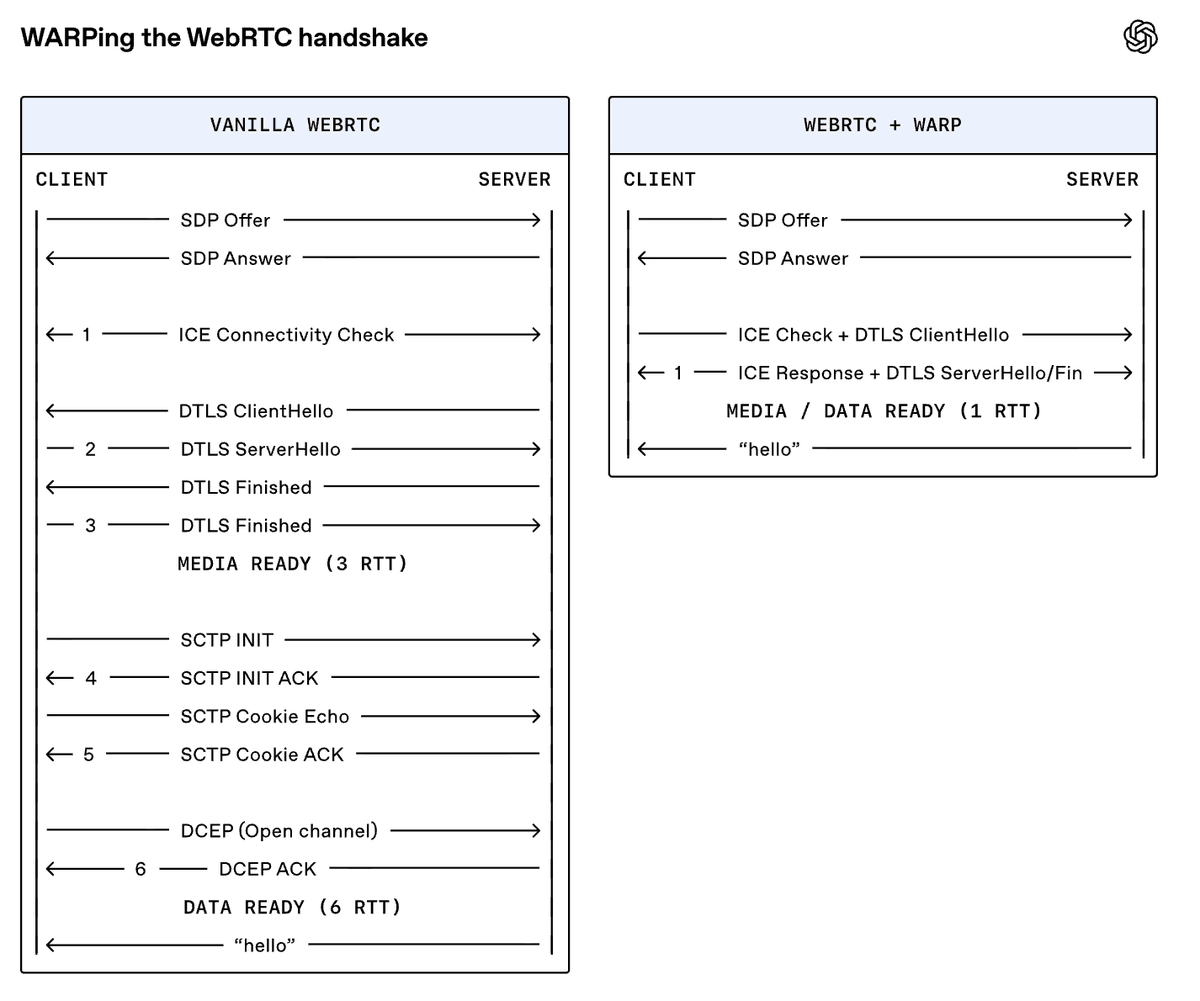
Audio moves through a dedicated fast path, while deeper reasoning and tool use happen asynchronously. We also reduced voice-session startup from six network round trips to one.
Context
OpenAI has separated the audio of a ChatGPT voice conversation from the slower work behind it. In a two-post thread, the company says GPT-Live can listen while it speaks, and that to make this feel natural at ChatGPT scale it rebuilt the voice stack from the app to the model. Audio now travels through a dedicated fast , while deeper reasoning and happen asynchronously, meaning they run alongside the conversation instead of holding it up. OpenAI says the new architecture keeps audio flowing continuously so that reasoning and tool calls do not interrupt the conversation.
Delay is a central concern for anyone building voice agents. A DeepLearning.AI course on production voice agents describes the main components, speech-to-text, a and text-to-speech, and teaches builders to measure the latency each stage adds and to handle users interrupting. OpenAI's thread describes its approach only at the level of overall design: keep the audio on its own path so that slower reasoning and tool use do not stall it.
The thread gives one concrete number: starting a voice session used to take six network round trips and now takes one. A round trip is a request from the app and the server's reply, and each one adds waiting before a conversation can begin. OpenAI does not say how much time this saves in practice, and the thread reports no measurements of response delay, interruption handling or voice quality. Each post also carries a link and an image, none of which were part of the material reviewed here, so this explanation covers only what the thread text states.
- Client — The program that sends a request to a server and receives its response.
- Path — A description of a file or folder location, written using directory names and separators.
- tool use — A model's ability to call external functions — run code, search the web, edit files — instead of only generating text.
- Large language model — A model trained on large amounts of data to process and generate language.




Checking sign-in…
Loading comments…