Trends In Ai Supercomputers
- Source
- epoch.ai
- Author
- Epoch AI publications
- Date
Context
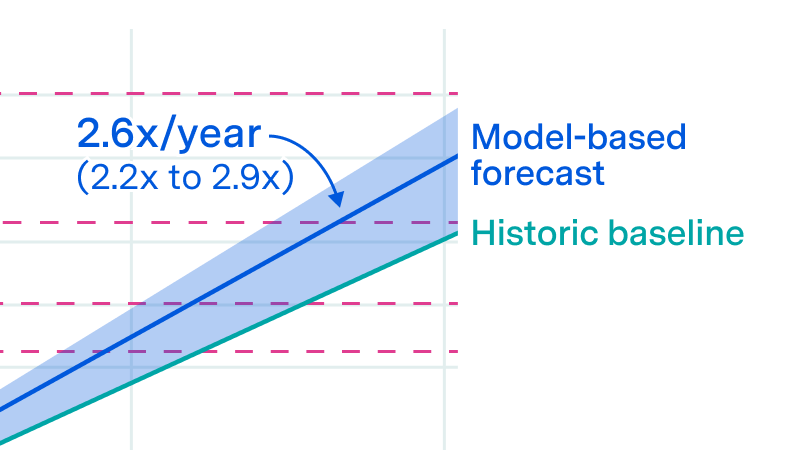
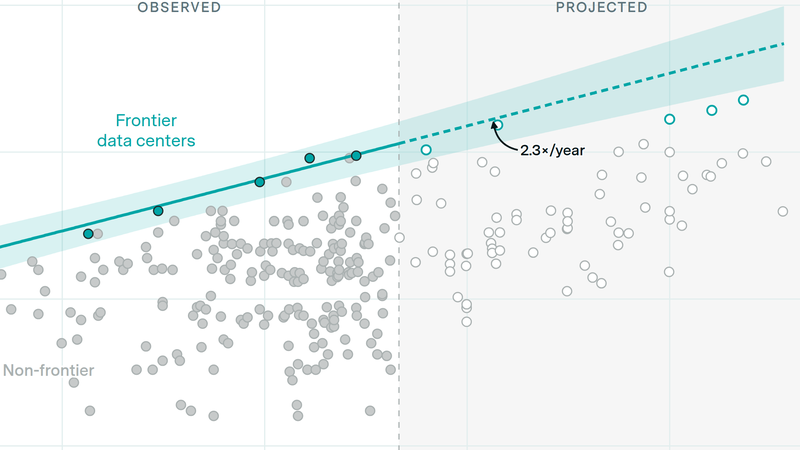
In April 2025, Epoch AI published a study of AI supercomputers by Konstantin F. Pilz, Robi Rahman, James Sanders and Lennart Heim. AI supercomputers are the large GPU clusters frontier models are trained on, and the study is built from a dataset of more than 500 of them from 2019 to 2025. Their main finding is that the computational performance of leading systems doubled every nine months, or 2.5x a year. That growth came from two sources at once: the number of chips in a leading system rose about 1.6x a year, and performance per chip also improved about 1.6x a year. Systems with more than 10,000 chips were rare in 2019, but by 2024 several companies had built machines more than ten times that size, including xAI's Colossus with 200,000 chips.
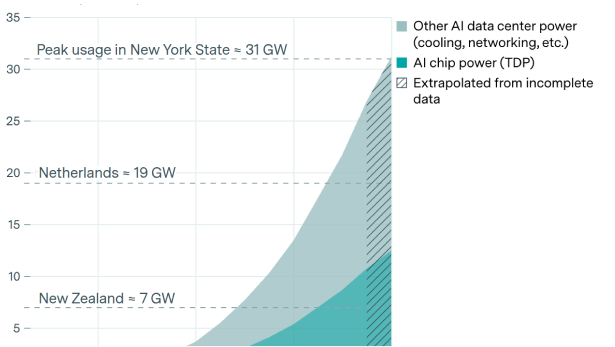
Cost and power grew more slowly than performance but still roughly doubled every year, at 1.9x and 2.0x respectively. The authors estimate that Colossus, the most powerful system as of March 2025, cost about $7 billion in hardware and drew around 300 megawatts, as much as 250,000 households. Chips grew more efficient, with performance per watt up 1.34x a year, but not nearly fast enough to offset the growth in scale. If the trends continue, the paper projects that the leading AI supercomputer in June 2030 would need 2 million chips, cost $200 billion and draw 9 GW. The authors think chip production and capital commitments such as the $500 billion Project Stargate could cover the first two. They describe 9 GW, the equivalent of nine nuclear reactors, as beyond any existing industrial facility, and suggest companies may turn to training runs spread across several sites.
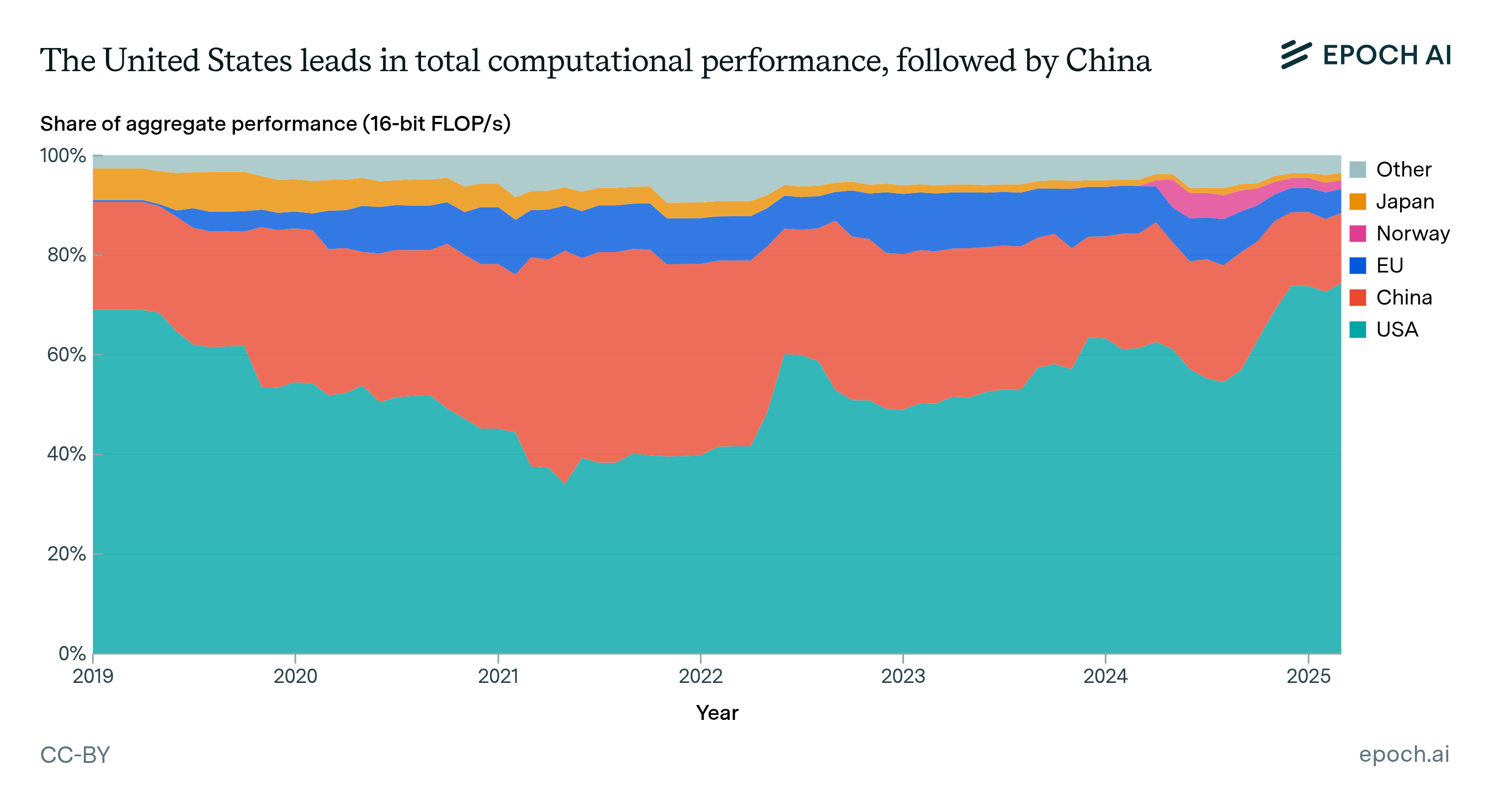
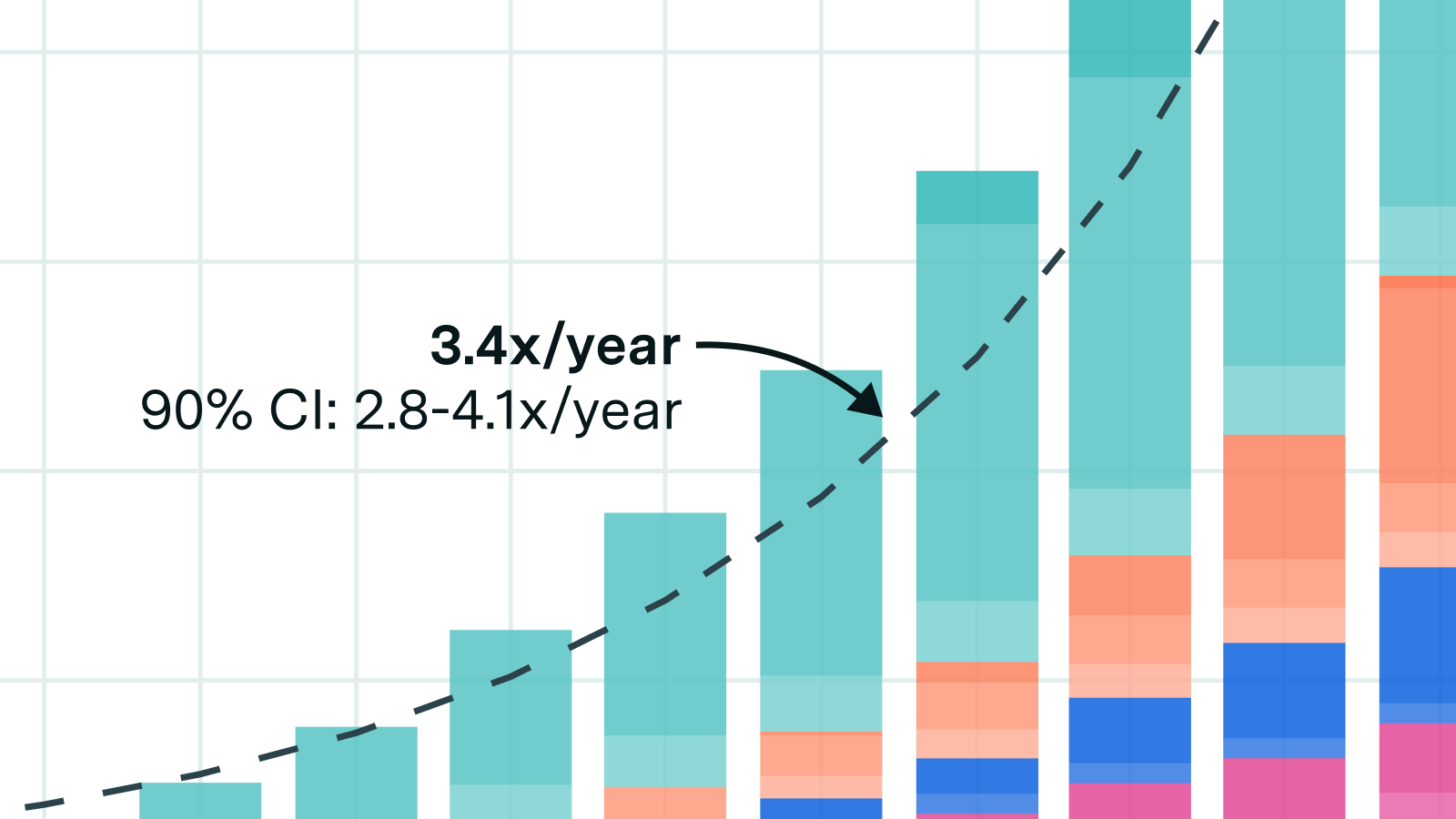
The study also tracks who owns this compute. Industry's share of AI supercomputer performance in the dataset rose from about 40% in 2019 to 80% in 2025, as leading company systems grew 2.7x a year against 1.9x for public-sector ones. The United States hosted about three-quarters of the performance and China about 15%, with traditional supercomputing countries like the UK, Germany and Japan now marginal. The authors note that location does not settle who uses the compute, since many systems are rented out through cloud services.
These are early-2025 figures and should be read as a trend estimate, not a census. Epoch says the dataset covers an estimated 10 to 20 percent of global AI supercomputer performance as of March 2025, with uneven public reporting across companies and sectors, though the authors believe the overall distribution is broadly representative. The 2030 numbers are an extrapolation that holds only if the 2019 to 2025 growth rates continue. The full analysis is in the accompanying paper.
Checking sign-in…
Loading comments…