We’ve updated the six Artificial Analysis Capability Indexes to v2.0, aligning…
- Source
- x.com
- Date
Artificial Analysis updated its six Capability Indexes, which map model performance onto occupations such as finance, legal and engineering, to version 2.0. The change aligns them with Intelligence Index v5.0, the overhaul we covered on October 28, which moved most of its test sets private. The domain indexes now put more weight on non-hallucination and on agentic tool use, and they swap in HLE-Diamond and AA-Omniscience v1.1 as components. The reweighting matters because these indexes are the figures people cite when choosing a model for a specific profession rather than for general use. Under the new weights, a model that is fluent but makes things up scores lower than before. Artificial Analysis reports Claude Opus 5.5 leading all six indexes after the update. Scores from the earlier versions use different weights and components, so a ranking taken from a v1 index does not carry over to v2.0.

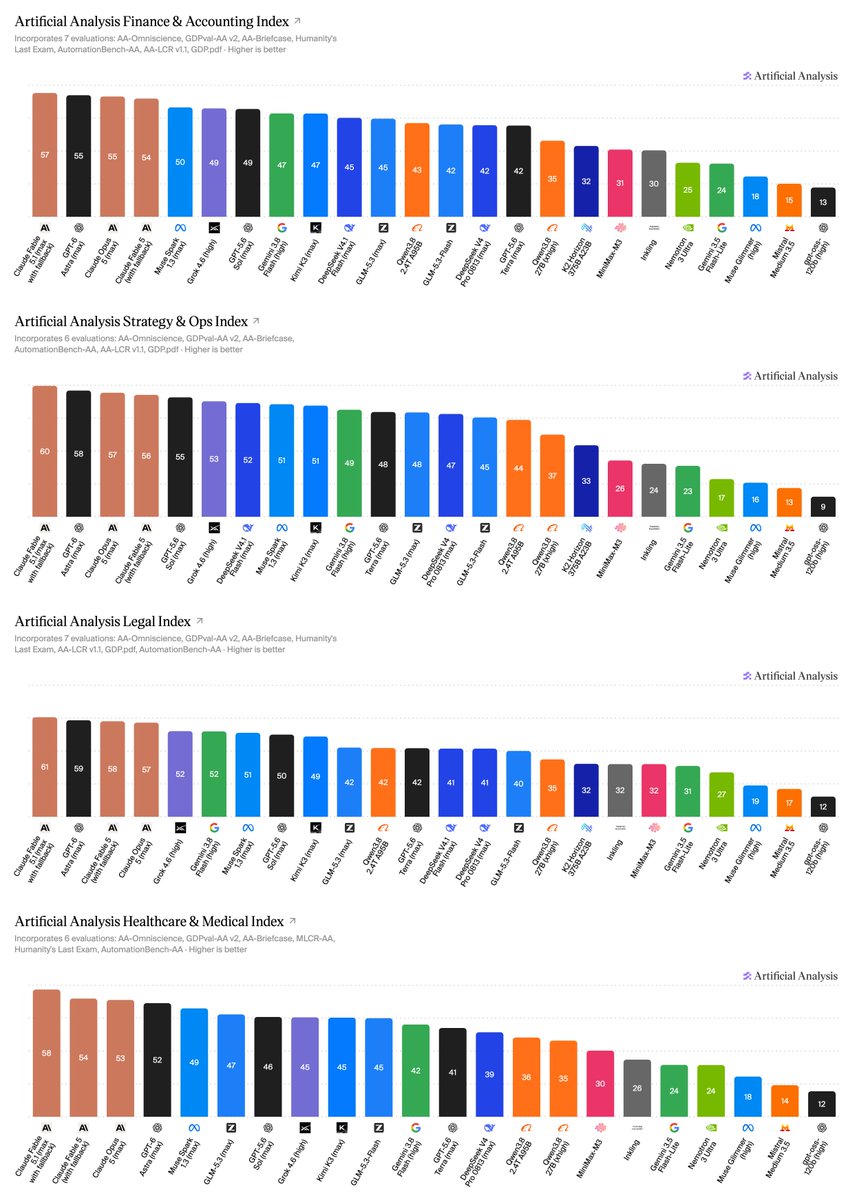
We’ve updated the six Artificial Analysis Capability Indexes to v2.0, aligning them with evaluations from the Artificial Analysis Intelligence Index v5.0 and placing greater emphasis on Non-Hallucination and Agentic Tool Use The Capability Indexes map tasks from O*NET occupations to benchmarks that represent them, weighting each benchmark by how often its capability appears in that occupation. There are six indexes: Finance & Accounting, Strategy & Ops, Legal, Healthcare & Medical, Engineering, and Economics. Key changes: ➤ Finance & Accounting: increased weight on Non-Hallucination, upgraded HLE to HLE-Diamond and AA-Omniscience to v1.1, removed GDPval-AA from Agentic Knowledge Work, and removed AA-LCR from Long-Context ➤ Strategy & Ops: increased weight on Agentic Tool Use, added Non-Hallucination and upgraded AA-Omniscience to v1.1, removed GDPval-AA from Agentic Knowledge Work, and removed AA-LCR from Long-Context ➤ Legal: increased weight on Non-Hallucination, upgraded HLE to HLE-Diamond and AA-Omniscience to v1.1, removed GDPval-AA from Agentic Knowledge Work, and removed AA-LCR from Long-Context ➤ Healthcare & Medical: increased weight on Agentic Tool Use, upgraded…

Context
Artificial Analysis's Capability Indexes ask a narrower question than its general Intelligence Index: how well a model fits the work of particular occupations. Each of the six indexes (Finance & Accounting, Strategy & Ops, Legal, Healthcare & Medical, Engineering, and Economics) maps tasks from occupations in O*NET, the US government's database of jobs and their tasks, to benchmarks that represent them, and weights each by how often its capability appears in that occupation (announcement).
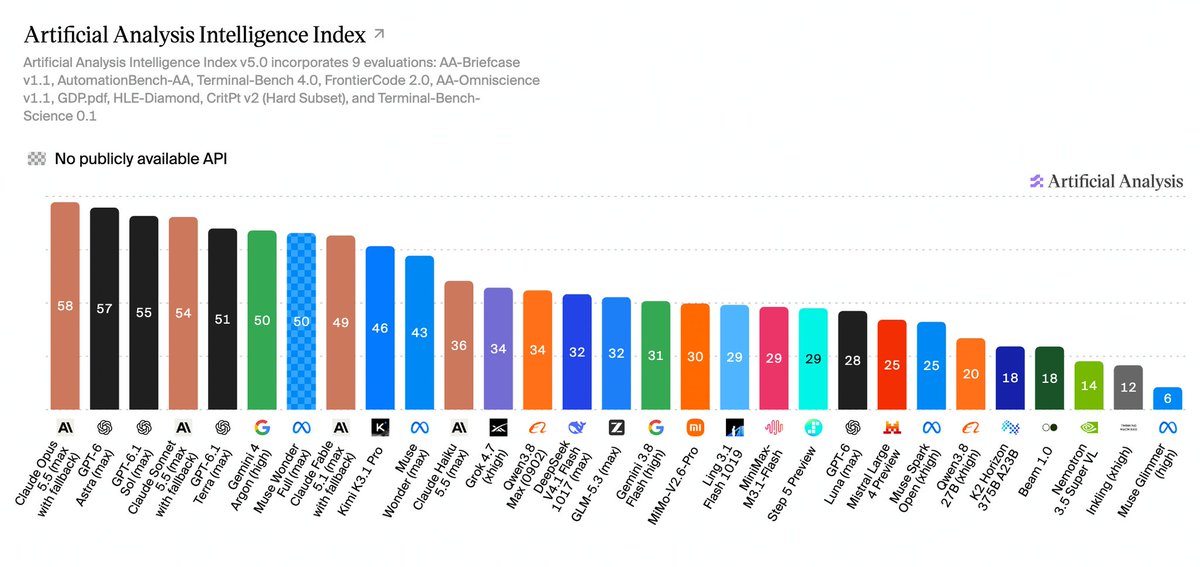
Version 2.0 changes what those indexes reward. They now draw on the evaluations in Intelligence Index v5.0 and put more weight on Non-, which rewards a model for not making up answers, and on Agentic . Finance & Accounting and Legal raise the weight on Non-Hallucination; Strategy & Ops and Healthcare & Medical raise Agentic Tool Use, and Strategy & Ops also adds Non-Hallucination. Every index drops GDPval-AA from its agentic knowledge work component and moves to AA-Omniscience v1.1, and five of the six replace HLE with HLE-Diamond. Engineering adds a science capability built from CritPt v2 (Hard Subset) and Terminal-Bench-Science 0.1, plus FrontierCode 2.0 for agentic coding, and Economics replaces AA-LCR with GDP.pdf for long- reasoning. Because the benchmarks and weights changed, a v2.0 score is a different measurement from one under the previous version, v1.1, and the two should not be compared directly.
Under the new weighting, Anthropic's Claude Opus 5.5 at max effort leads all six indexes, and OpenAI's GPT-6 Astra at max effort is next in Finance & Accounting, Legal and Engineering. Among open-weights models, Moonshot AI's Kimi K3.1 Pro leads all six, ranked fifth to eighth overall, although Artificial Analysis notes its weights have not yet been released. The post's text gives rankings but no scores.
- benchmark — A standard public test set for comparing AI models — the shared scoreboards behind every "model X beats model Y" claim.
- hallucination — When a model states something false with full confidence — inventing facts, citations, or APIs that don't exist.
- tool use — A model's ability to call external functions — run code, search the web, edit files — instead of only generating text.
- context window — The maximum amount of text a model can consider at once — its working memory for the current conversation or task.
Checking sign-in…
Loading comments…