Announcing AA-AnalystAgent, our new agentic benchmark for quantitative analysis…
- Source
- Artificial Analysis
- Date

Announcing AA-AnalystAgent, our new agentic benchmark for quantitative analysis on real-world spreadsheets & documents. Claude Opus 5 leads at 54%, followed by GPT-5.5 at 50% and Claude Fable 5 at 49% In real analyst roles, professional judgment and expertise are as important raw quantitative capabilities. AA-AnalystAgent tests this and requires models to interpret sources, decide which exceptions and caveats apply, and settle on a methodology to successfully complete a task. Because handing analyst tasks to agents requires not just correct answers but consistent ones, AA-AnalystAgent runs each task five times and reports pass^5 as its headline metric (we call this ‘pass-all-5’). pass^5 means models must get a task correct every time it tries across five independent attempts to pass. AA-AnalystAgent overview: 🔢 80 questions across 14 business and scientific domains, including healthcare expenditure reports, trade and commodity statistics, hydrology and weather data, government appropriations, energy cost models, financial models, environmental reporting, and project schedules 🧠 Five workflow buckets from across real analyst work: source lookup and diagnosis, filter and…

- benchmark — A standard public test set for comparing AI models — the shared scoreboards behind every "model X beats model Y" claim.
- AI agent — An AI system that doesn't just answer once but works toward a goal in a loop — taking actions, reading the results, and deciding what to do next.
- agent harness — The scaffolding around a model that turns it into a working agent — the loop, the tools it can call, and the rules for when to stop.
It measures reliability across repeated attempts rather than a single lucky pass, which is the property that decides whether an agent removes work or adds verification. The is open source, so the setup is reproducible.
“In real analyst roles, professional judgment and expertise are as important raw quantitative capabilities. AA-AnalystAgent tests this and requires models to interpret sources, decide which exceptions and caveats apply, and settle on a methodology to successfully complete a task.”
ArtificialAnlys
“Because handing analyst tasks to agents requires not just correct answers but consistent ones, AA-AnalystAgent runs each task five times and reports pass^5 as its headline metric (we call this ‘pass-all-5’). pass^5 means models must get a task correct every time it tries across five independent attempts to pass.”
ArtificialAnlys
“Reliability separates the top of the leaderboard more than raw capability: GPT-5.5 (xhigh) has the highest pass@1, but Opus 5 leads on pass^5 because it repeats what it gets right.”
ArtificialAnlys
“Committing early to a wrong interpretation is the most widespread way models fail, appearing in 57% of the failures we classified.”
ArtificialAnlys
“The price of a given score varies enormously: Claude Sonnet 4.6 and @Xiaomi's MiMo-V2.5-Pro both score 20%, at $1.34 and $0.05 per task.”
ArtificialAnlys
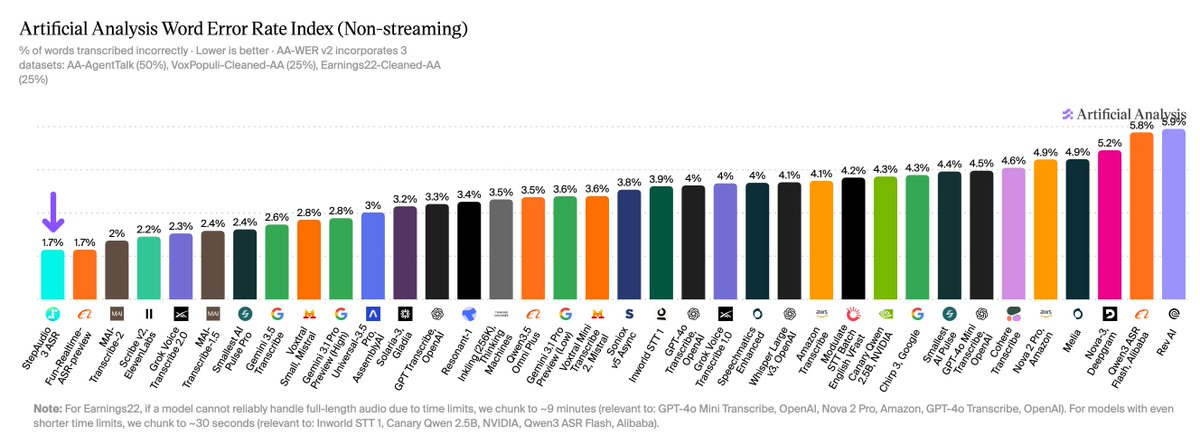
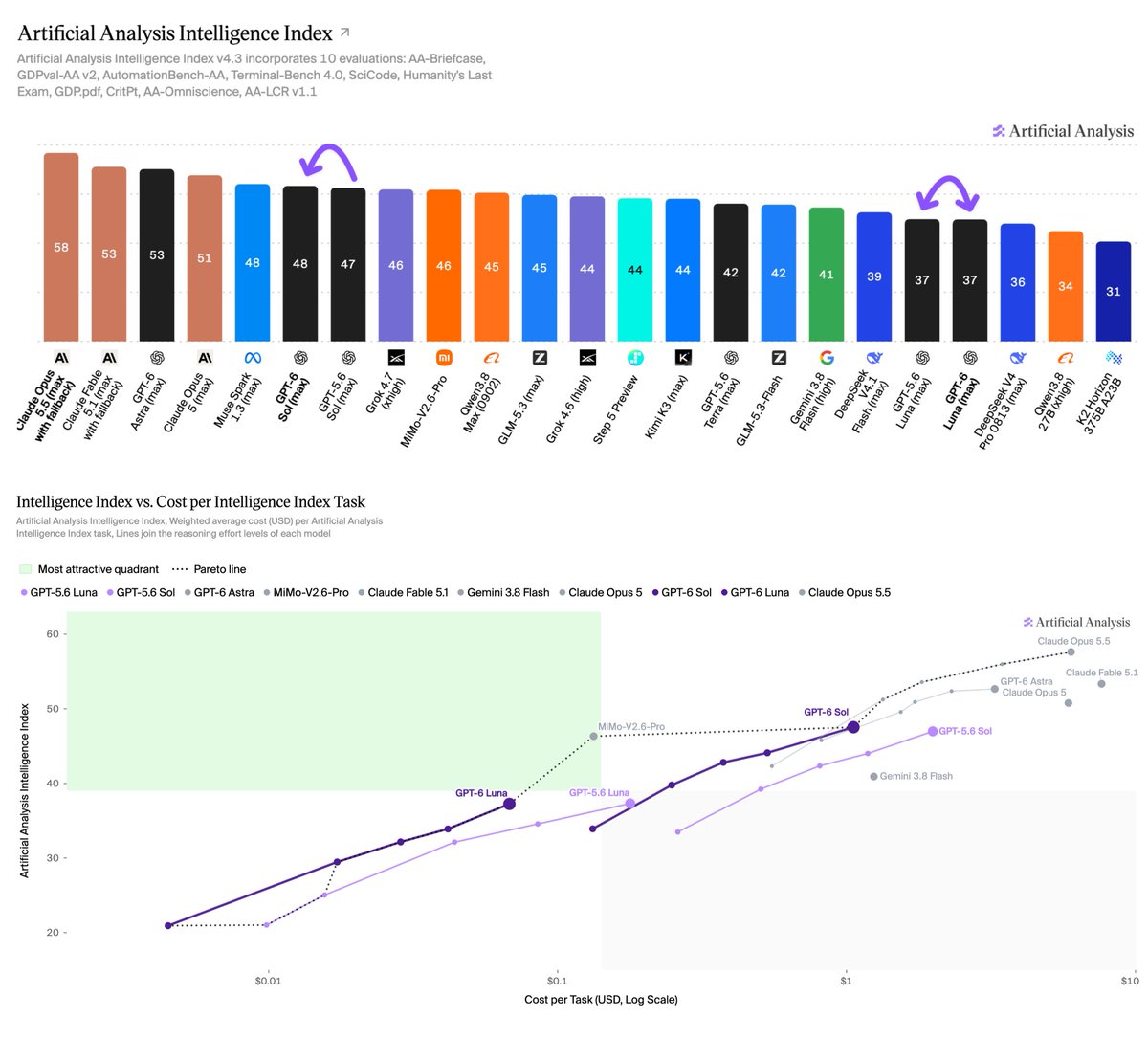
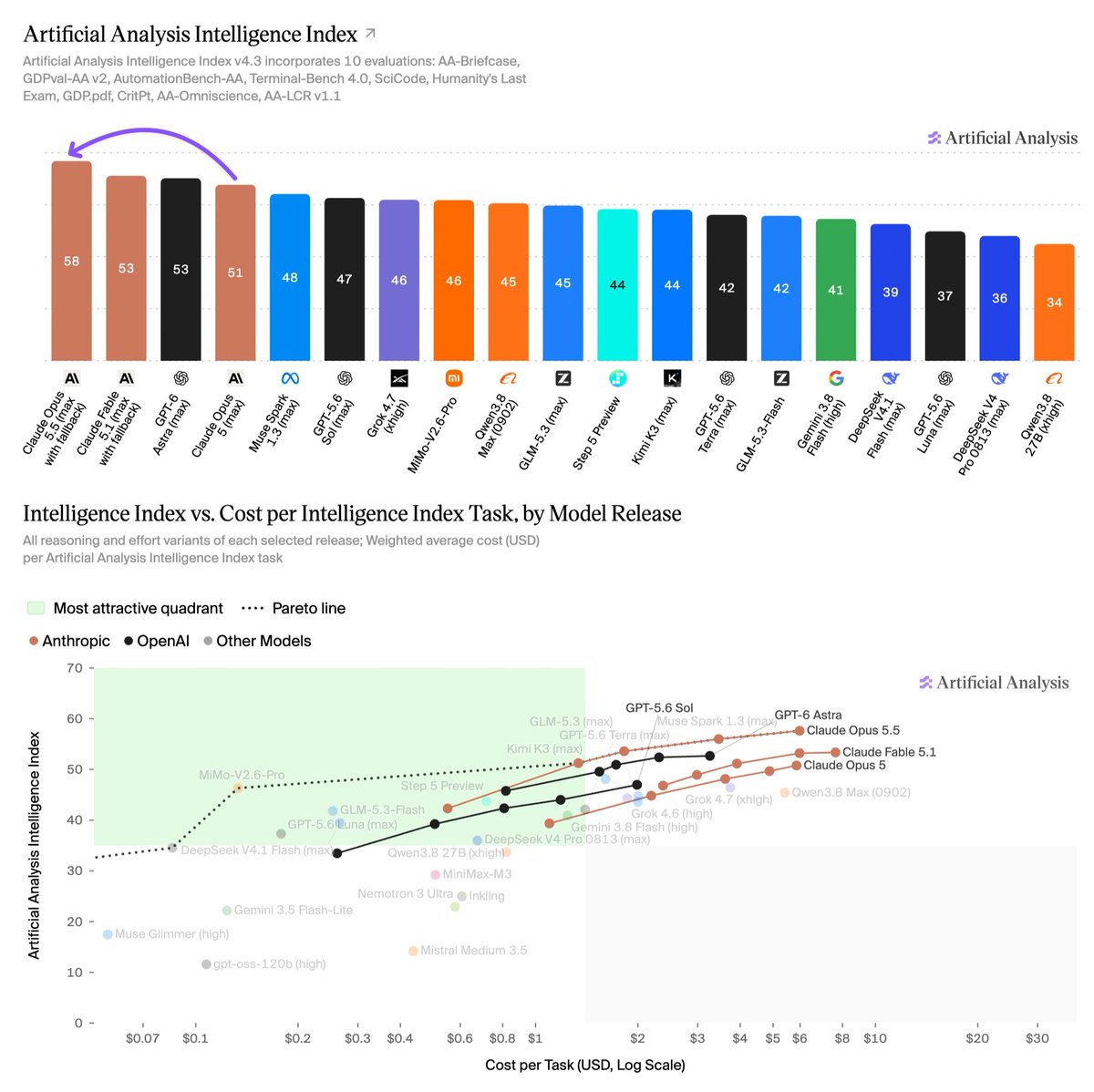 postArtificial Analysis: Opus 5.5 Tops Intelligence Index With Price CutArtificialAnlys
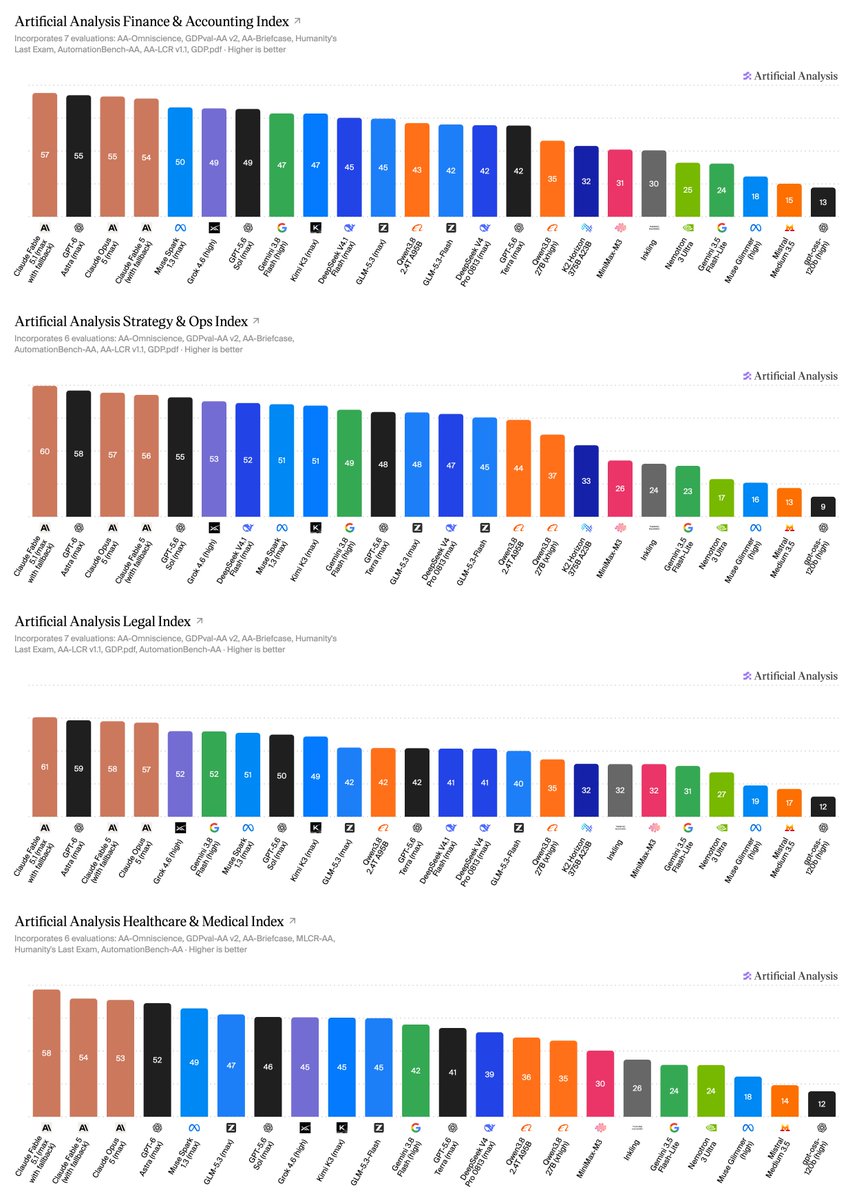 postAnnouncing Artificial Analysis Capability Indices v1.1, updated with stronger domain tuning, combining slices of core InArtificialAnlys
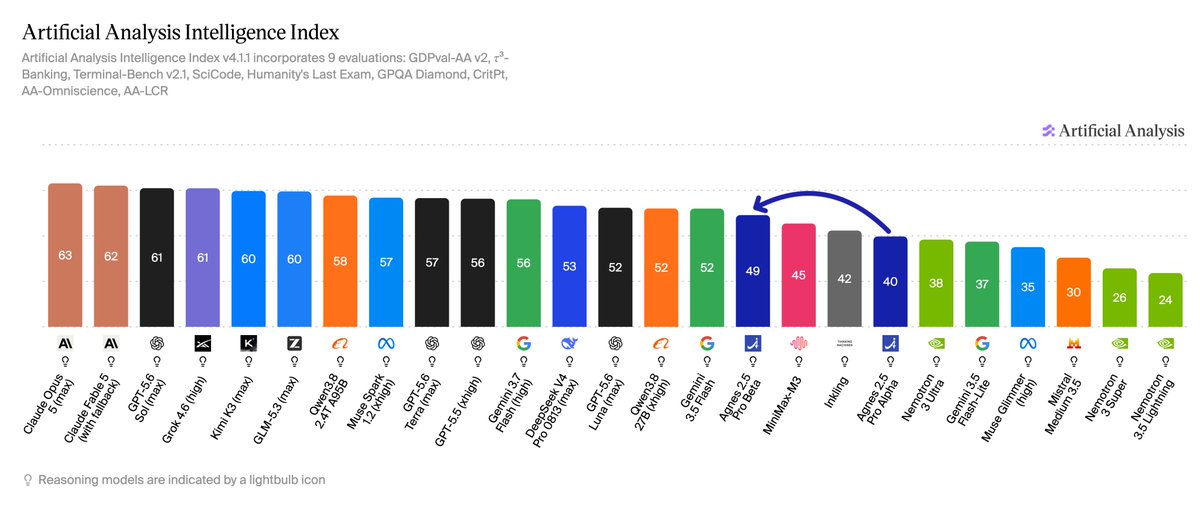 postAgnes AI's Agnes 2.5 Pro Beta scores 49 on the Artificial Analysis Intelligence…Artificial Analysis
Checking sign-in…
Loading comments…