FLUX 3: Black Forest Labs' Unified Multimodal Flow Model
- Source
- latent.space
- Author
- Latent Space
- Date
Context
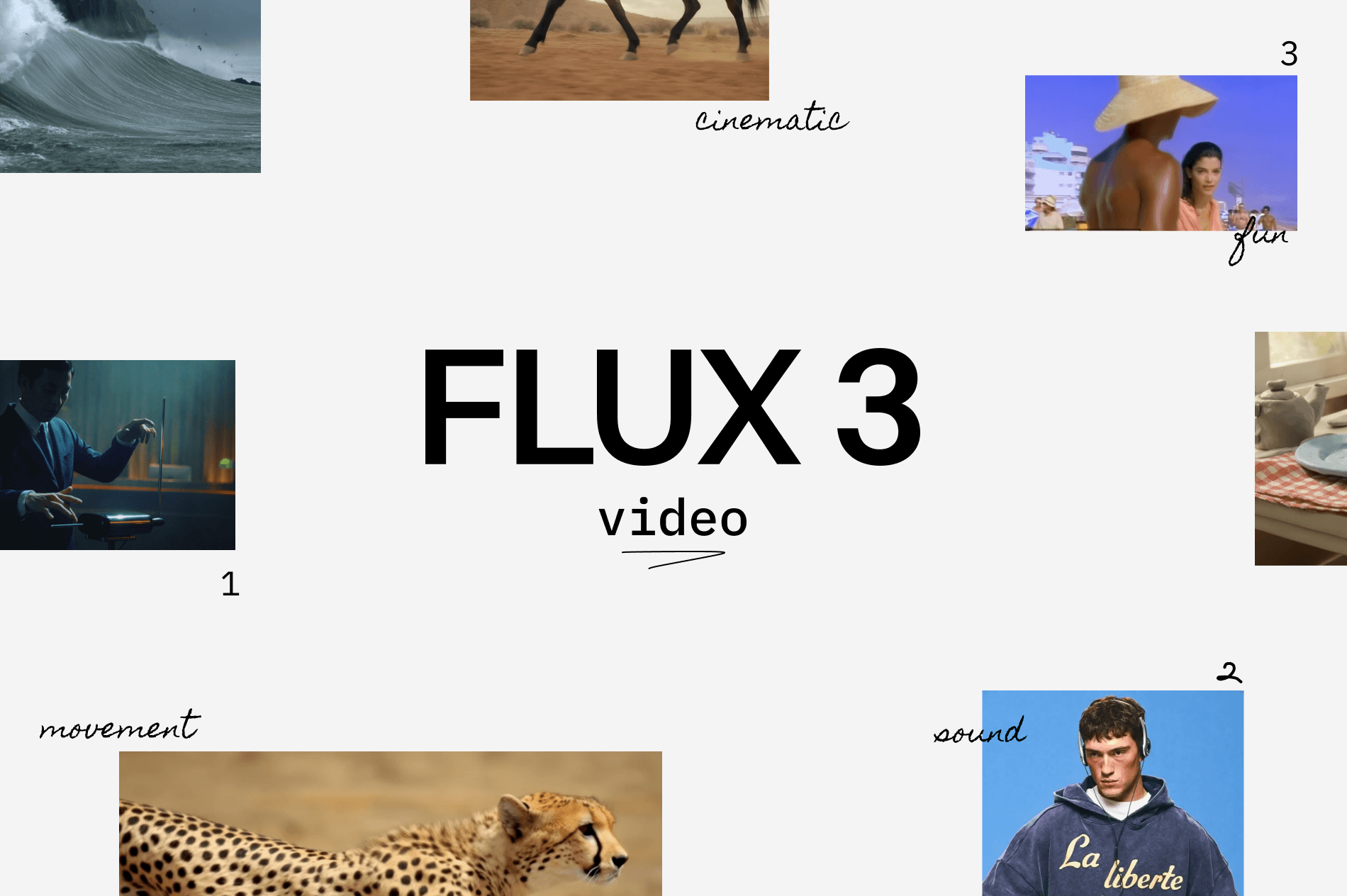
Black Forest Labs designed FLUX 3 to learn from images, video and audio in one architecture. Its July 23, 2026 launch account describes generating video together with sound, using text or visual references as inputs. The intended connection is that movement, appearance and sound provide complementary information about the same event.
For creators, that supports requests in which a clip's visual action and audio are generated together, including continuation from existing video and sound. The launch opened early access for video; early access for image and Dev access were still planned. The account establishes a shared generation approach and staged rollout, while its claims about broader physical understanding remain a research direction.
- The Stack v3 is 114TB of raw code from 224M repos, filtered down to ~5T tokens versus ~550B in v2. C++ grew 15x, TypeScript 7.5x, Rust 7x. It ships file contents inline instead of Software Heritage IDs, so no resolution step before training.
- FLUX-mimic puts the FLUX 3 video backbone on robot and wearable data to predict actions, and runs on a single on-prem GPU. The claim under it: a model that predicts video well has already learned enough world model to control a hand.
- PRO-LONG keeps an 's full structured interaction history and queries it like a database instead of compressing it into a memory blob. On ARC-AGI-3 it beat purpose-built long-horizon memory harnesses while spending fewer tokens.
- Offloop's D1 is a small dispatcher model whose only job is choosing which agent speaks next — or that none should. It attacks the standard failure where several agents redo each other's work and burn tokens doing it.
- The argument is about framing: some compare probing a rival model through prompting to reverse-engineering a competitor's product, others point to distillation's long research lineage. The practical answer offered is funding open-weight models, not bans.
- open weights — A model whose trained parameters are published for anyone to download and run — unlike API-only models you can access but never possess.
- AI agent — An AI system that doesn't just answer once but works toward a goal in a loop — taking actions, reading the results, and deciding what to do next.
- multi-agent — Using several AI agents on one problem — splitting work in parallel, checking each other, or filling different roles like planner and reviewer.
- distillation — Training a small, cheap model to imitate a big one's outputs, keeping much of the capability at a fraction of the cost.
“larger scale undoubtedly produces better results.”
Liang Wenfeng
“Fable looks at C code and hard NOs it every time”


Checking sign-in…
Loading comments…