Muse Spark 1.2 evals cover code, robotics and chart reasoning
- Source
- x.com
- Date

Muse Spark 1.2 supports a broad range of multimodal tasks, from turning visuals into working code to translating perception into physical action. It also brings robust audio-visual understanding to enable video-heavy workflows common in real-world enterprise use. Today, we’re sharing new evals and demos that illustrate the breadth of the model’s visual understanding and reasoning capabilities. Let’s start with a demo that shows how Muse Spark parses multimodal observations and calls tools to guide a robot to navigate in an unstructured environment to find a rubber duck. 🧵👇

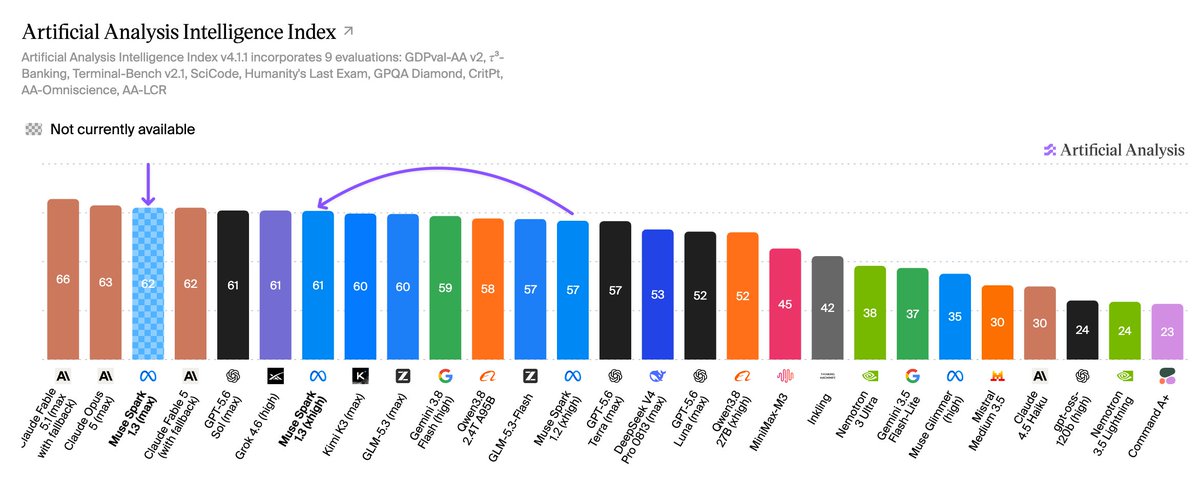
Now let’s take a look at how Muse Spark 1.2 performs across visual reasoning, chart understanding, and knowledge-intensive tasks.
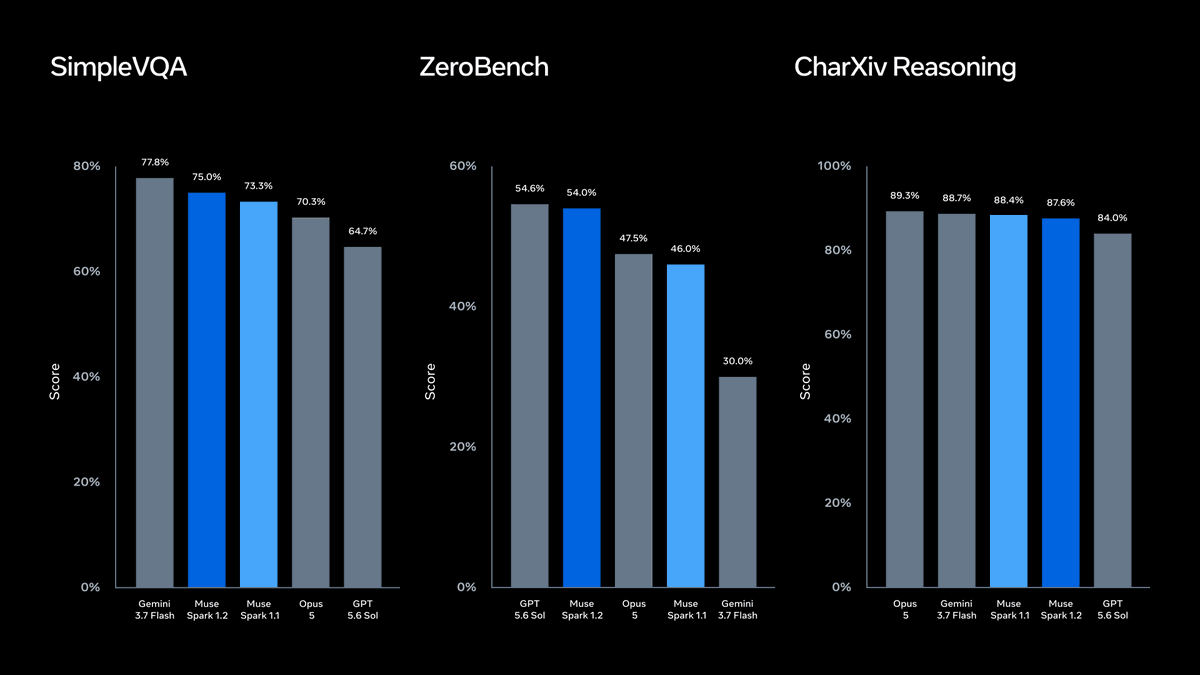
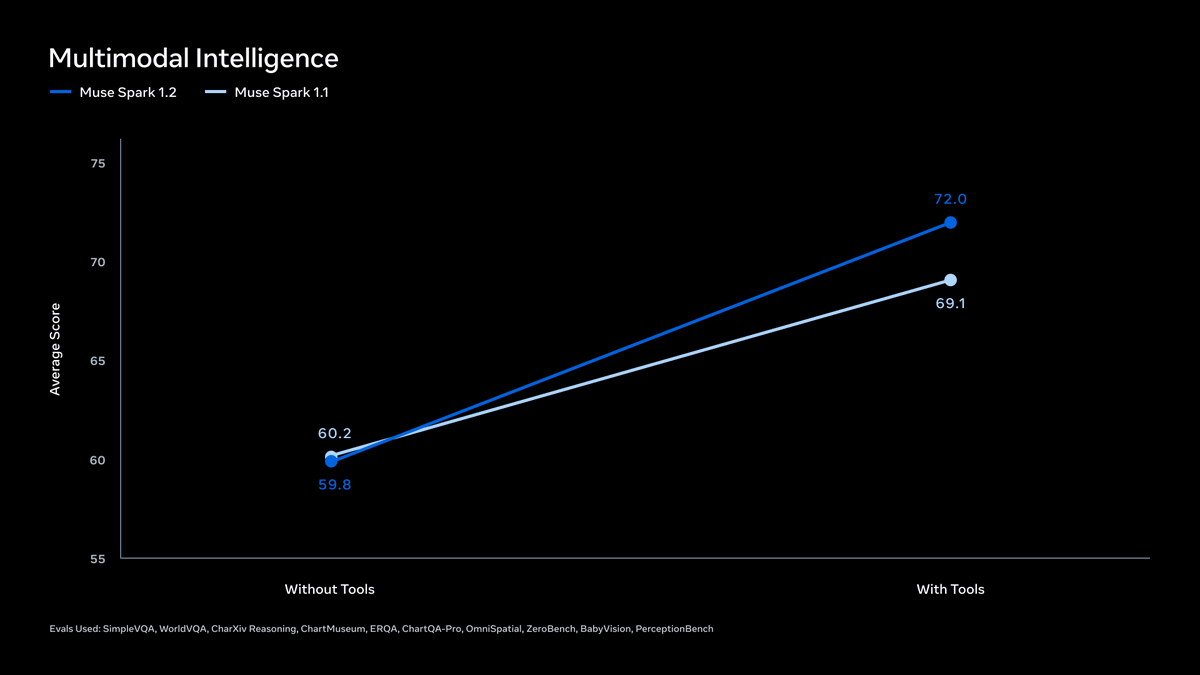
Muse Spark 1.2 reasons better with tool use. The model inspects visual inputs more closely and incorporates what it finds into its reasoning.
Muse Spark 1.2 generates digital artifacts like web pages and games directly from images or video. It translates visual layout, hierarchy, and style into working code, evaluating correctness based on actual rendering and behavior while using a continuous self-improvement loop to refine its outputs.

capability that reaches into and physical action changes what workloads are feasible.
- multimodal — A model that works with more than text — reading images, audio, or video, and sometimes generating them too.
- eval — A repeatable test for AI quality — a set of tasks plus scoring — used the way software teams use test suites, because model output is too variable to judge by eyeballing.
- tool use — A model's ability to call external functions — run code, search the web, edit files — instead of only generating text.
- AI agent — An AI system that doesn't just answer once but works toward a goal in a loop — taking actions, reading the results, and deciding what to do next.


Checking sign-in…
Loading comments…