We have updated the Artificial Analysis Text to Image Arena to expand the range…
- Source
- x.com
- Date

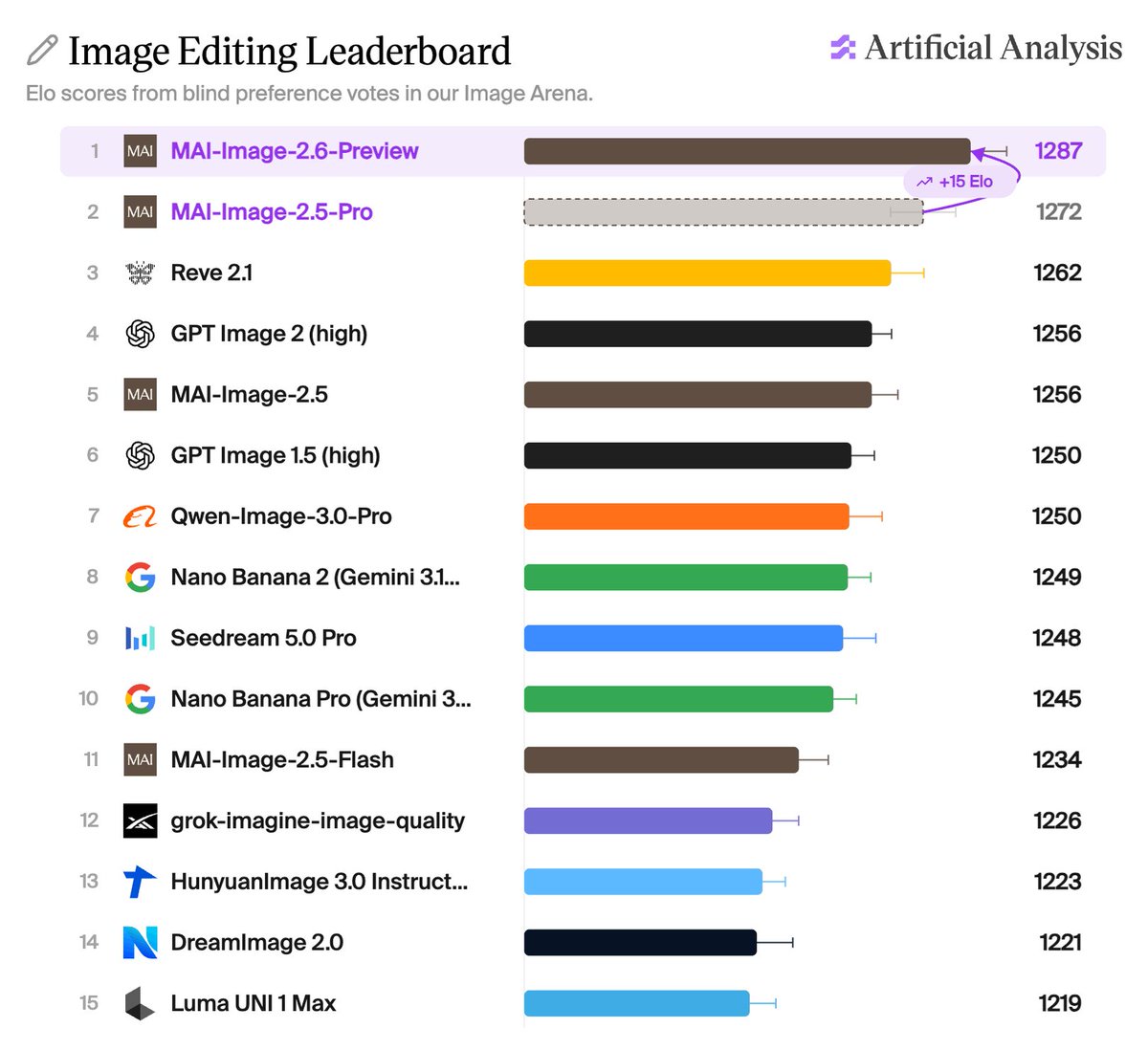
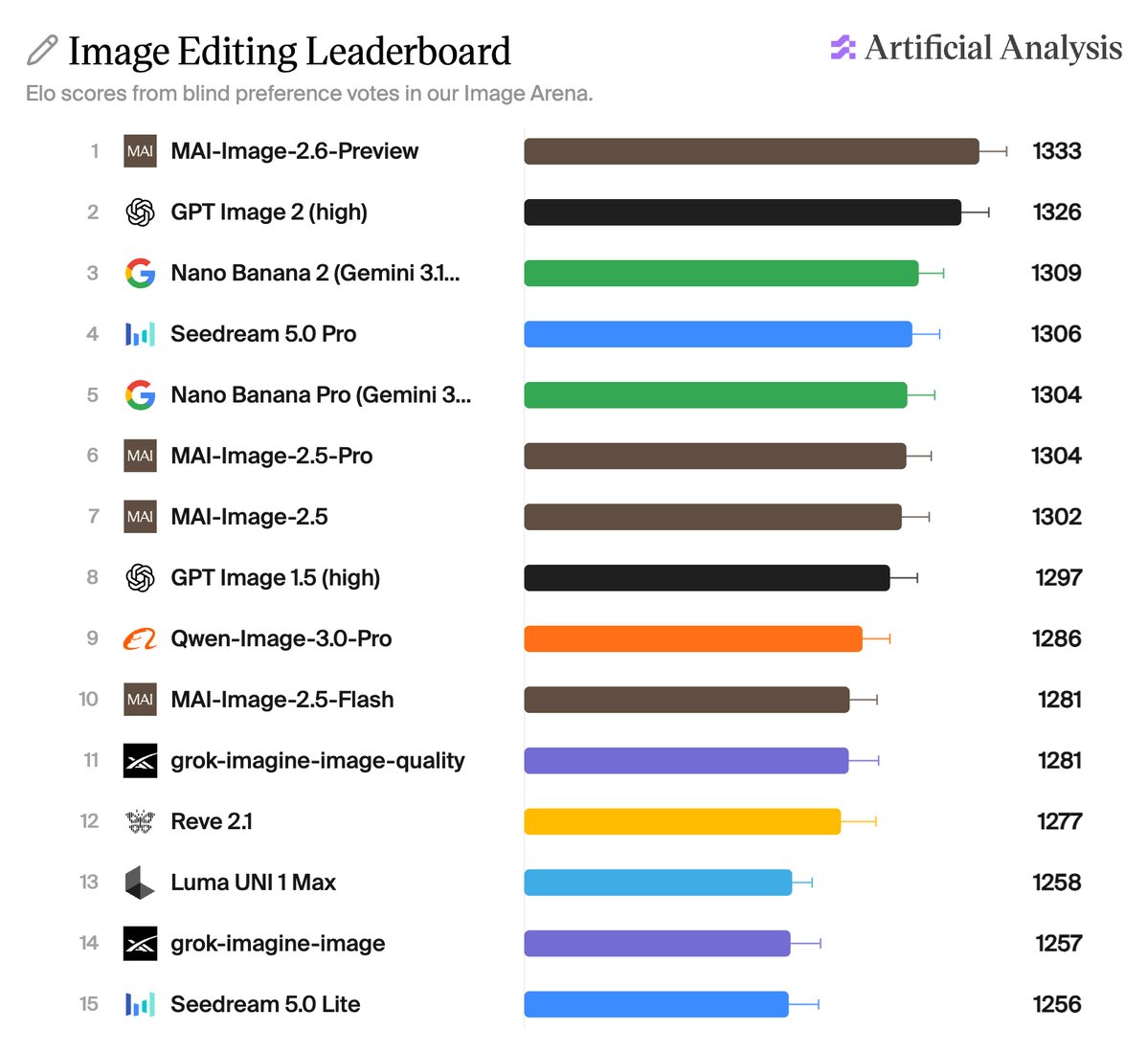
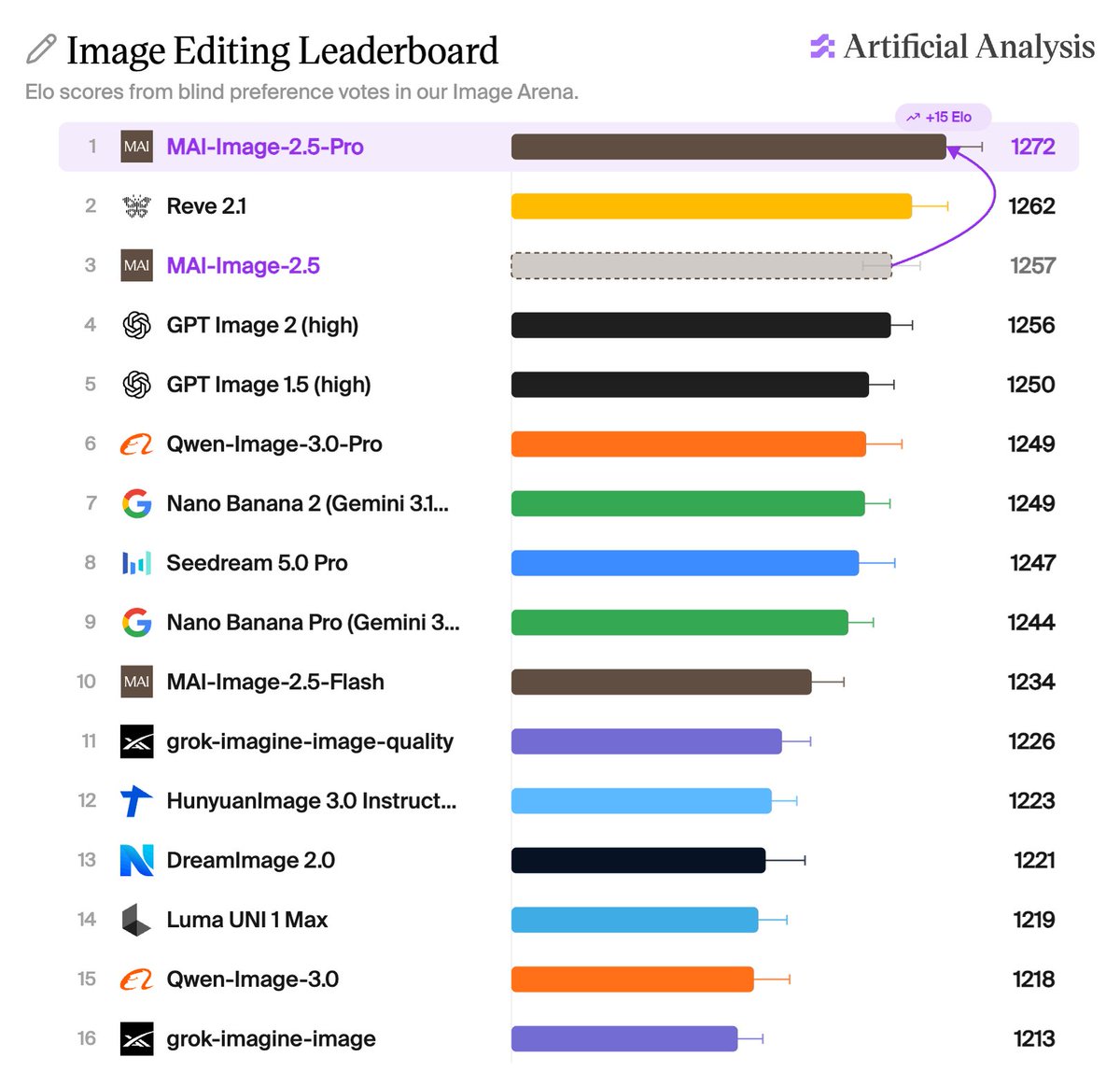
We have updated the Artificial Analysis Text to Image Arena to expand the range of use cases and capabilities we test for, from UI/UX Design to Live-Action Film, and from Physics to Text Rendering. Our updated evaluation measures not just which model is best overall, but which model is best for your specific work. The new leaderboard is live and voting is open. Text to image models have grown more capable over the past years, evolving from single-subject renders in narrow domains, to rich multi-element scenes adhering to fine-grained user control, to systems that render precise typography and interleaved text and graphic layouts. The model an agency uses for campaign creative is not necessarily the model a product manager uses for UI mockups, or a game studio for concept art. Choosing a model today means trading off quality across the specific work you do, and our refreshed methodology answers exactly that question. Our updated evaluation measures against a taxonomy of 10 real-world use cases, 9 model capabilities, and a wide range of styles and aesthetics. We test for use cases such as Marketing & Advertising, Retail & Ecommerce, Live-Action Film, Animation & Gaming,…

Context
Artificial Analysis expanded its image-generation to distinguish the kinds of work models are asked to do. Its methodology announcement describes ten use cases and nine capabilities, including interface design, film imagery, text rendering and layout. Someone choosing a model for readable graphics can therefore examine a more relevant category than an overall ranking alone.
The overall samples evenly across use cases and capabilities. Human curators select prompts from anonymized contributed material and refresh them monthly, retiring prompts that no longer distinguish models or reflect usage. The change makes the evaluation's coverage more explicit and gives buyers a way to investigate task-specific strengths.
- eval — A repeatable test for AI quality — a set of tasks plus scoring — used the way software teams use test suites, because model output is too variable to judge by eyeballing.
- benchmark — A standard public test set for comparing AI models — the shared scoreboards behind every "model X beats model Y" claim.
Checking sign-in…
Loading comments…