Deepgram's US endpoint goes GA as the default API turns global
- Source
- deepgram.com
- Author
- Deepgram
- Date
Context
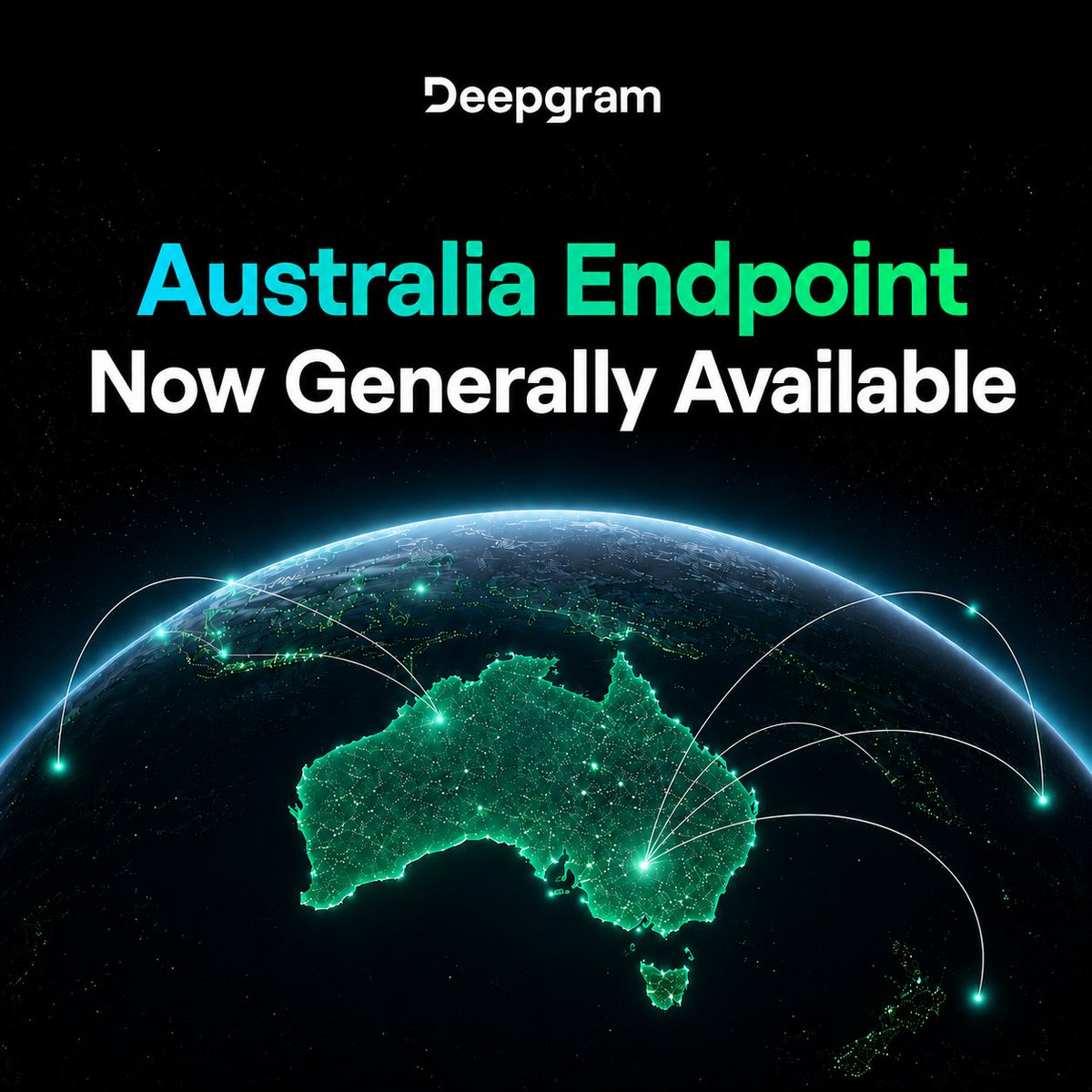
The more consequential part of Deepgram's announcement that its US endpoint is generally available concerns the address most customers already use. Deepgram, which sells speech-to-text, text-to-speech and voice-agent APIs, is turning its default endpoint, api.deepgram.com, into a global API. Today those requests are served from Deepgram's US data centers. Under global routing, connections will enter Deepgram's network at the nearest point of presence and be sent to fast, healthy capacity, which over time will include other regions. Because traffic can then be processed outside the United States, the default endpoint makes no promise. Deepgram tells customers who rely on api.deepgram.com to keep data in the US to move those workloads to the new endpoint, api.us.deepgram.com, by the end of January, before global routing begins.
The US endpoint commits to storage and inference for audio, transcripts and speech output in the United States, for speech-to-text, text-to-speech and voice agents. Switching means changing the base URL. API keys, SDKs and pricing stay the same. The commitment has a stated edge. By default, Deepgram retains requests to improve its models, and that work can happen outside the region. Turning on zero data retention, with the mip_opt_out=true setting, keeps all processing in the US. Deepgram's earlier India endpoint announcement said the same opt-out extended residency to all processing and kept content out of model training, but did not state outright that the training work happened abroad; this post does. If the US region is unavailable, requests fail rather than being rerouted. Account and billing metadata is processed in the US for every endpoint. A that uses a third-party is subject to that provider's own residency and retention terms.
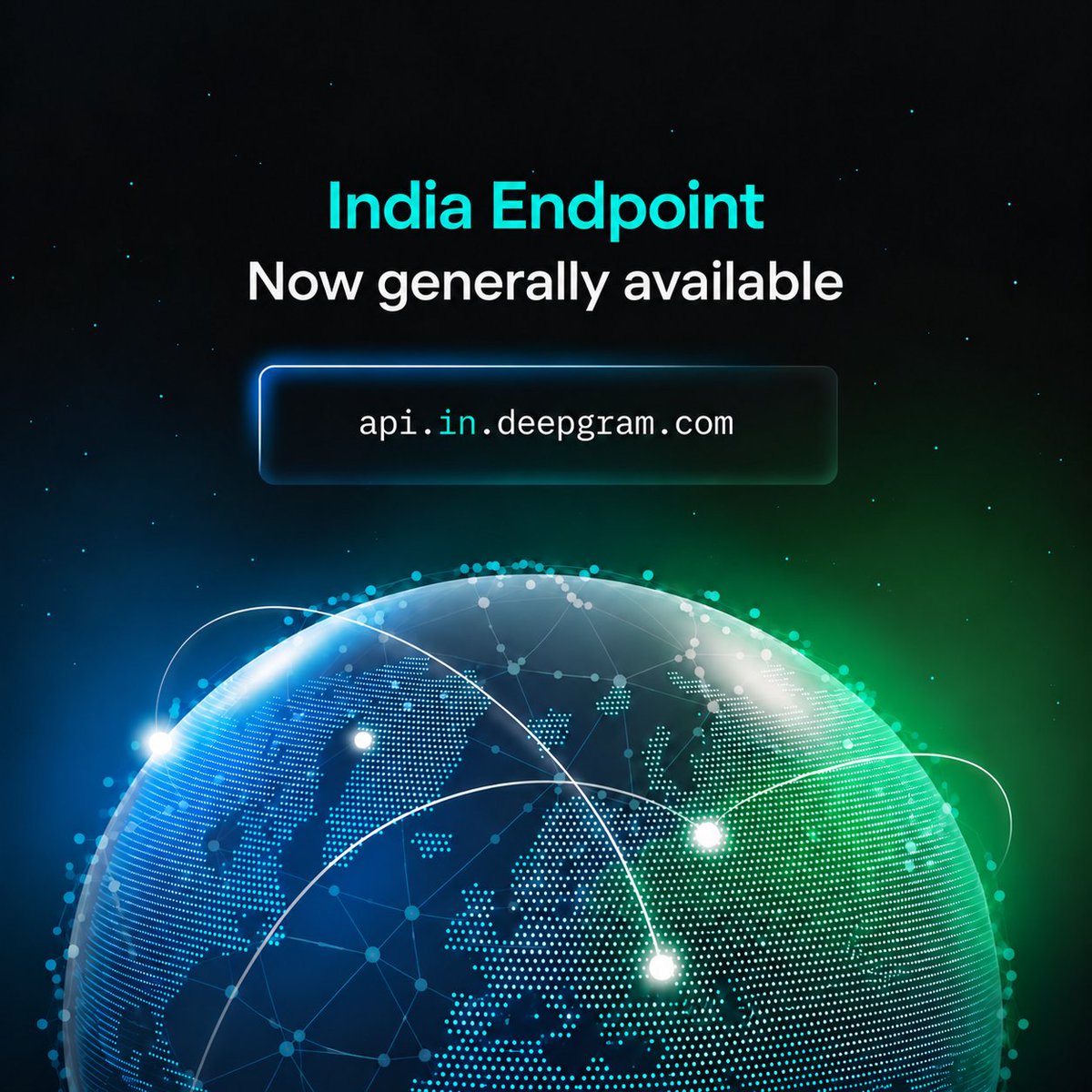
Deepgram's reasoning is that one endpoint cannot be both the fastest path for every user and a residency guarantee, so it now keeps the two on separate addresses. With the US addition, its regional endpoints cover the US, the EU, Australia and India, all running the same API. One application can send general traffic to the global endpoint and route only the workloads bound by residency rules to a region. Each regional endpoint has its own , and Deepgram asks customers to contact it before moving production traffic to one. Teams that need processing pinned to a specific country, or keys, logs and retention inside their own environment, are pointed to Deepgram's dedicated and self-hosted deployments.
- On the US endpoint, Deepgram by default retains requests to improve its models and that work can happen outside the region; only with zero data retention (mip_opt_out=true) does all processing stay in the United States.
- Regional endpoints do not fall back to other infrastructure: if the region is unavailable, requests fail instead of being routed elsewhere, which is the tradeoff Deepgram makes for the residency promise.
- Teams relying on api.deepgram.com to keep data in the US should move to api.us.deepgram.com by the end of January, since traffic on the coming global API can enter and be processed outside the US and it makes no residency promise.
- For voice agents that call a third-party LLM, that provider handles the request under its own residency and retention terms, and each regional endpoint has its own concurrency limits.
- data residency — A requirement that data be processed or stored within a specified country or geographic region.
- Realtime conversational agent — An agent that processes streaming audio or visual input while a session is live.
- Large language model — A model trained on large amounts of data to process and generate language.
- Agent rate limits — Controls that bound request volume and simultaneous work.

Checking sign-in…
Loading comments…