LLaDA2.2 mini released
- Source
- huggingface.co
- Author
- InclusionAI model releases
- Date
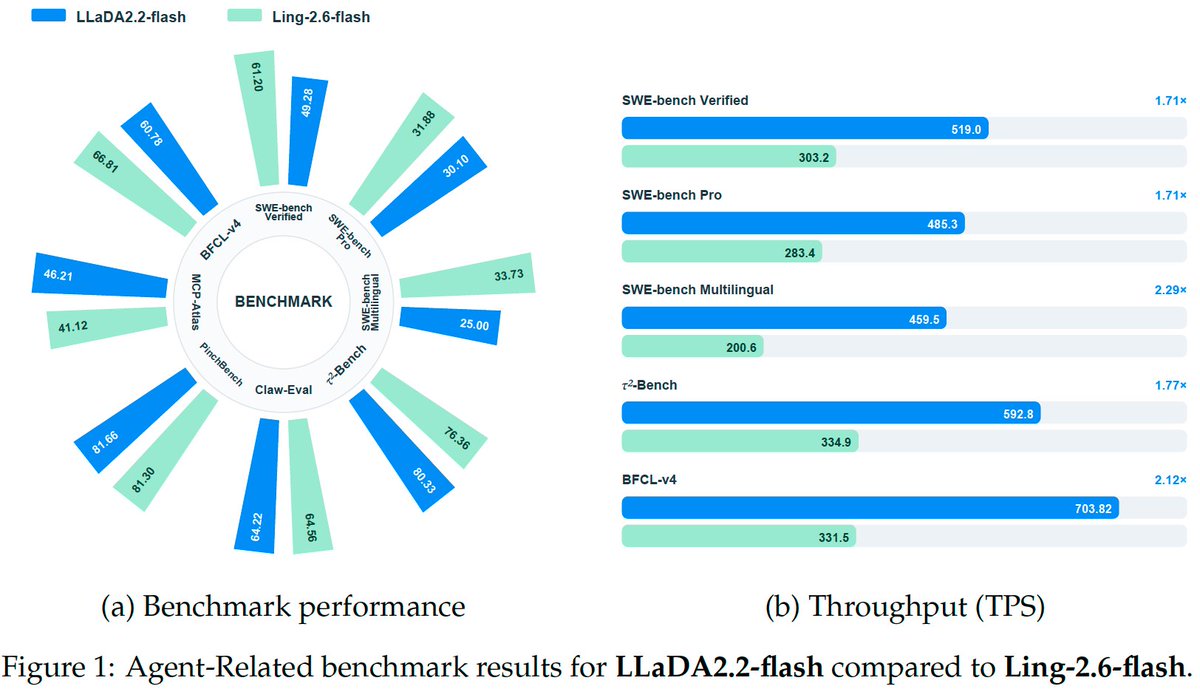
InclusionAI released LLaDA2.2-mini, a lightweight diffusion language model built around Levenshtein Editing, a scheme that lets the model insert and delete tokens mid-generation instead of only appending to the end of its output. That self-correcting mechanism is aimed squarely at long-context tool calling and multi-turn agent interaction, where a model that can only append text has no way to fix an earlier mistake without restarting the whole response. InclusionAI shipped the model with out-of-box serving support for both vLLM and SGLang, so teams can deploy it into existing agent infrastructure on day one rather than waiting on custom integration work. For anyone running multi-turn agents where small early errors compound, a model built to edit its own output mid-stream is worth testing against whatever append-only model currently sits in that pipeline.
Context
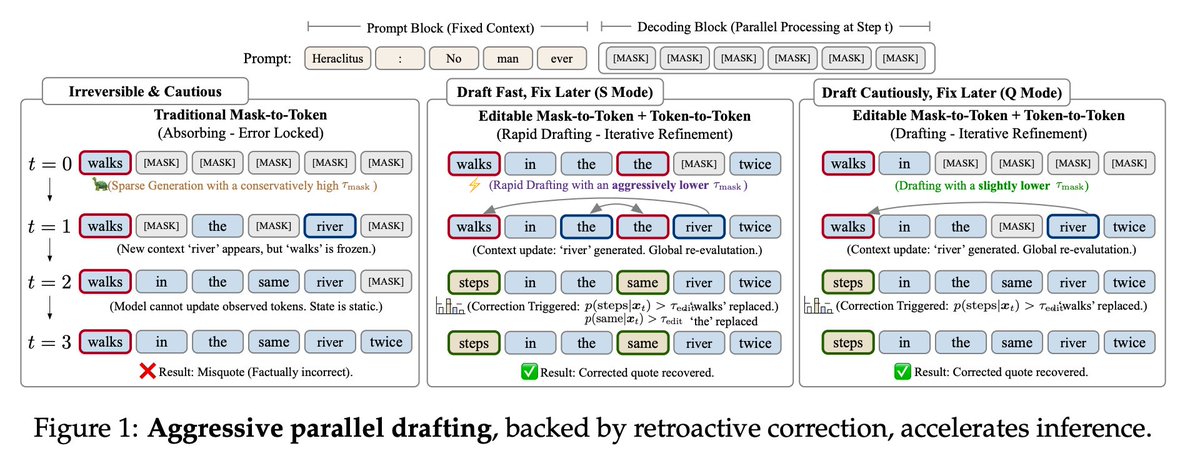
InclusionAI's LLaDA2.2-mini gives its text-generation process explicit ways to delete material and create insertion points. The model card calls this Levenshtein Editing: the model can change the structure of text while generating in parallel, including removing redundant content.
The design targets multi-turn work with tools, where later results can require revising an earlier attempt. The card describes training these editing behaviors with rewards from tasks and supports a of 128,000 tokens. Together, these features give the model a way to revise developing answers as a tool-driven task unfolds.
- AI agent — An AI system that doesn't just answer once but works toward a goal in a loop — taking actions, reading the results, and deciding what to do next.
- context window — The maximum amount of text a model can consider at once — its working memory for the current conversation or task.
- LLM — A large language model — the neural network behind tools like Claude and ChatGPT, trained on huge amounts of text to predict what comes next.
- tool use — A model's ability to call external functions — run code, search the web, edit files — instead of only generating text.
Checking sign-in…
Loading comments…