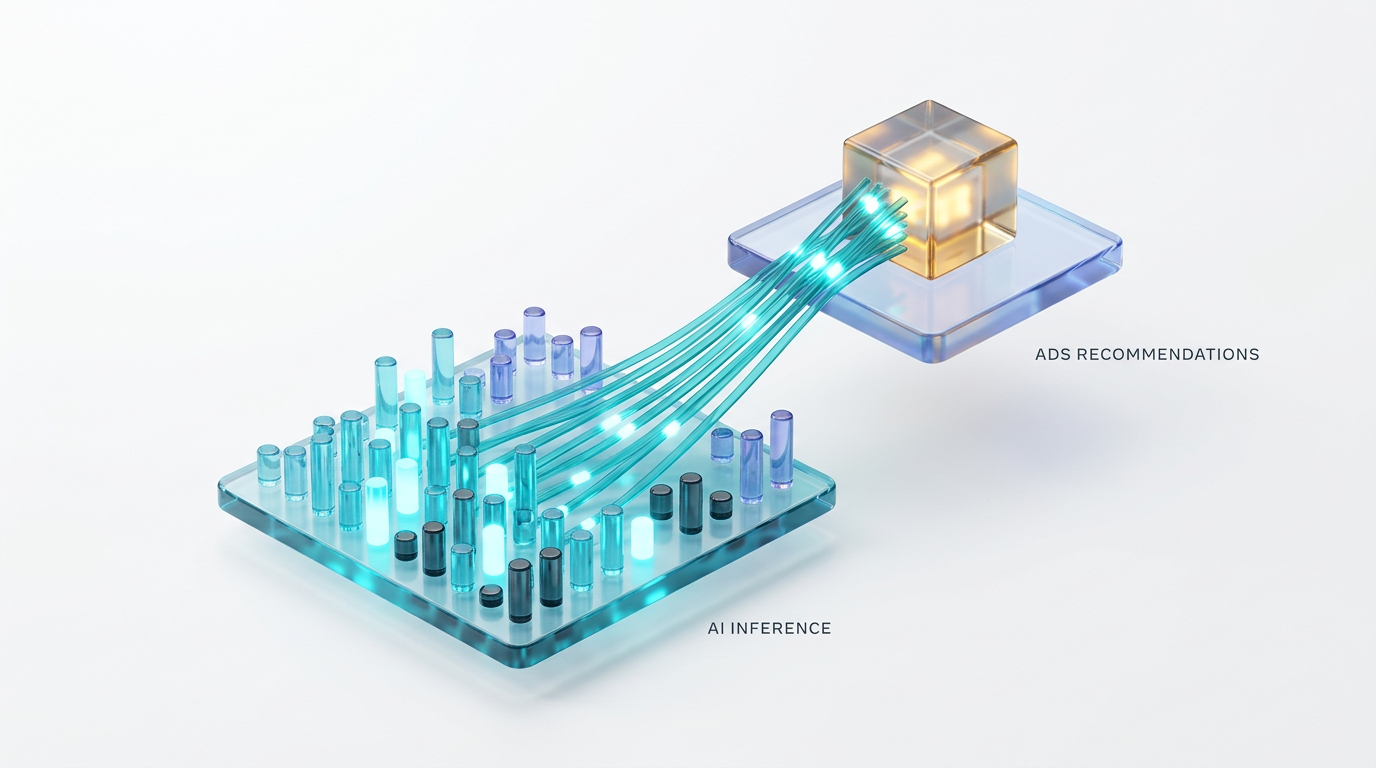
Meta's two-stage ads-ranking architecture processes long user histories before an ad-ranking request arrives. An offline ModelA computational system that uses learned patterns to produce an output from information supplied to it.Full definition → produces a cached numerical representation of a user's behavior, independently of any particular ad. A faster online model combines that representation with fresh user signals and information about the ads being considered, according to the architecture account.
The separation gives the expensive history model room to grow without putting all of its work inside the request's LatencyThe time between asking for a result and having it, including the model's generation time, tool calls, retries and any queueing.Full definition → budget. Computation still happens, but its reusable result is prepared asynchronously; the online stage concentrates on the current ranking decision.
Terms in this piece · Glossary
Model — A computational system that uses learned patterns to produce an output from information supplied to it.
Latency — The time between asking for a result and having it, including the model's generation time, tool calls, retries and any queueing.
attention — The mechanism that lets a model weigh which earlier words matter for the word it's currently processing — the core operation of a transformer.