Intel
Page 08
How we found 24 Android vulnerabilities using our open source AI security agent
A GitHub Security Lab researcher shows how packaged taskflow prompts for the open-source Taskflow Agent guided an LLM through Android app audits, yielding more than 20 reported vulnerabilities.
Why it mattersSplitting an audit into incremental taskflow steps helps an LLM find complex vulnerabilities it would miss in one pass. The open-source taskflows can be run on your own repo, though they consume many premium requests.
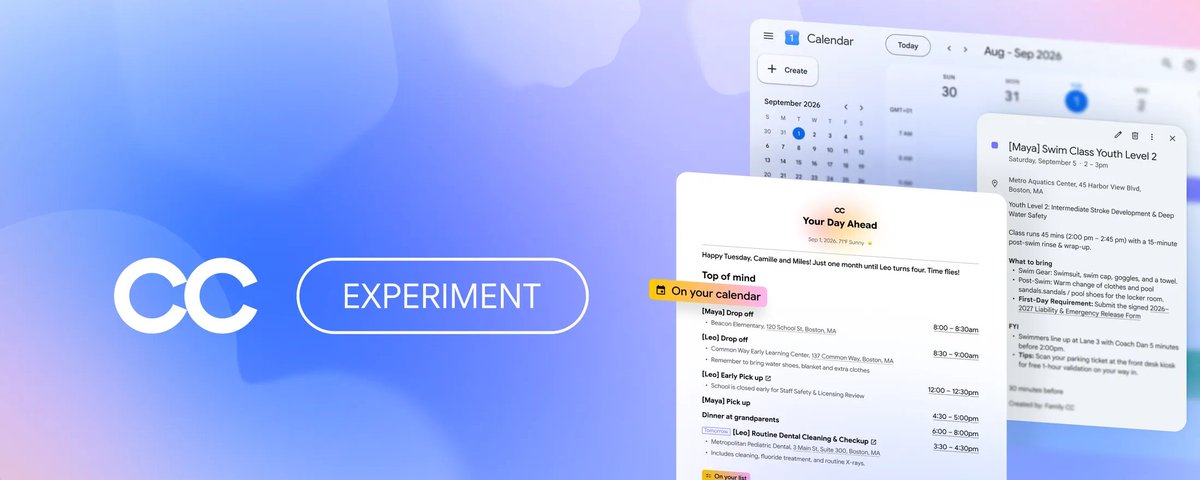
Google's Project CC gives a family agent its own identity and sandbox
Google Labs expands Project CC into a family group agent.
Why it mattersShows one way to scope agent access: a separate identity, opt-in email forwarding and isolated compute rather than shared passwords. The design is useful to compare against your own multi-user agents.

Anthropic ships Sonnet 5.5, 30% faster than Sonnet 5 at unchanged pricing, with always-on thinking, effort guidance, and org-bound preserved thinking that resets when accounts switch mid-session.
Why it mattersSonnet 5.5 keeps $2/$10 pricing while claiming up to 30% lower cost for most work. Preserved thinking now stays within the originating org, so switching accounts mid-session forces new thinking.

Artificial Analysis benchmarks Claude Sonnet 5.5: 56 on its Intelligence Index, parity with Opus 5.5 on several agentic evals, but the heaviest output token use it has measured, raising cost per task to $7.60.
Why it mattersSonnet 5.5 nearly matches Opus 5.5 on agentic tasks but uses roughly 60% more output tokens, so cost per task is about 50% higher than Sonnet 5 at the same per-token price. Budget for tokens, not list price.

GitHub made Claude Sonnet 5.5 generally available in Copilot across the app, CLI and VS Code. Its early testing found equal coding results to Sonnet 5 with fewer steps, tokens and tool calls, and faster completion.
Why it mattersClaude Sonnet 5.5 is now selectable in GitHub Copilot's app, CLI and VS Code. GitHub reports it matched Sonnet 5 on coding tasks with fewer steps, tokens and tool calls.
Judge first, render later: pairing Jev with the HeyGen MCP
A walkthrough of pairing TypeSafe's Jev decision model with the HeyGen MCP.
Why it mattersScreen a batch of items with a cheap, fast judge model that returns typed probabilities, and spend costly agent tool calls only on confident yes answers. Unsure cases go to a human.

Introducing Claude Sonnet 5.5
Anthropic releases Claude Sonnet 5.5, over 30% faster than Sonnet 5, aimed at everyday scoped tasks, bug fixes and document work.
Why it mattersSonnet 5.5 runs over 30% faster than Sonnet 5 and targets well-scoped tasks and bug fixing, with Haiku 5.5 due in weeks, which informs model selection for agent workloads.

Anthropic releases Claude Sonnet 5.5, the second model in the 5.5 family. It runs more than 30% faster than Sonnet 5 and costs up to 30% less for most work. Vals AI places it second on its index, just behind Opus 5.5.
Why it mattersA mid-tier model that runs over 30% faster and costs up to 30% less changes the cost and latency tradeoff for coding agents. Vals ranks it second overall, within 0.47 points of Opus 5.5.

Anthropic released Claude Sonnet 5.5, a faster and cheaper complement to Opus 5.5 aimed at scoped everyday tasks, bug fixing and polished documents. It is the first Sonnet with cyber safeguards and fallbacks like those on the most capable models.
Why it mattersSonnet 5.5 keeps Sonnet 5 pricing but uses fewer tokens, cutting cost per task by up to 30% and running over 30% faster. At low or medium effort it beats Sonnet 5's best scores on several benchmarks.
Sonnet 5.5
Anthropic releases Claude Sonnet 5.5, a faster Sonnet at unchanged token prices that typically needs fewer tokens per task.
Why it mattersSonnet 5.5 keeps Sonnet 5 pricing ($2/$10 per million tokens), runs 30%+ faster, and scores 70.6% on Terminal-Bench 4.0. It is the first Sonnet with cyber safeguards, so some security requests may fall back.
Highlights from Git 2.56
GitHub's tour of Git 2.56 covers new features from 104 contributors, led by git add --resolved.
Why it mattersgit add --resolved stages only unmerged paths and refuses files still containing conflict markers, avoiding accidental staging of unrelated edits. Useful when agents or humans resolve merges.

EmDash 1.0 is a stable, open source CMS built for Astro, with agent-friendly…
Cloudflare ships EmDash 1.0, an open source CMS for Astro.
Why it mattersA stable Astro CMS built with agent workflows and sandboxed plugins. It gives agent-driven content and site tasks a supported base with a security model for extensions.
The problem is not AI code, but not knowing about system architecture or intent
An engineer argues the real risk in AI-heavy teams isn't the code quality but that nobody tracks system architecture or intent anymore once everyone defers every decision to an agent.
Why it mattersArgues that teams shipping via AI agents are losing institutional knowledge of why systems are built the way they are, a maintainability risk distinct from and arguably worse than AI code quality itself.

Cloudflare's Vinext 1.0 moves from AI experiment to a production-ready way to run Next.js apps on Vite, adding advanced cache warming, broader compatibility, an automated test pipeline and a project compatibility check.
Why it mattersAn AI-originated framework now claims production readiness for running Next.js apps on Vite and Cloudflare. A compatibility check tells you what ports cleanly before you migrate.
Cloudflare releases cf, an agent-oriented command-line tool that mirrors its whole API and supports TypeScript configuration, and open-sources Forge, the internal generator behind its SDKs.
Why it mattersOne CLI covers the entire Cloudflare API and accepts TypeScript configuration, so agents and scripts can manage infrastructure without hand-built API calls. The Forge SDK generator is now open source.

The OpenCode maintainer says SSO and SCIM will be available at no charge in OpenCode Console, removing a common enterprise paywall for teams rolling out the open source coding agent.
Why it mattersOpenCode Console will include SSO and SCIM at no charge, so teams adopting this coding agent do not pay an enterprise tier for identity management.

Introducing cf: the agentic CLI for the entire Cloudflare API
Cloudflare launches cf, an agentic CLI spanning its full API (versus Wrangler's ~280 commands).
Why it mattersCloudflare now exposes its entire product surface to agents through one CLI with JSON-first output, addressing a real gap where Wrangler covered only a fraction of available operations.
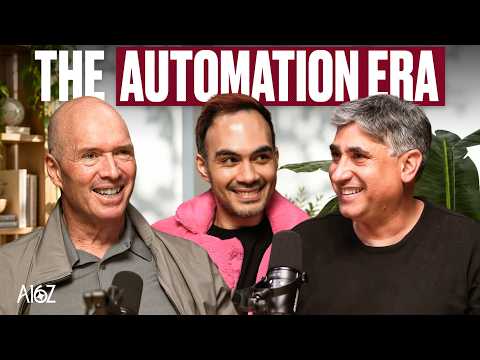
How Jev Turns AI Into Software That Gets Things Done
a16z talks with TypeSafe AI's founder about Jev, a approach that puts reasoning inside programs so they make probabilistic decisions about intent.
Why it mattersArgues that coding agents speed up writing conventional software but do not make software itself reason about intent. It frames reliability as the barrier to programmable AI decisions inside applications.

The Untold Story of Higgsfield | Burning $4M a Month on AI Models | CEO, Alex Mashrabov
Higgsfield's CEO discusses scaling an AI video product, model cost structure, open versus closed model margins, abandoning proprietary models.
Why it mattersOffers operator numbers on inference economics: heavy monthly model spend and roughly 80% margins on open models versus 20 to 30% on closed ones. Relevant for teams choosing between open and closed models.

Coding Is Not Solved
A veteran engineer pushes back on the 'coding is solved' narrative, arguing LLMs still fail non-functional requirements like reliability and security.
Why it mattersAn experienced engineer builds the case that LLM-generated code still fails at reliability, security, and maintainability, and that AI cannot be held accountable, a limitation that governs where it's safe to deploy unchecked.
Cloudflare open-sourced Forge, a pluggable CI pipeline that generates SDKs, CLIs and documentation from API definitions. Generation moves upstream into individual team repositories, so developer tooling stays continuously synchronized with the API.
Why it mattersForge generates SDKs, CLIs and docs from API definitions inside each team's CI, so client tooling stays in sync with the API. Teams shipping APIs consumed by agents and developers can adopt it to cut drift.

The road to the agentic browser: A Kitesurf update
Cloudflare details progress on Kitesurf, its agent-first browser running on Workers, including new WebMCP support that lets agents call site-exposed functions instead of clicking through pages.
Why it mattersWebMCP support in an agentic browser lets sites expose callable functions to agents instead of relying on brittle click-simulation, changing how agent-driven browsing automation can be built.

Introducing Forge: the open source pipeline for generating SDKs, CLIs, docs, and more
Cloudflare open sources Forge, the pluggable pipeline it built to generate the cf CLI, SDKs, API docs and MCP servers from one API definition, aimed at treating agents as first-class API consumers.
Why it mattersForge is a concrete, open-source answer to generating agent-consumable interfaces (CLI, SDK, MCP, docs) from a single API definition, useful for anyone standardizing how agents interact with their own services.
Artificial Analysis launches a Cyber Index and partner Alliance combining CWE-Bench-AA, DeepsecBench-AA and CyberGym-E2E-AA to score how well AI agents audit, discover, patch, and reproduce vulnerabilities.
Why it mattersGives engineers a shared, multi-benchmark measure of how well models find, patch, and exploit-test vulnerabilities, covering discovery, patching, and end-to-end tasks. Useful for choosing models for security agents.
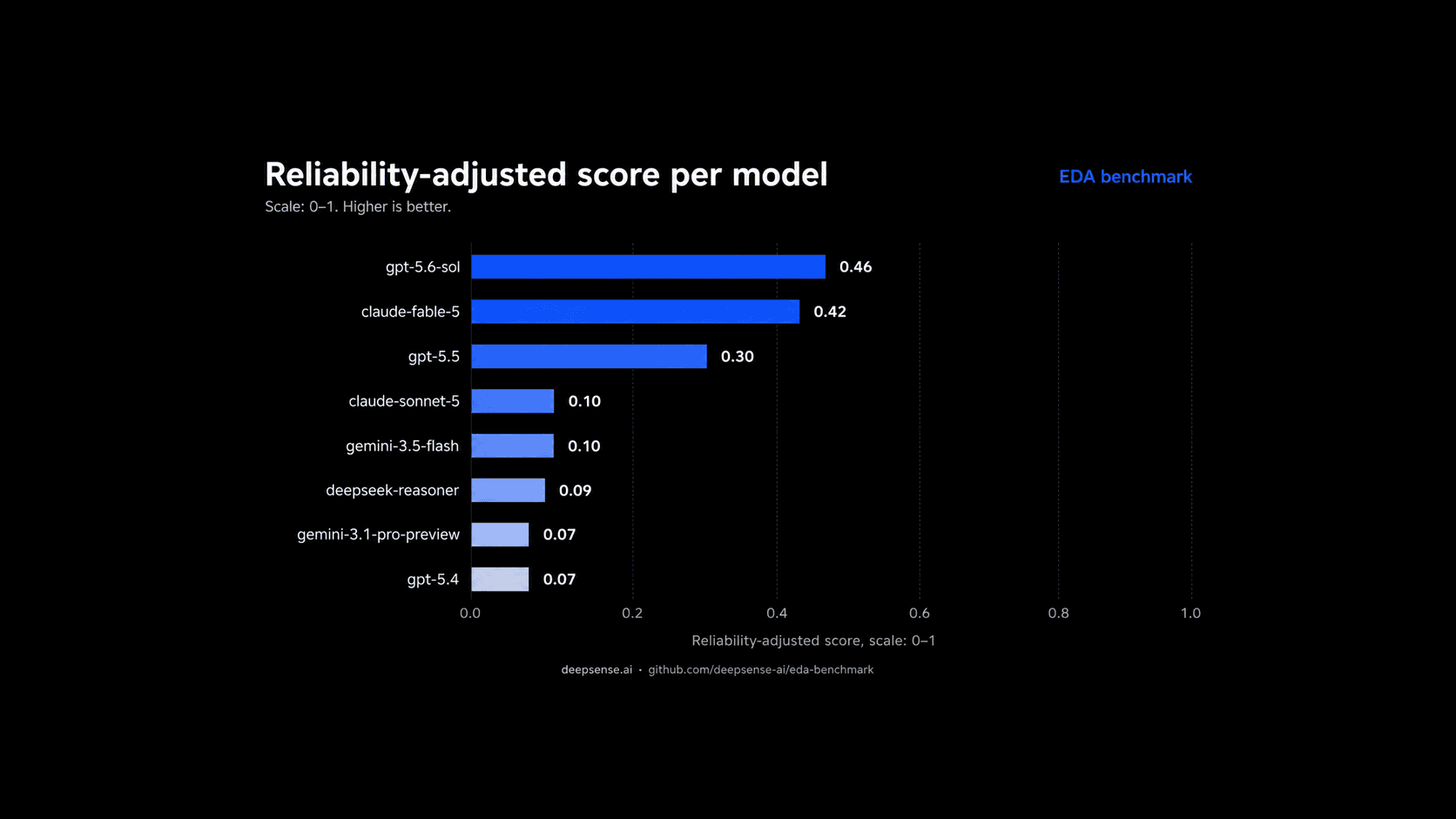
EDA Benchmark Leaderboard
Article URL: https://deepsense.ai/blog/eda-benchmark-leaderboard-july-14-2026-update/ Comments URL: https://news.ycombinator.com/item?id=49876875 Points: 1 # Comments: 1
Why it mattersdeepsense.ai's benchmark shows Claude Fable 5 leads on raw mean score for exploratory data analysis while GPT-5.6-sol tops the reliability-adjusted ranking.

The $10B AI Assistant Challenging Meta's Muse, Grok's Bots, and OpenAI's Dots
Interview with the CEO of Instinct on building an app-less personal agent reached by text, voice, and email, including trust and payments, proactive-compute costs, growth.
Why it mattersCovers the operating realities of a consumer agent: compute cost of proactive behavior, handling credit cards and personal data, and how agents may displace apps.

GPT-6 Luna First Test – Is OpenAI’s CHEAPEST Model Actually Good?
A hands-on review puts OpenAI's low-cost GPT-6 Luna through practical coding and agentic tasks.
Why it mattersHands-on testing across browser automation, C++ game builds, FPS generation, robot-arm control and Blender/Godot workflows shows where OpenAI's cheapest model, GPT-6 Luna, holds up and where it falls short.
Holo4: powering generalist computer-use agents
H Company releases Holo4, a 27B/35B-A3B open computer-use agent that operates GUIs, code, MCP.
Why it mattersHolo4 is an open, cross-interface computer-use agent model (GUI, code, MCP, API) that scores 61.7% on OSWorld 2.0 versus 81.8% for Opus 5.5 at a fraction of the parameters and cost, with full trajectories released for inspection.
NVIDIA Open Agent Safety Platform: A Reference for Continuous In-Silicon Agent Monitoring
NVIDIA details its Open Agent Safety Platform, pairing the open-source OpenShell sandboxed runtime on Vera CPUs with Sentry monitoring on BlueField-4 DPUs to enforce policy and observe agent behavior out-of-band at line speed.
Why it mattersNVIDIA's platform puts policy enforcement and monitoring on the DPU sitting on an agent's only path to the model, giving continuous out-of-band observability and line-speed policy enforcement independent of the agent's own code.
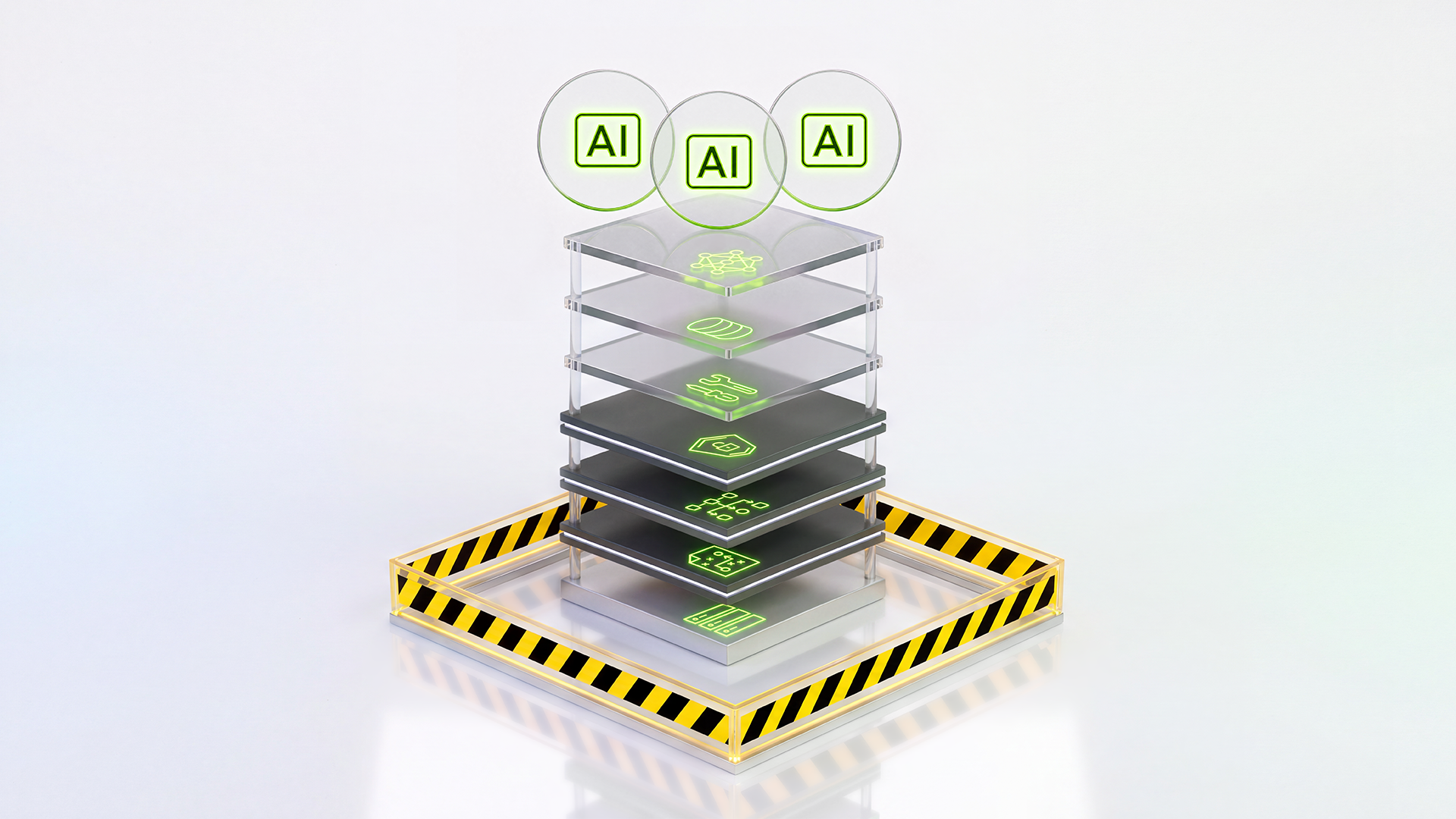
Add Runtime Controls to AI Agents with NVIDIA OpenShell
NVIDIA ships OpenShell 0.1.0, an open-source runtime that restricts which systems and data an agent can reach via sandboxing, credential isolation, and a formal policy prover.
Why it mattersOpenShell 0.1.0 restricts which systems and data an agent can reach through sandboxing and a formal policy prover, without rewriting the agent, letting teams add access controls to existing agent code.
A performance-engineering series builds on Carol Chen's transformer inference cost model, applying it to H200, B200 and B300 GPUs to reason about prefill/decode tradeoffs, batching, and memory budgeting for serving.
Why it mattersExplains how to reason about prefill versus decode costs, batching tradeoffs, and memory budgets when sizing inference on H200, B200, and B300 GPUs.

Auditing and Repairing LLM-as-Judge Failures in a Production Text-to-SQL Pipeline
A production audit finds a deployed GPT-4o-mini LLM-judge in a text-to-SQL pipeline agrees with human graders at Cohen's kappa of just 0.04, mostly from a 'grade hallucination' failure.
Why it mattersA deployed GPT-4o-mini judge in a production text-to-SQL pipeline agreed with human graders at kappa 0.04, over-flagging 77% of correct results; swapping to a self-hosted 27B model matched Claude Opus 4.7 at roughly 1/300th the cost.

Silent Success: A Release Gate That Passed on Checks It Never Ran, and Eight More
A case study catalogs nine real release gates and caches that silently reported success while skipping the checks they were supposed to run, including one that stayed green for two weeks.
Why it mattersA case study documents nine real release gates and caches that reported success while silently skipping checks (one stayed green for two weeks).

Cartograph: Federated Tool Discovery with Operator-Attested Retrieval for AI Agents
Cartograph is a federated MCP proxy that collapses tool discovery from loading every tool definition to three proxy tools using signed capability cards and layered retrieval, hitting 0.816 recall@5 versus 0.592 for keyword search on a 374-tool deployment.
Why it mattersCartograph collapses MCP tool discovery from loading every tool definition to three proxy tools and beats keyword search on retrieval accuracy (0.816 vs 0.592 recall@5) on a 374-tool, 22-server deployment.

A Framework for Identifying, Categorizing, and Explaining Bias in AI-Generated Code
A new taxonomy-driven framework tests whether LLMs can identify and explain bias in AI-generated Python code, finding Gemini reaches 80% classification accuracy against a human-annotated ground-truth dataset.
Why it mattersA taxonomy-driven framework for identifying bias in AI-generated code finds Gemini reaches 80% classification accuracy against human-annotated ground truth, giving teams a concrete way to audit coding assistants for systematic bias.

Stealth Apart, Harm Together: Skill Cascading Attacks on Skill-Based Agent Systems
Researchers introduce skill cascading attacks.
Why it mattersSkill cascading attacks distribute a malicious objective across multiple agent skills so no single one looks harmful, but their combined execution causes real harm, a new attack surface for anyone deploying skill-based agent systems.

What Will Remain Human in Software Architecture? A Focus Group Report
A EuroPLoP 2026 focus group of 22 architects and researchers argues accountability and architectural decision-making stay fundamentally human as AI agents take on more design work, coining 'harness engineering' for building the systems that govern AI-assisted development.
Why it mattersPractitioners at EuroPLoP 2026 argue accountability and architectural decisions stay fundamentally human even as AI takes on more design work.

When Is a Multi-Agent Code Judge Actually Grounded? Two Label-Free Measurements, and a Judge That Declines to Guess
A study runs MARCH, a published multi-agent code-judging framework, across 80 conditions and finds it calls ties on 78-95% of comparisons, reaching only 4.4% accuracy where directly asking the same model scores 43.7%.
Why it mattersMARCH, a multi-agent code-judging method, calls ties on 78-95% of comparisons and reaches only 4.4% accuracy where directly asking the model scores 43.7%.

Bootstrapping Conversational Recommendation Agents At Spotify: Synthetic Data Generation and Self-Improvement Loops
Spotify engineers detail how they bootstrapped conversational recommendation agents before real user data existed, using synthetic multi-turn conversation generation and a self-improvement loop to optimize tool planning and sequencing in a cold-start setting.
Why it mattersSpotify's approach to bootstrapping conversational recommendation agents, synthetic multi-turn dialogue generation plus a self-improvement loop for tool planning, is a concrete, transferable cold-start methodology for teams building agents without real usage data yet.

ScopeBench: Do Agents Preserve Engagement Boundaries Under Goal Pressure?
ScopeBench tests whether autonomous pentesting agents respect stated engagement boundaries when the objective is reachable only via an out-of-scope action.
Why it mattersScopeBench isolates scope adherence from raw hacking capability in autonomous pentesting agents, using 30 tasks reachable only by breaking a stated boundary, a concrete way to test whether agents stay in scope under goal pressure.

Empty Intersection: Provenance Coverage Rose to 98% and Neither Verification Decision Moved
A measurement study finds two structural fixes meant to stop verification systems from trusting their own self-reported output raise classified coverage from 36% to 98% and block thousands of ungraded writes, yet change zero of the actual verification decisions.
Why it mattersStructural provenance fixes for a production verification system raised classified coverage from 36% to 98% and blocked thousands of ungraded writes, yet changed neither of the two real verification decisions they were meant to fix.
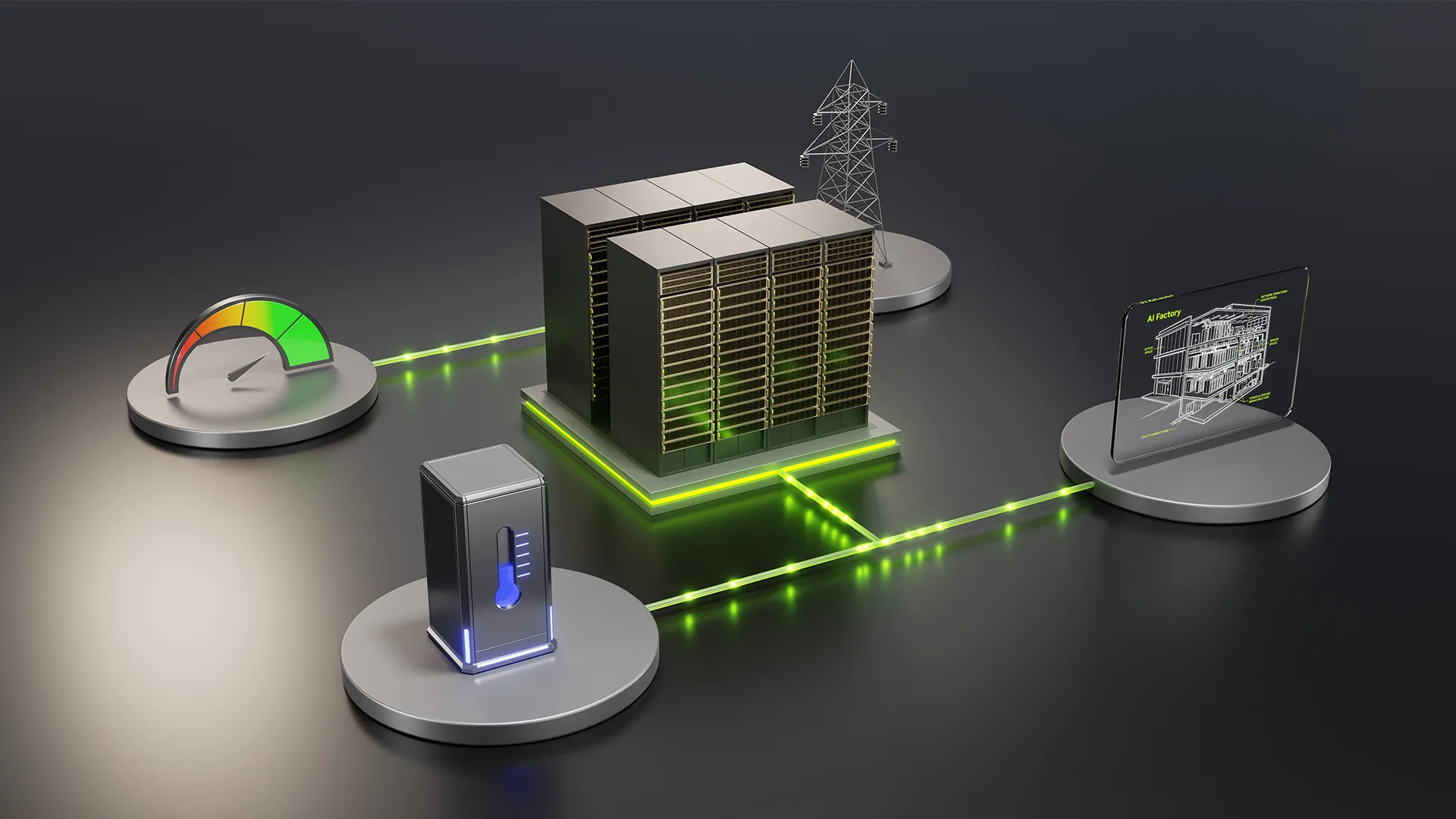
How NVIDIA DSX MaxLPS Maximizes AI Factory Throughput and Efficiency
NVIDIA and Nscale benchmark DSX MaxLPS, a dynamic power-sharing scheme that packed 40% more GPUs into a fixed power budget and raised throughput per watt from 4.10 to 6.12 tokens/s/W, at the cost of a 17% rise in P99 latency.
Why it mattersNVIDIA and Nscale show that policy-governed power sharing (DSX MaxLPS) let them run 192 GPUs instead of 140 within an identical power budget, lifting throughput per watt from 4.10 to 6.12 tokens/s/W, though P99 time-to-first-token rose 17%.
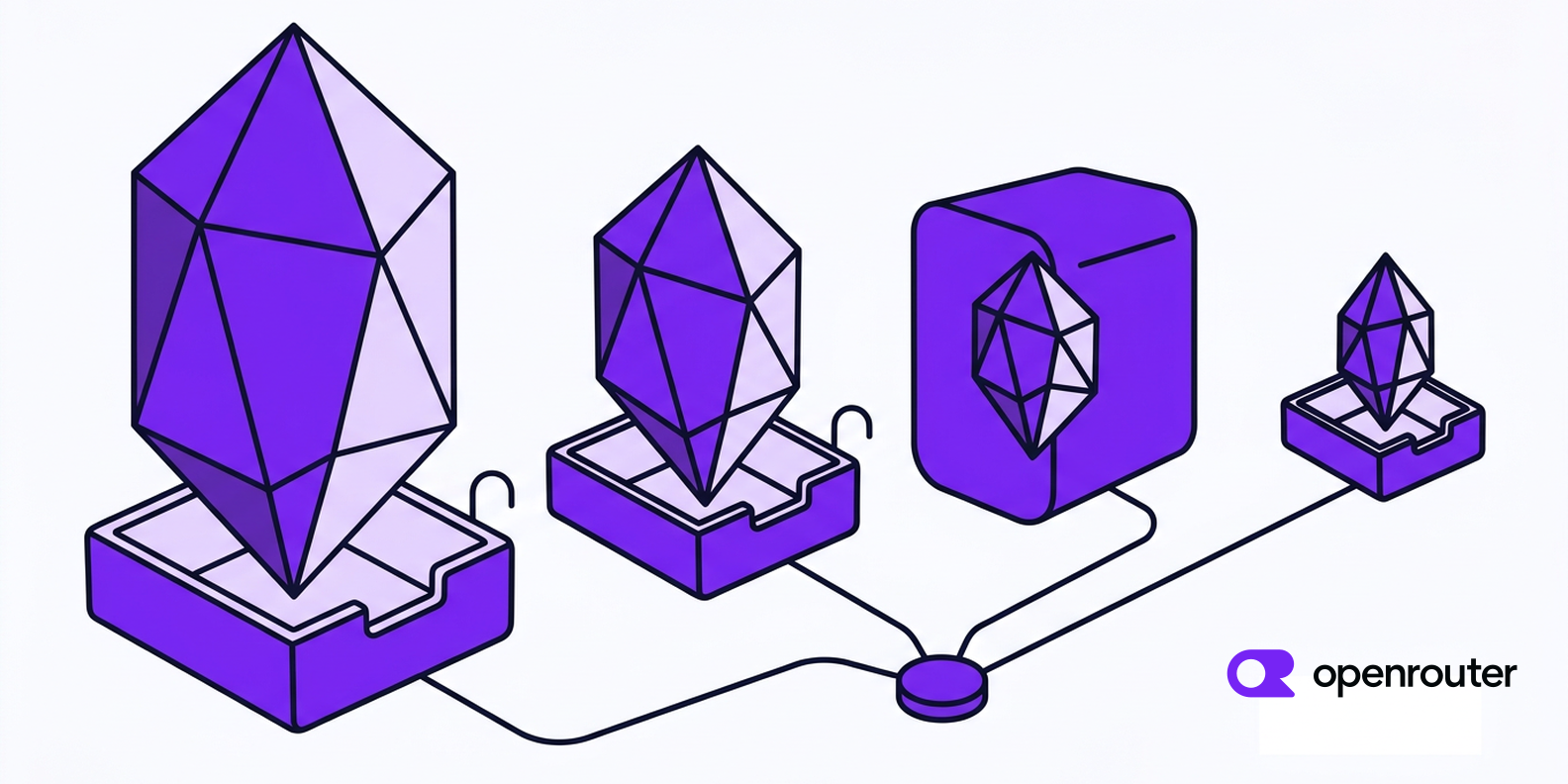
Qwen 3 8
OpenRouter breaks down Qwen 3.8's four variants.
Why it mattersClarifies that 'Qwen 3.8' is four differently licensed models (two downloadable, two hosted-only) with different context windows and per-provider prices, directly affecting which one you can self-host versus must call via API.
Browserbase Hud Frontier Evals
Browserbase and HUD describe how to structure browser RL tasks: prompt, environment and outcome grader, with QA agents reviewing traces.
Why it mattersBrowser evals on the live web can mix up model errors with site changes or reward hacking. The post describes tasks with graders and QA agents reviewing traces to catch misleading scores.
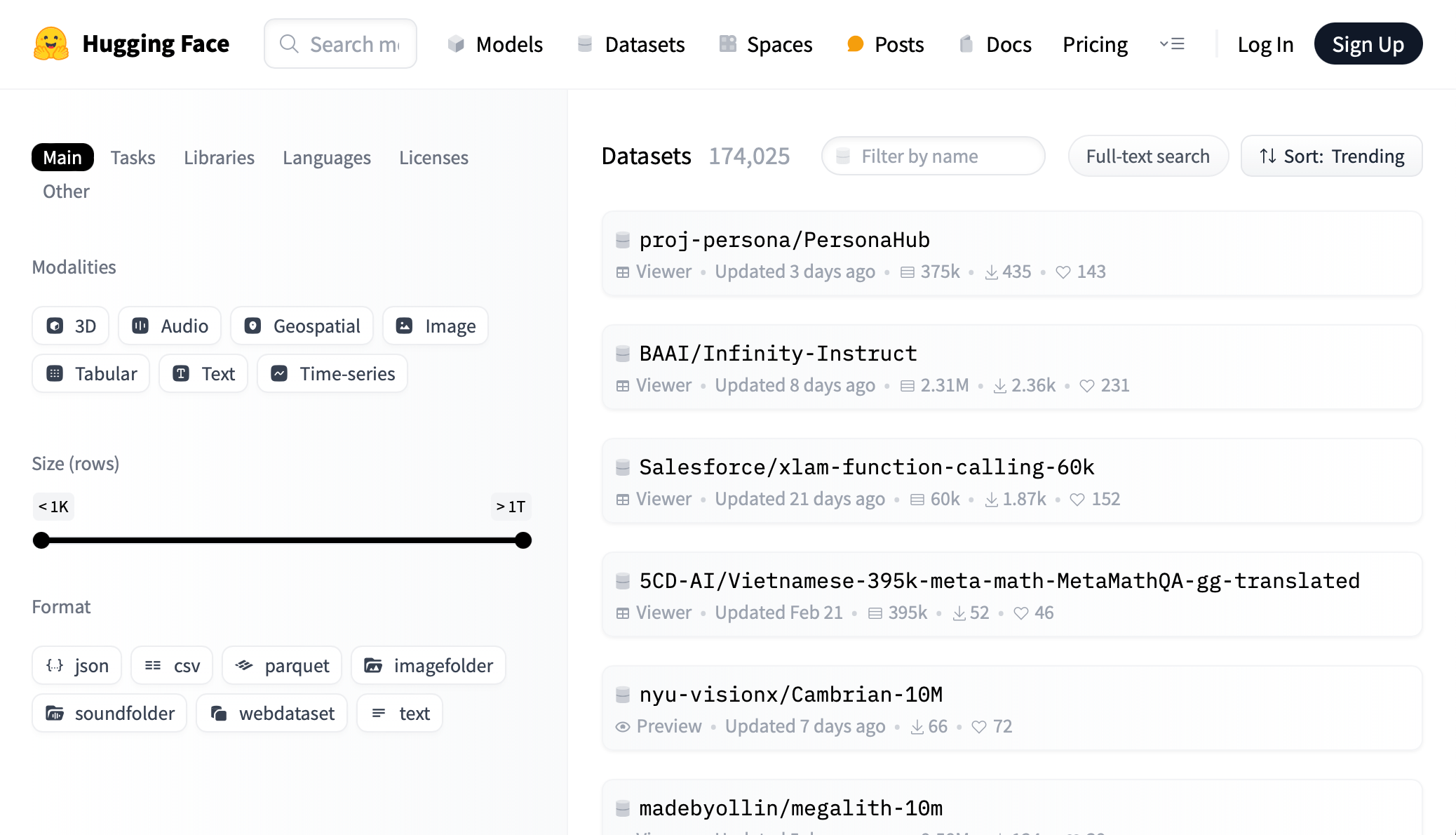
Welcome RL Environments to the hub
Hugging Face adds an RL Environments filter to the Hub.
Why it mattersRL environments are now discoverable and runnable from Hub dataset repos across Harbor, Verifiers, OpenEnv and NeMo Gym. You can load a published environment without porting it by hand.
What Is Krea Agent
Krea's guide to its creative production agent.
Why it mattersKrea Agent applies the coding-agent pattern to creative work: it chooses a model per step across 150+ hosted models, generates and reviews assets, and files them in a shared library.
2026 in LLMs (so far)
Simon Willison's annotated keynote traces 2026's defining LLM shifts, starting with Claude Opus 4.5/GPT-5.1 making coding agents daily-reliable and continuing through the year's model and pricing changes.
Why it mattersTraces the year's key inflection points starting with Claude Opus 4.5 and GPT-5.1 making coding agents reliable enough for daily use, giving practitioners a dated map of what changed and when.
Jev-Like Model Learns to Cook
Rodney L. fine-tunes OpenJev, a natural-language-inference decision model.
Why it mattersProvides a reproducible recipe (LoRA fine-tuning of an NLI scoring head with adapted GRPO) for training a lightweight decision model to act through raw environment controls, with no planner or macros, and public code to try it.
Bluesky reply bot checker
Simon Willison details the heuristics (reply timing, no original content, bait questions) behind a small Bluesky reply-bot detector he vibe-coded with Opus 5.5.
Why it mattersConcrete signals for spotting automated reply bots, distilled from a real vibe-coded utility, applicable to anyone building similar moderation heuristics.

Get Out of the Model's Way — Kevin Hou, Google DeepMind
Google DeepMind's Kevin Hou details Antigravity 2.0.
Why it mattersShares specific figures behind an agent team building an OS kernel from scratch, and introduces Antigravity's dynamic subagent teams and sidecar protocol for webhook/cron-triggered agent work.
An index of the vibe-coding frontier. Corrections welcome.