Ling-3.0-flash: a 124B MoE with 5.1B active parameters for agents
- Source
- x.com
- Date

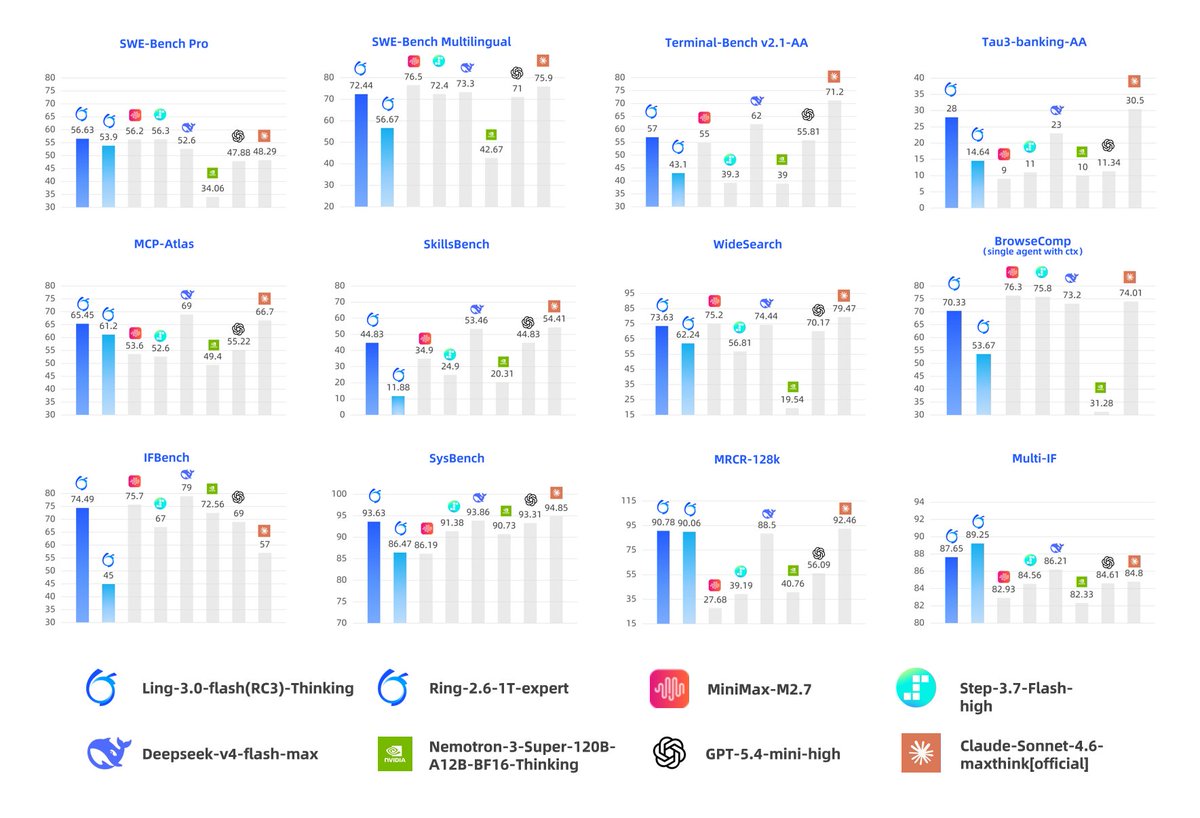
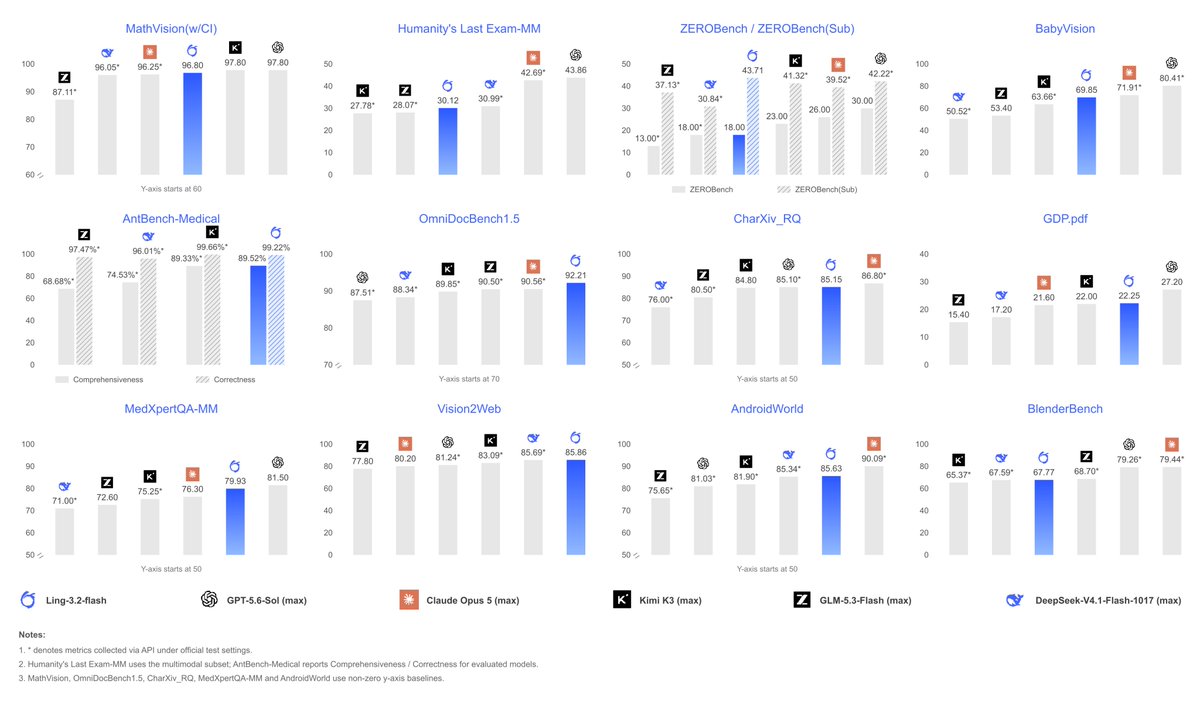
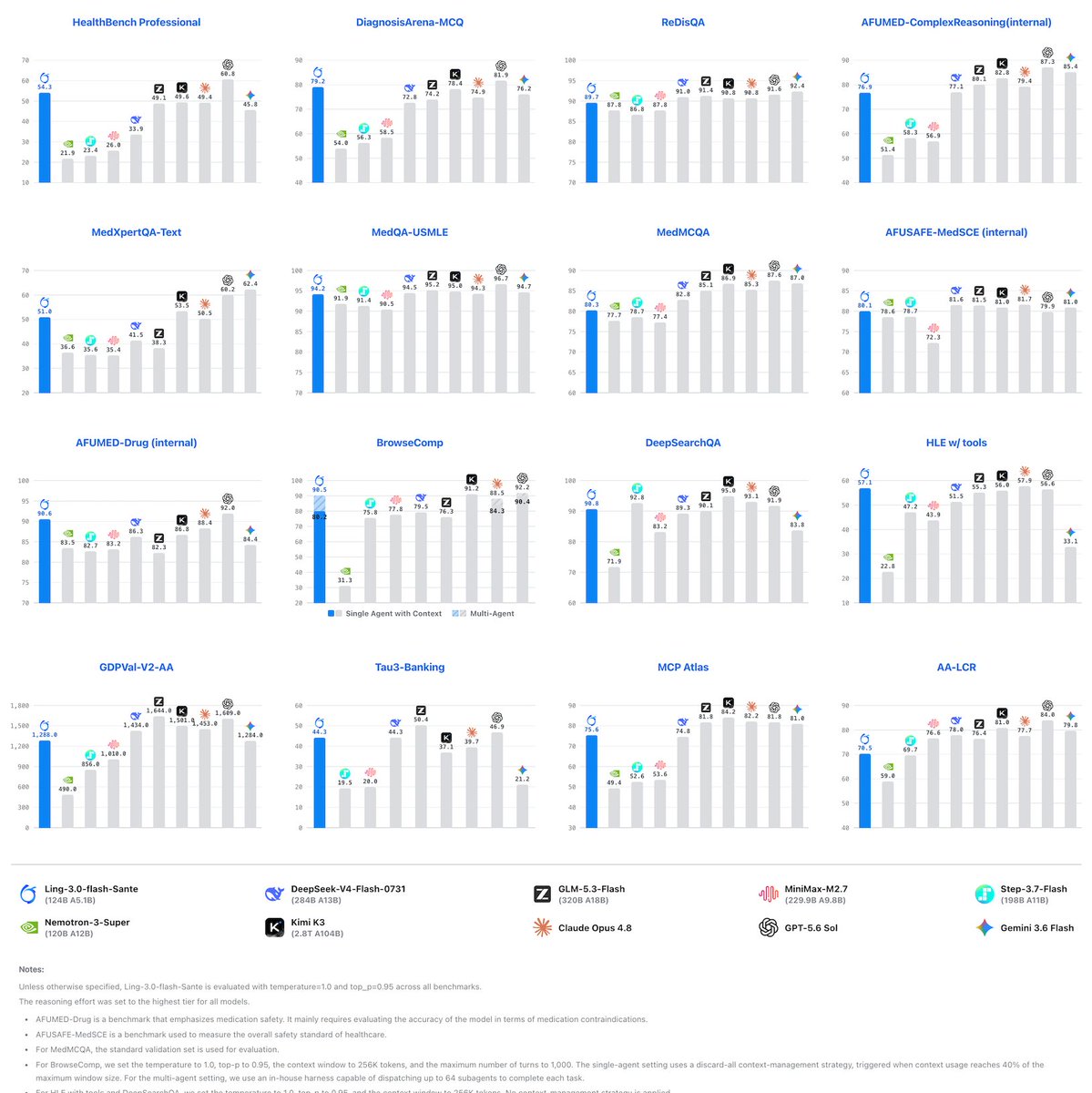
Today, we’re releasing Ling-3.0-flash—a hybrid-reasoning MoE model built for production-scale agents. 124B parameters. Just 5.1B active per token. With 1/8 of the total and 1/12 of the active parameters, it matches or beats our 1T flagship model on most benchmarks shown.
Context
Ant Ling announced Ling-3.0-flash on July 23, 2026 as a model that leaves most of itself idle on any given token. It is a model: its 124 billion parameters are divided into many specialist sub-networks called experts, and a router sends each token through only a few of them, so about 5.1 billion parameters do the work for each token. Computation per token follows that active count, although the full model still has to be held in memory. Ant Ling's claim is that this smaller design gives up little: with one-eighth of the total parameters and one-twelfth of the active parameters of its trillion-parameter flagship, it says Ling-3.0-flash matches or beats that flagship on most of the benchmarks it showed. The scores were posted as an image and are the company's own.
The Hugging Face model card for the open weights that followed on August 4 names that flagship as Ring-2.6-1T and shows how sparse the new model is: each token goes to 8 of 512 routed experts plus one shared expert. It also explains the post's "hybrid reasoning" label. The model thinks step by step by default, and a request can switch that off when a quick answer is enough. The weights are under the MIT license.
- mixture-of-experts — A model built from many specialist sub-networks where only a few activate per token, giving big-model capability at small-model running cost.
- attention — The mechanism that lets a model weigh which earlier words matter for the word it's currently processing — the core operation of a transformer.
- context window — The maximum amount of text a model can consider at once — its working memory for the current conversation or task.
- multi-agent — Using several AI agents on one problem — splitting work in parallel, checking each other, or filling different roles like planner and reviewer.

Checking sign-in…
Loading comments…