PrismML Tests 1-Bit Bonsai 2 27B on IMO Problems and Iterative Coding
- Source
- x.com
- Date

We have been very excited to see how the community has been utilizing our Bonsai 2 model, well beyond use cases that we had originally envisioned it for. We’ve spent the last few days putting Bonsai 2 27B through various examples inspired by what the community has shown us. These examples showcase the strengths, and some of the shortcomings–particularly on longer multi-turn agentic workflows, and will be extremely helpful as we continue to improve. We’ll be sharing a few of those demos, along with some practical guidance on the settings and prompting that get the best results from the model. Demo repo:
Context
PrismML says it spent several days putting Bonsai 2 27B through examples modeled on how the community has been using it, and that the results show strengths as well as shortcomings, particularly on longer multi-turn agentic workflows. It is publishing those demos with guidance on settings and prompting in a demo repository.
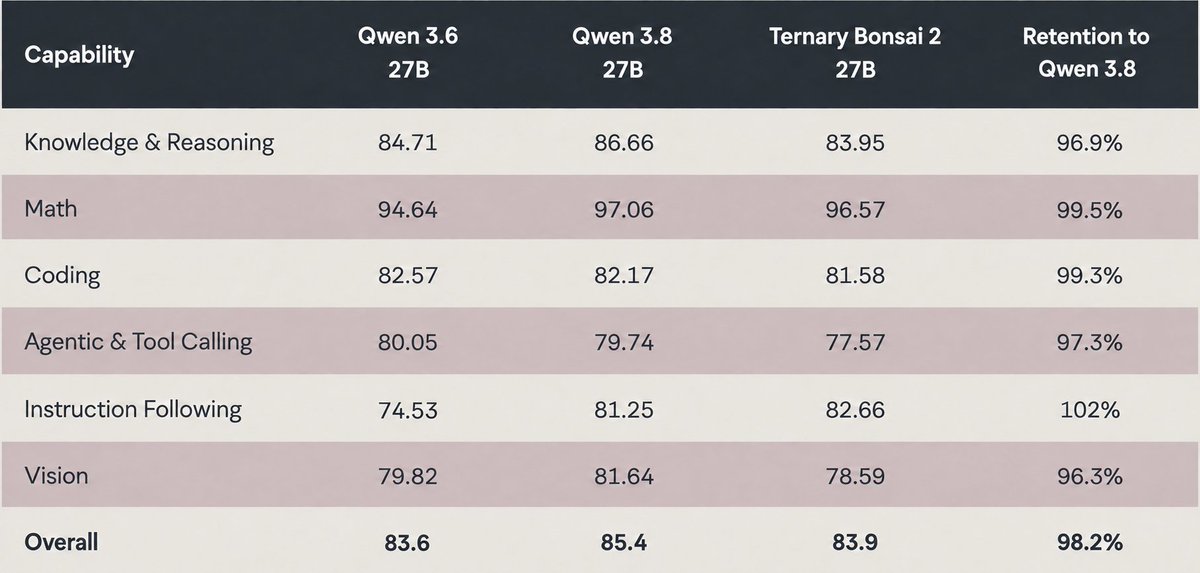
Bonsai 2 27B is a heavily compressed model meant to run on ordinary hardware. PrismML's release announcement says it is based on Qwen3.8 27B. The repository calls it ternary and says it stores 1.75 bits per weight in one packing format, against 16-bit weights in the full-precision original. PrismML claims it keeps 98.2% of the full-precision model's measured capability at roughly a ninth of the size, with math within half a point and coding level with the baseline. The demo's default download is 7.8 GB plus a vision component, and it runs on a Mac, on Linux or Windows GPUs, or on a CPU, with image input, and up to 262,144 tokens of .
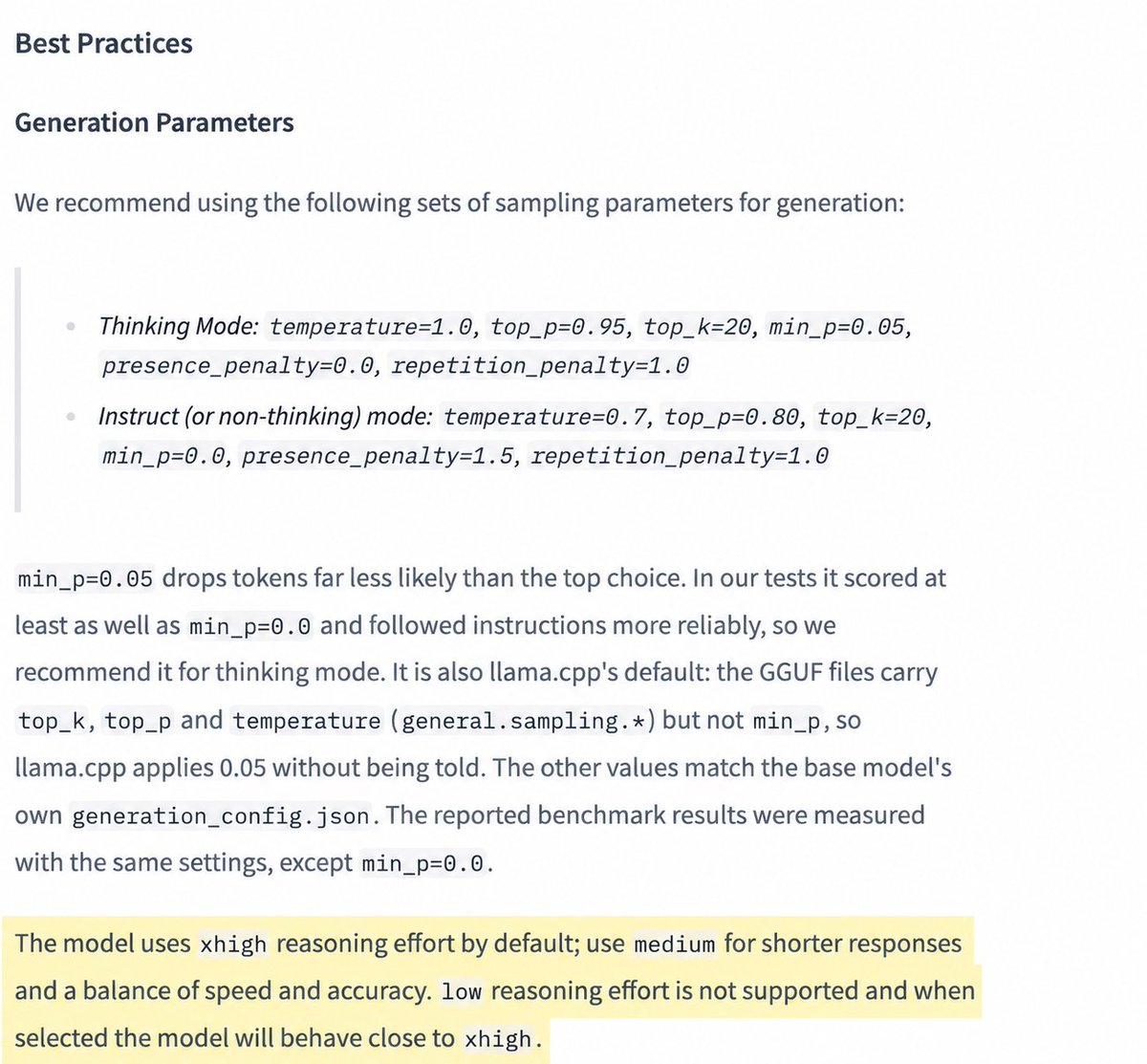
The main agentic demo has Bonsai 2 drive the Hermes from a two-line brief to a playable 3D skateboard game, which it checks in its own browser before taking a round of plain-English feedback. The settings guidance matters because this is a that thinks before answering. PrismML recommends a generous output limit of 16,384 tokens or more, since a small cap cuts the model off mid-thought, and says its default reasoning level is xhigh, with medium giving shorter answers at a balance of speed and accuracy. Selecting low effort is not supported, and the model then behaves close to xhigh. All of these figures and demos come from PrismML itself.
- tool use — A model's ability to call external functions — run code, search the web, edit files — instead of only generating text.
- context window — The maximum amount of text a model can consider at once — its working memory for the current conversation or task.
- AI agent — An AI system that doesn't just answer once but works toward a goal in a loop — taking actions, reading the results, and deciding what to do next.
- reasoning model — A model trained to think — generating extended internal reasoning before answering — trading time and tokens for accuracy on hard problems.
Checking sign-in…
Loading comments…