The twilight of the chatbots
- Source
- oneusefulthing.org
- Author
- Ethan Mollick
- Date

Context
Ethan Mollick argues that longer-running AI agents change the user's role from guiding each conversational step to assigning and assessing a larger piece of work. The enabling component is the surrounding software, often called a : it gives the model tools and an environment in which to act. Mollick's essay connects that change to a more managerial way of using AI.
That makes judging the finished work especially consequential. Mollick recommends trying systems on relevant tasks because aggregate results can conceal differences in design and judgment. Delegating a longer task still leaves the user responsible for recognizing whether the result serves its purpose.
- Epoch had Opus 4.7 run unattended for 14 hours and it produced a software package estimated at 2-17 weeks of human engineering, for $251 of tokens. That is the price point that makes assigning work to an a budget line, not an experiment.
- At OpenAI, a quarter of employees have four or more agents running at once in a given week, and legal, HR and other non-technical functions adopted agents at nearly the same rate as engineers.
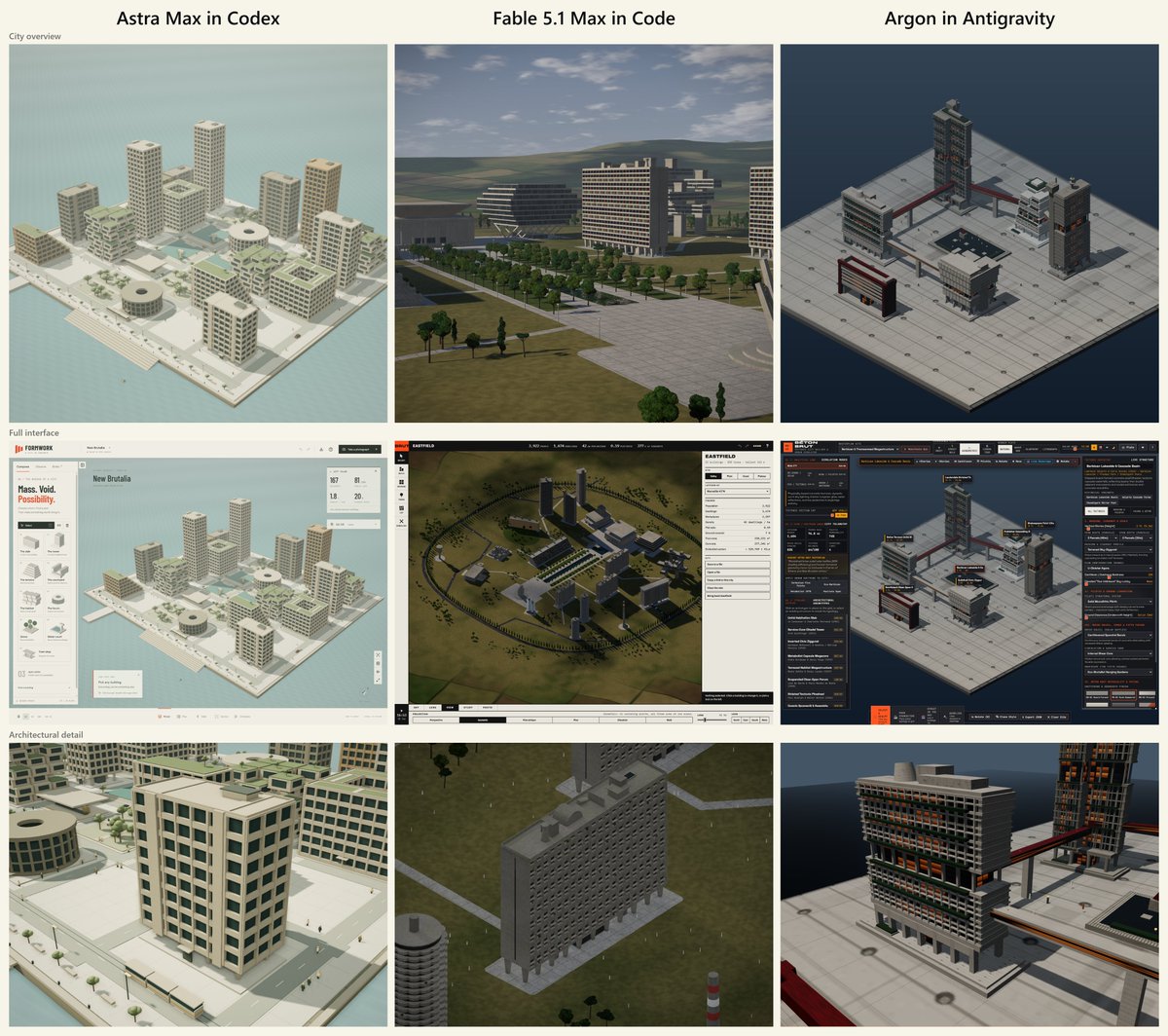
- Agents are the model plus a harness: tool access, an environment to act in, and an app like Claude Code or Codex around it. A better harness raises the capability you actually get from a fixed model, so the wrapper is now part of the performance story.
- Chinese models sit on their own exponential curve, roughly 6-12 months behind the American closed frontier. Mollick warns their benchmark scores flatter them - real-world performance often trails what the numbers suggest.
- On an exponential, each fixed window of change is bigger than the last. An AI plan written before winter 2025 assumed a couple of hours of work per prompt; months later it is sixteen. That is why a smooth curve is experienced as a series of shocks.
- agent harness — The scaffolding around a model that turns it into a working agent — the loop, the tools it can call, and the rules for when to stop.
- benchmark — A standard public test set for comparing AI models — the shared scoreboards behind every "model X beats model Y" claim.
- AI agent — An AI system that doesn't just answer once but works toward a goal in a loop — taking actions, reading the results, and deciding what to do next.
- open weights — A model whose trained parameters are published for anyone to download and run — unlike API-only models you can access but never possess.
“Epoch , recently found Opus 4.7, working on its own for 14 hours, was able to build a software package that would take 2-17 weeks of human engineering work (it cost $251 in tokens).”
“We are moving from a world where non-experts use chatbots to fill in gaps to one in which experts use agents to get work done.”
“We are very bad at feeling exponentials from the inside, and we are currently inside one.”
“A quarter of OpenAI workers have at least four agents running at one time every week.”


Checking sign-in…
Loading comments…