Advancing the price-performance frontier with GPT-5.6
- Source
- simonwillison.net
- Author
- Simon Willison
- Date

Context
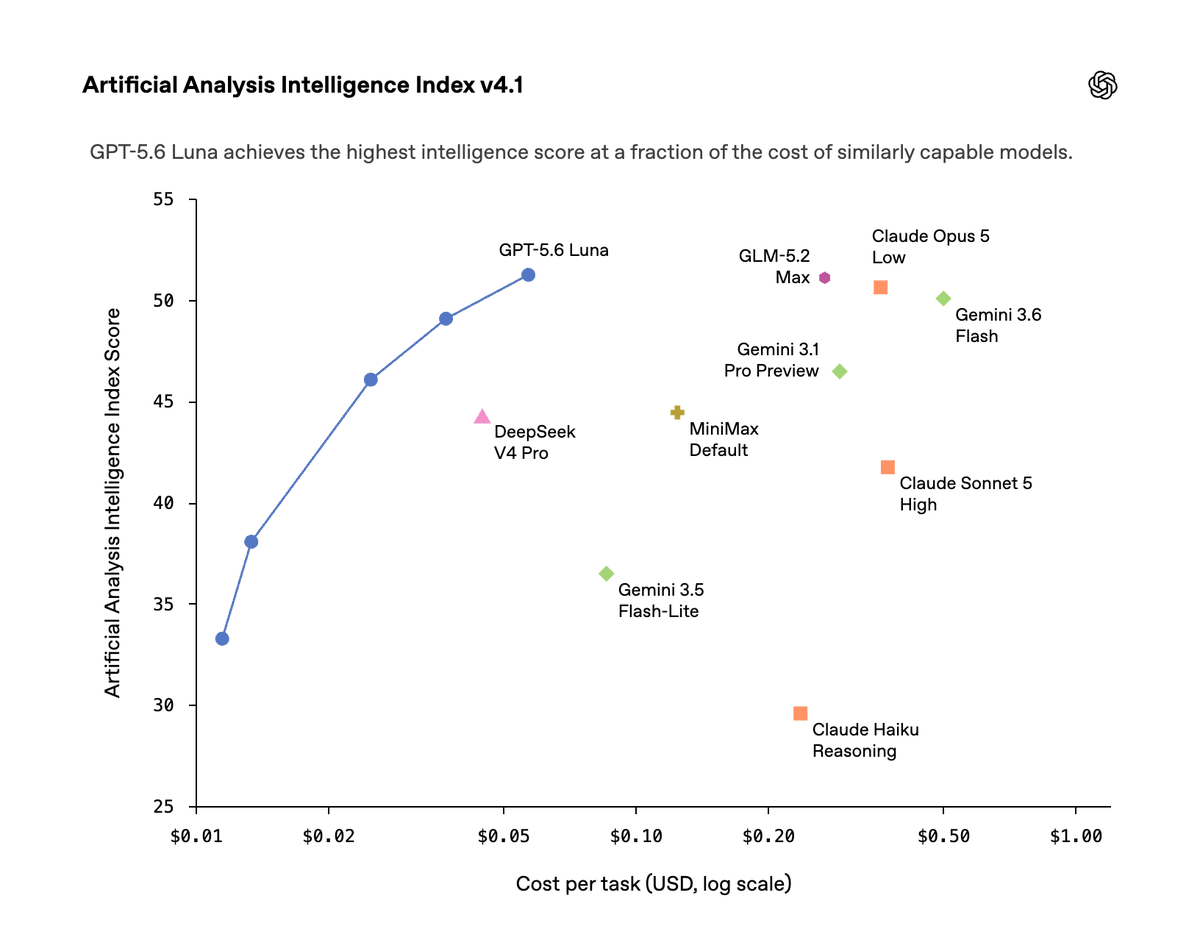
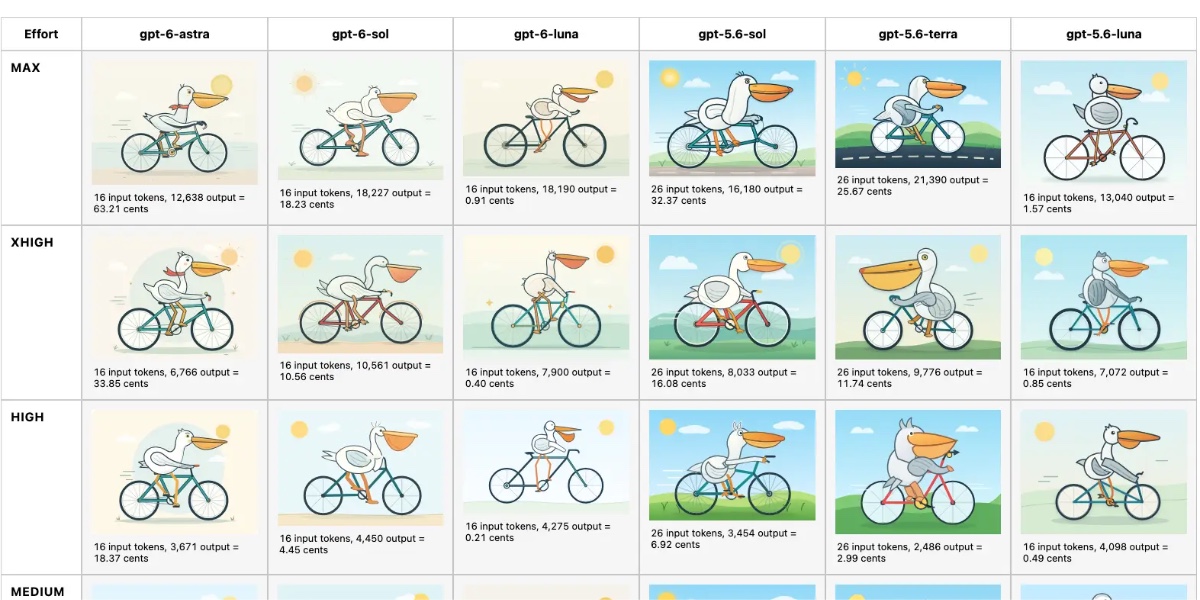
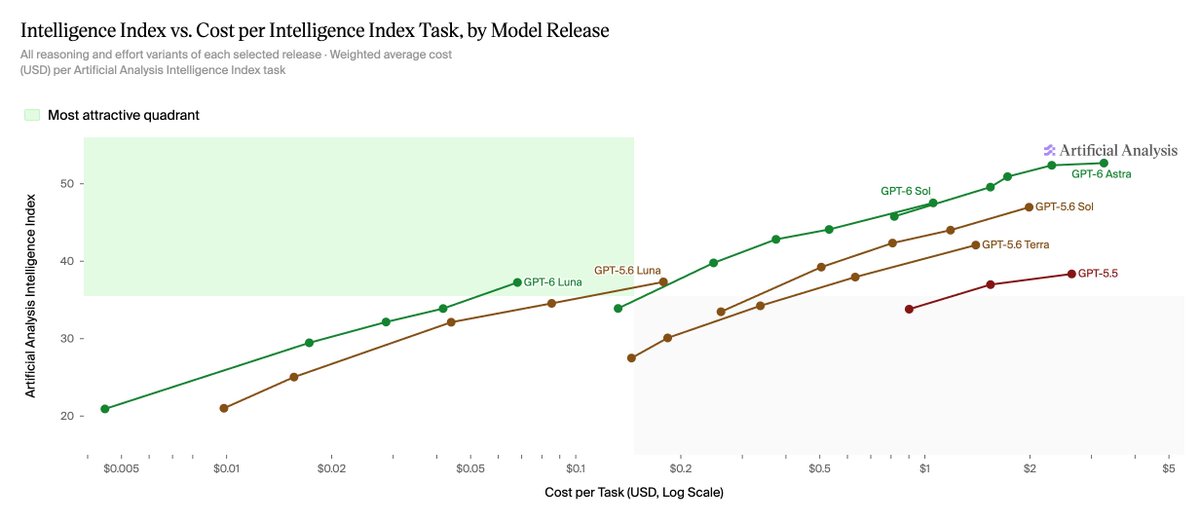
OpenAI cut API prices for two GPT-5.6 models on July 30, 2026, Luna by 80% and Terra by 20%. Simon Willison reports Luna's new rates as $0.20 per million input and $1.20 per million output tokens, which prices the text a developer sends separately from the text the model returns. Willison says OpenAI credited GPT-5.6 Sol's work on its serving software with enabling the cuts. The 20% serving-cost reduction in that work is a separate figure from the price cuts: it describes OpenAI's reported cost of running the models, not the size of the discount to customers.
- The claimed savings come from idle GPUs, not raw math. The model searched its own forward pass for work that could be precomputed, skipped, or parallelized — cutting memory movement and synchronization stalls, for 20% lower end-to-end serving cost.
- The kernels were rewritten in Triton and Gluon, two GPU programming languages OpenAI itself maintains. Training the model to be good at your own languages, then pointing it at your own serving stack, is a vertically integrated loop.
- Anthropic's Haiku 4.5 at $1/$5 per million tokens used to be price-matched with OpenAI's cheap tier. After the cut, the same input tokens cost a fifth as much — enough to make people re-pick the default model for high-volume work.
“We also used GPT‑5.6 Sol to optimize the model’s forward pass: the computation that transforms inputs into next-token predictions.”
“With Codex, GPT‑5.6 Sol autonomously rewrote and optimized our production kernels, the core code that executes the mathematical operations that make up the model.”
“That Luna price drop completely changes the landscape with respect to lower priced models.”
“I've switched it over to Luna.”

Checking sign-in…
Loading comments…