Claude Sonnet 4 6 Gdpval
- Source
- artificialanalysis.ai
- Author
- Artificial Analysis articles
- Date
Context
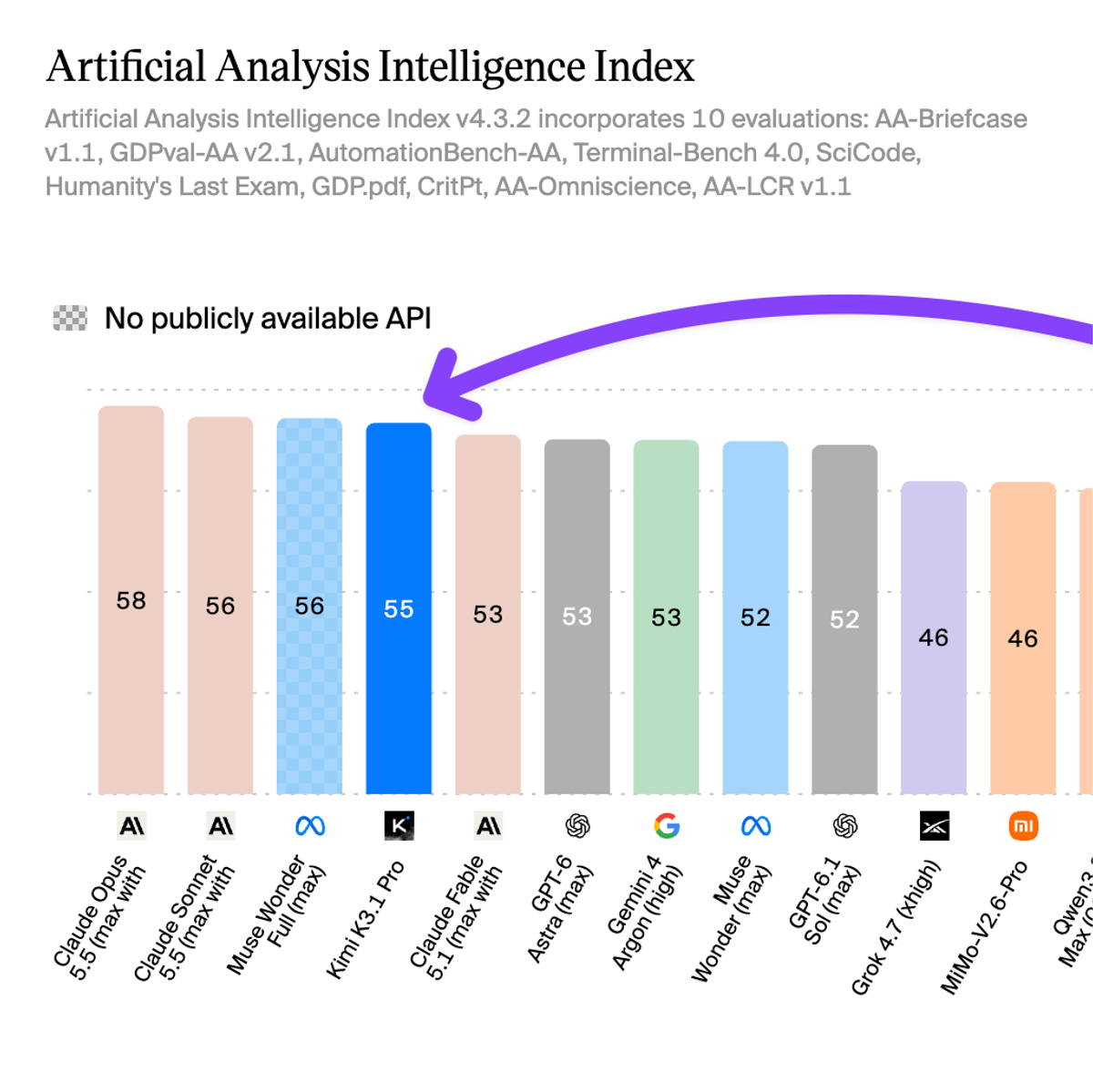
Artificial Analysis reported in February 2026 that Anthropic's Claude Sonnet 4.6 had taken first place on GDPval-AA, narrowly ahead of the larger Opus 4.6. The catch is that the lead is not statistically clear and was bought with heavy use. Sonnet 4.6 scored an Elo rating of 1633 in pre-release testing, but it sits within the 95% confidence interval of Opus 4.6, so the two are effectively level on this measure. (artificialanalysis.ai)
GDPval-AA is Artificial Analysis's main measure of general agentic ability. It takes tasks from GDPval, a dataset OpenAI released in September 2025 covering self-contained work across 44 occupations in 9 sectors, such as preparing presentations, analysing data or editing video. Models work through each task in a loop with shell access and web browsing, using Stirrup, Artificial Analysis's open-source . Results are expressed as Elo ratings, and on that scale Artificial Analysis puts Sonnet 4.6's expected win rate against Sonnet 4.5 at over 85%.
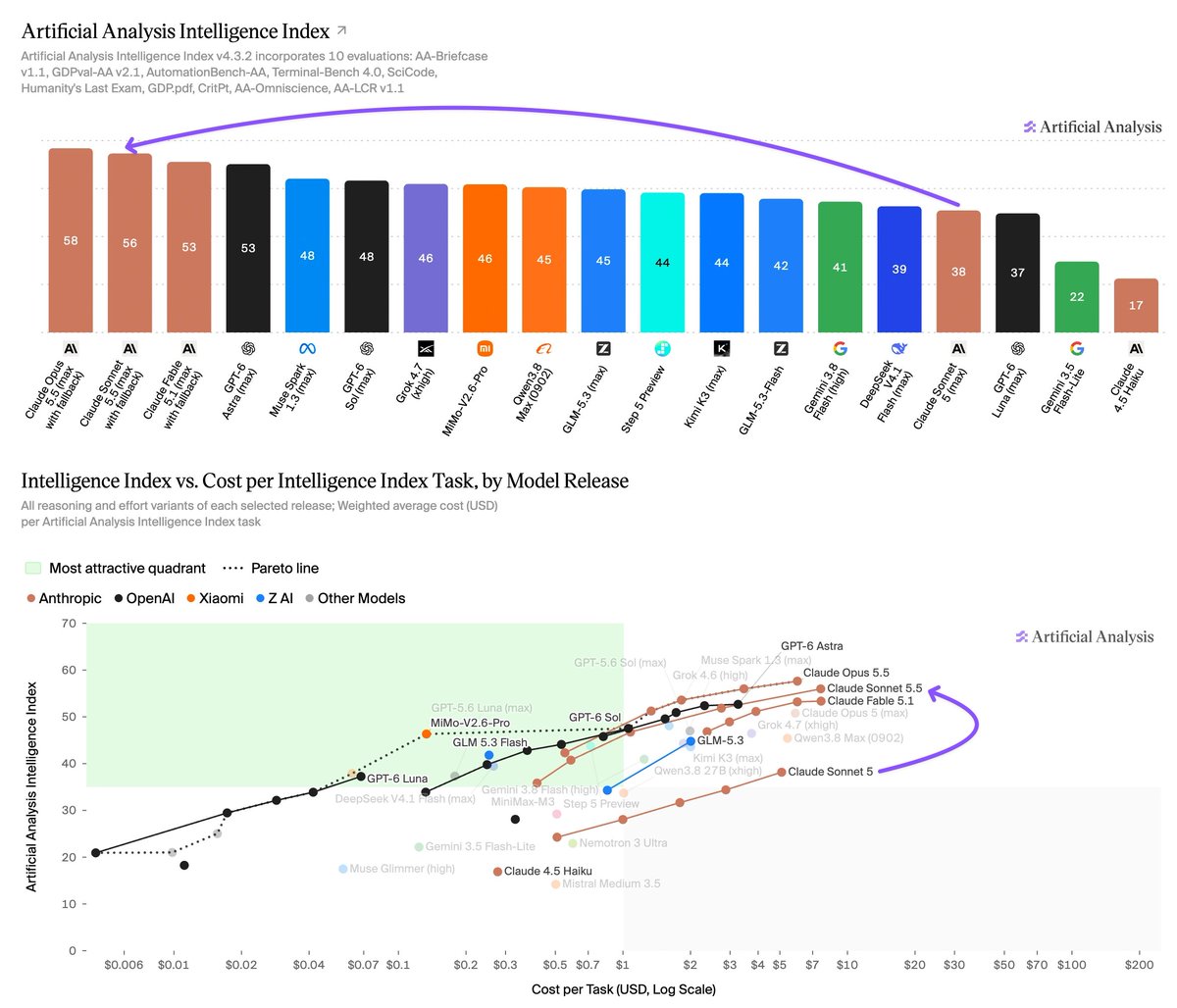
The result used the adaptive thinking mode and maximum effort setting introduced with Opus 4.6. Under those settings Sonnet 4.6 used about 280 million tokens to complete the , more than four times Sonnet 4.5's 58 million and well above the 160 million Opus 4.6 used with equivalent settings. That pushed Sonnet 4.6's total cost to run GDPval-AA slightly above Opus 4.6's, with both its thinking and non-thinking variants costing slightly more than their Opus counterparts. At the time of writing, Artificial Analysis had not yet finished its broader Intelligence Index runs on the model.
- The 1633 Elo came from pre-release testing with adaptive thinking at max effort, settings introduced with Opus 4.6, and implies an expected win rate above 85% against Sonnet 4.5.
- Token use rose from 58M for Sonnet 4.5 with extended thinking to 280M for Sonnet 4.6 with adaptive thinking, more than 4x its predecessor.
- Its first place sits within the 95% confidence interval of Opus 4.6, so the two are not separable on this benchmark; both Sonnet 4.6's thinking and non-thinking variants cost slightly more to run than their Opus counterparts.
- GDPval-AA builds on OpenAI's September 2025 GDPval dataset of self-contained work tasks across 44 occupations in 9 sectors, with models working through shell and web access in the open-source Stirrup harness.
- token — The chunk of text a model reads and writes in — roughly three-quarters of a word — and the unit AI usage is billed in.
- agent harness — The scaffolding around a model that turns it into a working agent — the loop, the tools it can call, and the rules for when to stop.
- benchmark — A standard public test set for comparing AI models — the shared scoreboards behind every "model X beats model Y" claim.


Checking sign-in…
Loading comments…