Epoch AI: infrastructure could soon support billions of AI agents
- Source
- x.com
- Date

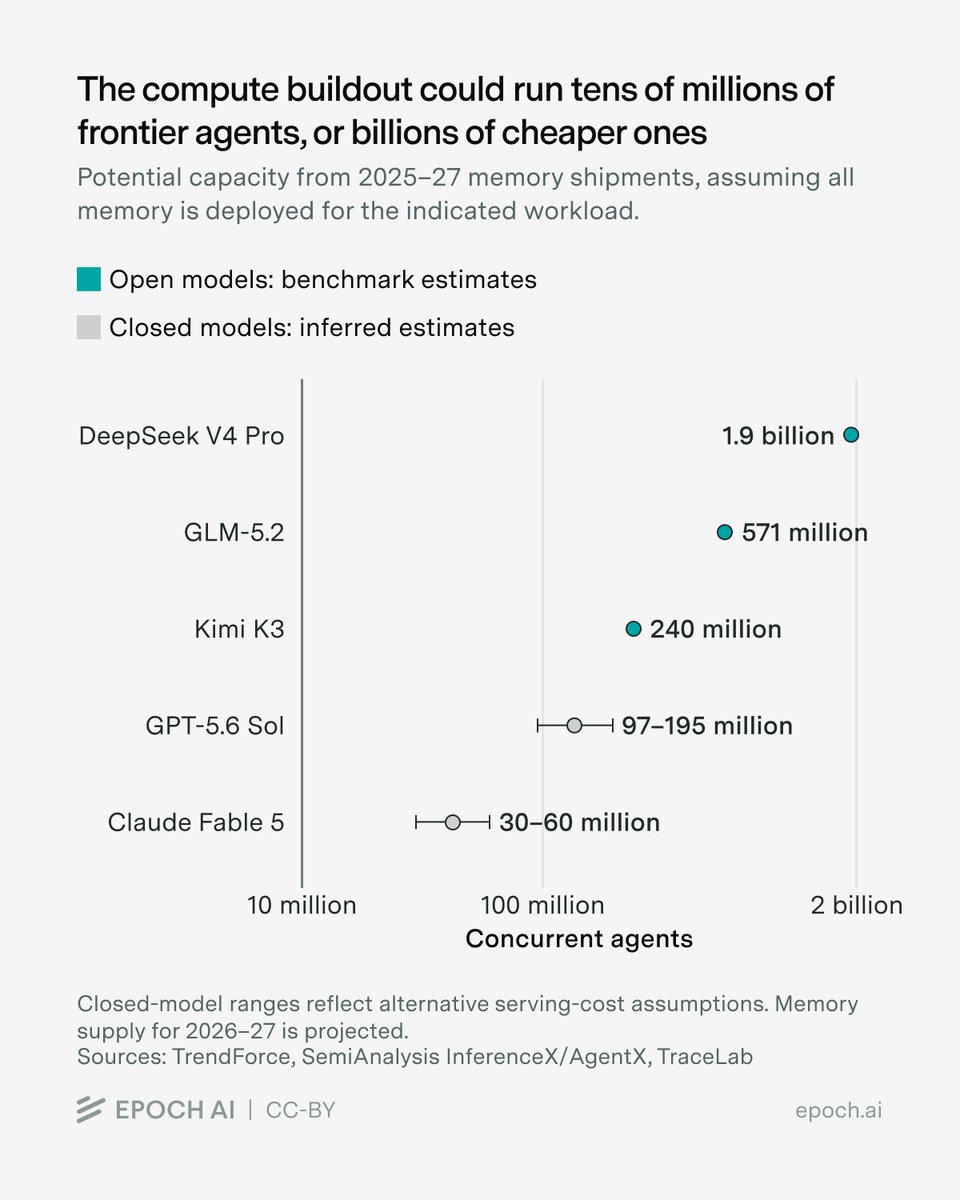
We estimate AI infrastructure could soon support hundreds of millions or even billions of AI agents. At the high end, that’s enough to rival the working hours of the global human workforce. The exact number of agents depends on the efficiency of the models they run on and whether soaring demand for AI continues. We analyzed different scenarios 🧵
Context
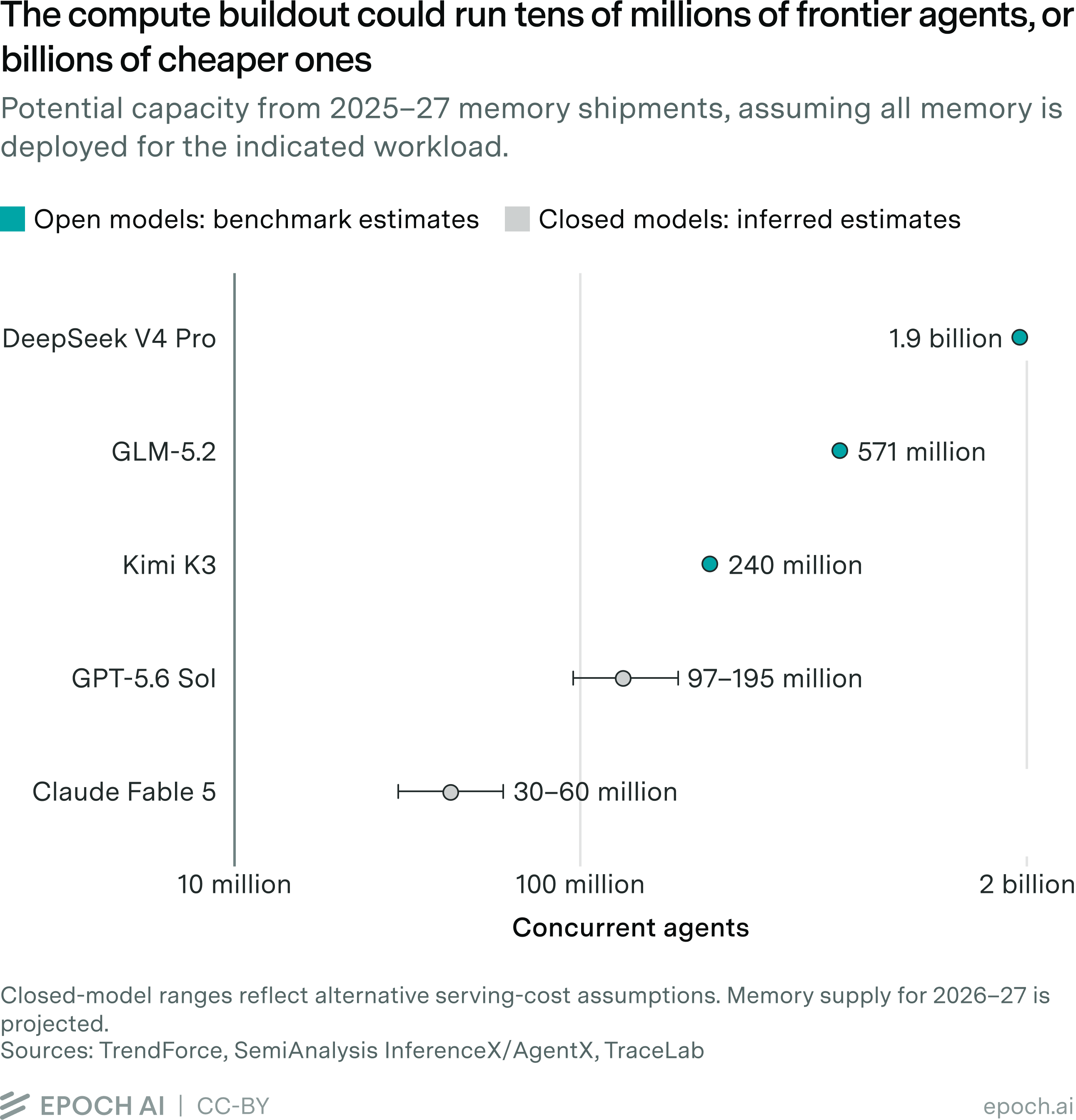
Epoch AI estimates that AI hardware could soon support hundreds of millions or even billions of concurrent AI agents, and says the high end would rival the working hours of the global human workforce. The number depends heavily on which model runs the agents: in Epoch's chart, memory shipments from 2025 to 2027 support 30 to 60 million agents running Claude Fable 5 but 1.9 billion running DeepSeek V4 Pro.
That assumption is essential to reading the numbers. The chart assumes all memory shipped in that period is deployed for the indicated workload, and its 2026 and 2027 supply is projected. It marks open-model figures as estimates and closed-model figures as inferred estimates, with closed-model ranges reflecting alternative serving-cost assumptions. So the chart compares how much -serving capacity different model choices could extract from the same memory buildout. It does not count deployed agents or show that the agents would match human work output. The thread beyond its opening post was not available. Chart and assumptions


Checking sign-in…
Loading comments…