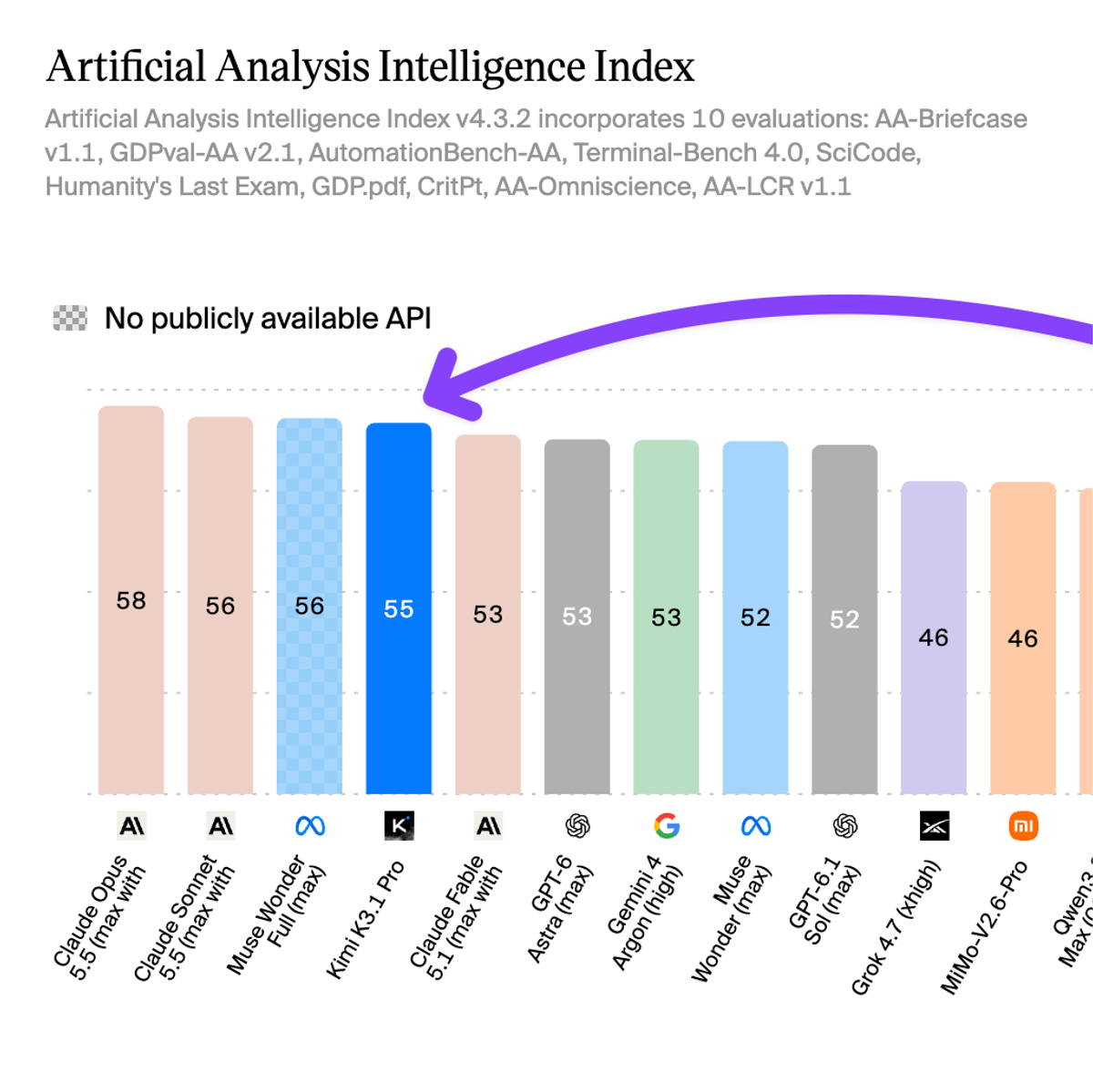
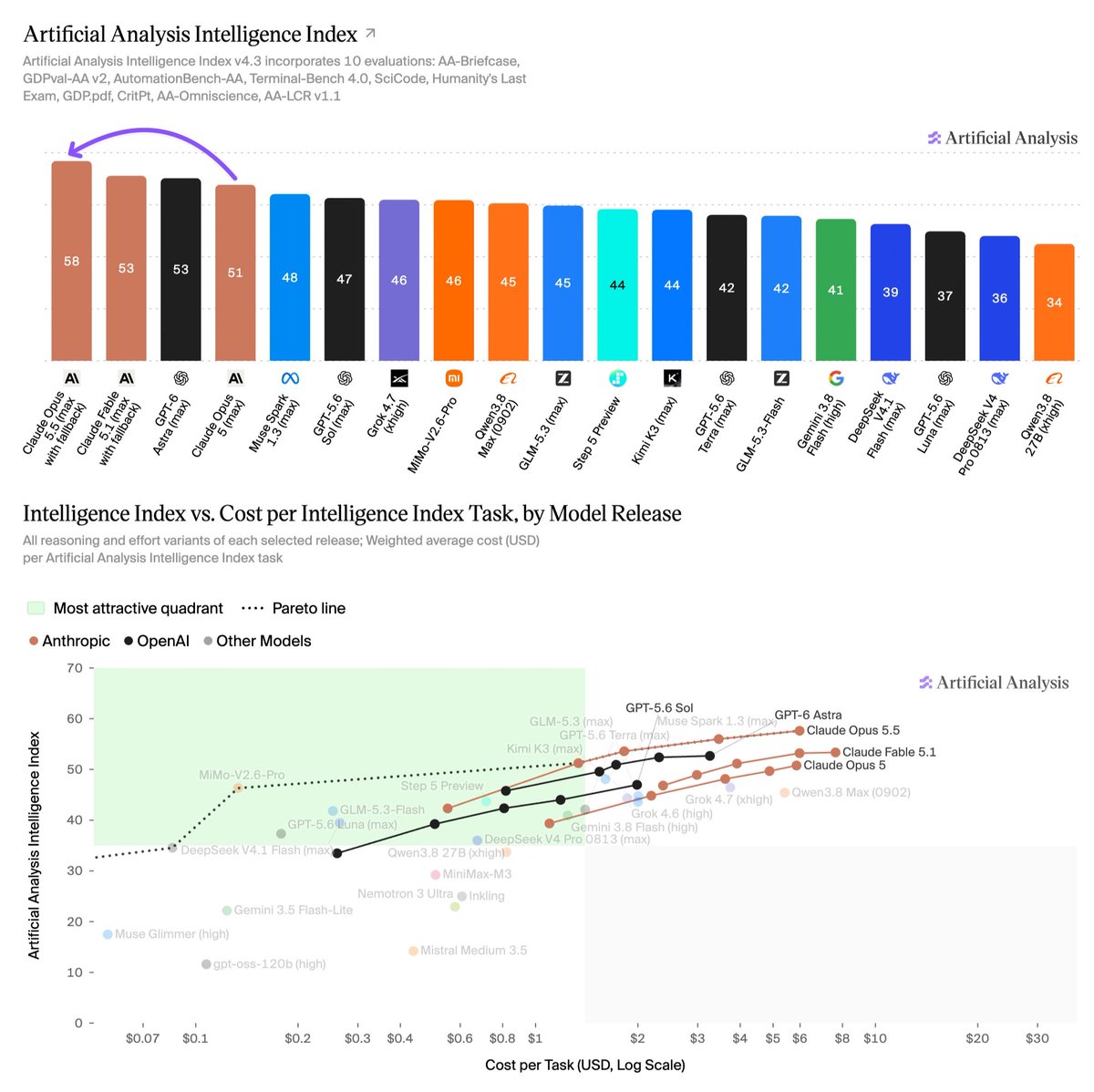
Opus 5 matches Fable 5 on the index at 26% lower cost per task and leads agentic knowledge work and Terminal-Bench, with high and xhigh efforts often cheaper than prior models.
Key takeaways · AI-distilled
Artificial Analysis ran the Opus 5 Intelligence Index evalA repeatable test for AI quality — a set of tasks plus scoring — used the way software teams use test suites, because model output is too variable to judge by eyeballing.Full definition → with Opus 4.8 fallback enabled. The reported score therefore describes that configured system.
Opus 5's reasoning effort changes cost and performance. On GDPval-AA v2, Artificial Analysis reports a 407-point Elo range and roughly eightfold variation in output tokenThe chunk of text a model reads and writes in — roughly three-quarters of a word — and the unit AI usage is billed in.Full definition → between low and maximum effort.
Opus 5 answered more factual questions correctly than Opus 4.8, but also answered more often when uncertain. Its reported AA-Omniscience hallucinationWhen a model states something false with full confidence — inventing facts, citations, or APIs that don't exist.Full definition → rate rose by 14 points to 50%.
Terms in this piece · Glossary
eval — A repeatable test for AI quality — a set of tasks plus scoring — used the way software teams use test suites, because model output is too variable to judge by eyeballing.
token — The chunk of text a model reads and writes in — roughly three-quarters of a word — and the unit AI usage is billed in.
hallucination — When a model states something false with full confidence — inventing facts, citations, or APIs that don't exist.