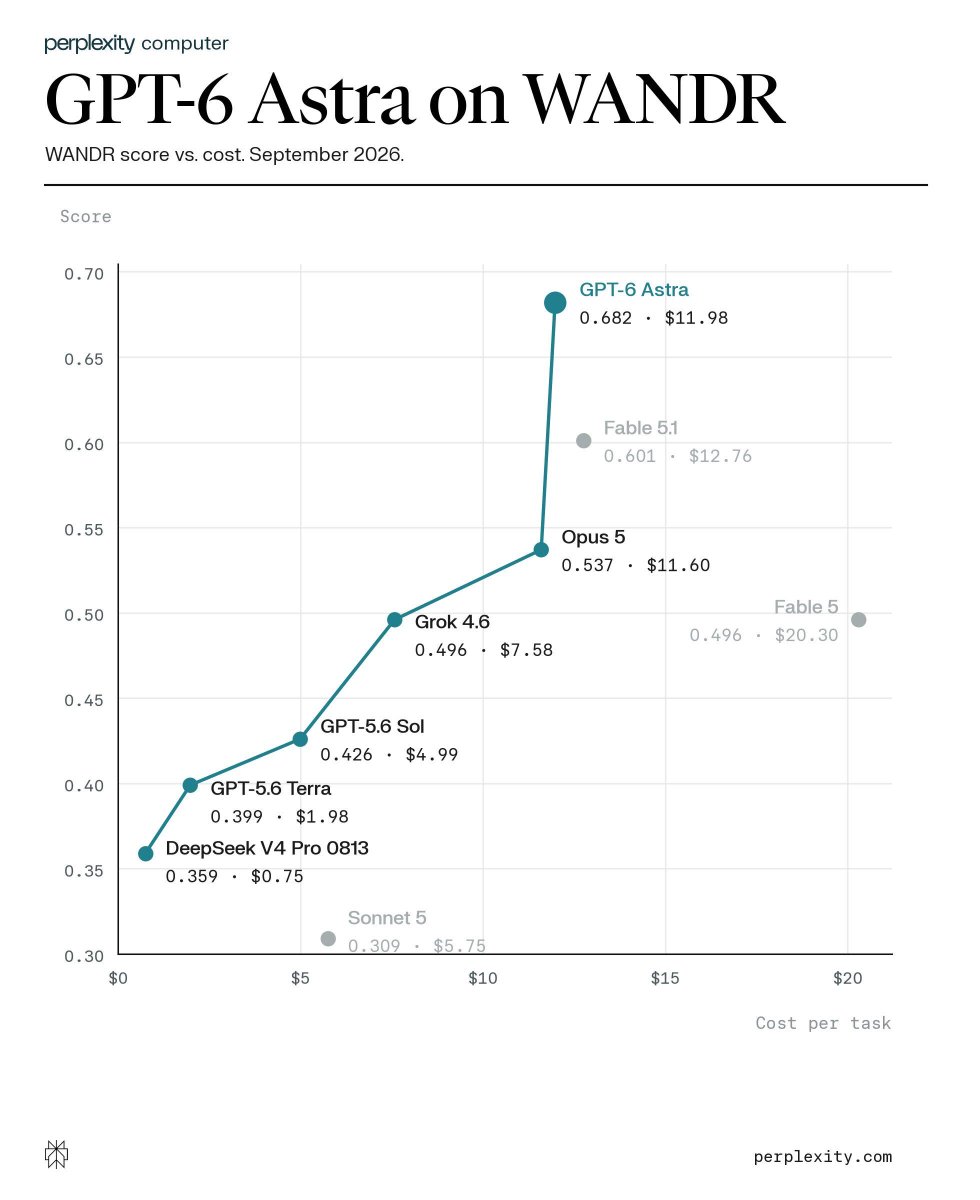
A higher price per tokenThe chunk of text a model reads and writes in — roughly three-quarters of a word — and the unit AI usage is billed in.Full definition → does not raise the bill one-for-one when much less text is generated. Artificial Analysis' GPT-6 Astra evaluation attributes part of OpenAI's cost competitiveness to reduced token use, while still finding higher costs than its predecessor, GPT-5.6 Sol, at maximum effort.
The comparison also separates a standardized model evaluation from coding-AI agentAn AI system that doesn't just answer once but works toward a goal in a loop — taking actions, reading the results, and deciding what to do next.Full definition → results produced in each provider's agent harnessThe scaffolding around a model that turns it into a working agent — the loop, the tools it can call, and the rules for when to stop.Full definition →. Those are different systems under test. The useful takeaway is to compare the complete configuration and workload: model price, generated volume, effort setting and agent software all shape the observed cost and performance.
Key takeaways · AI-distilled
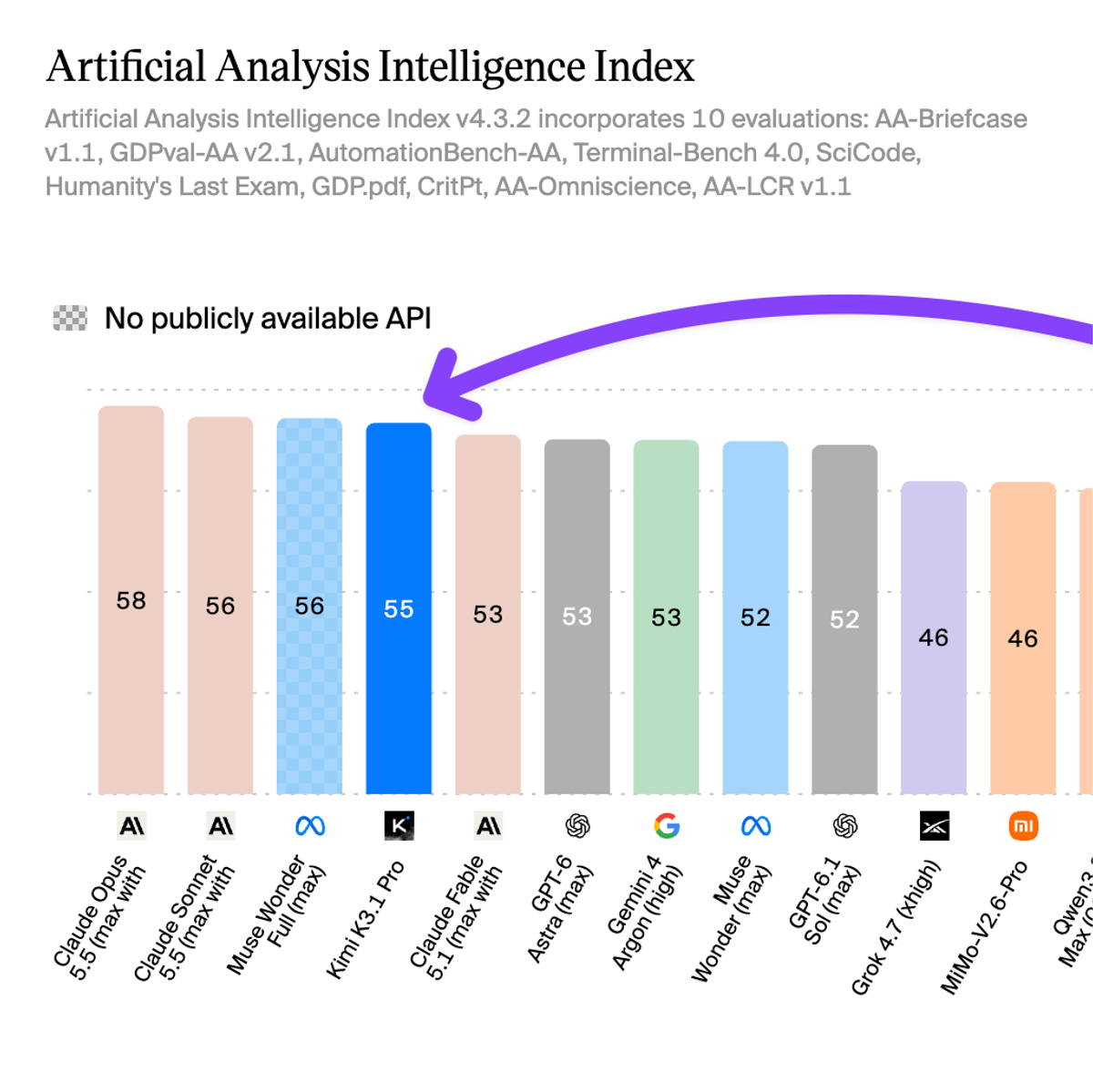
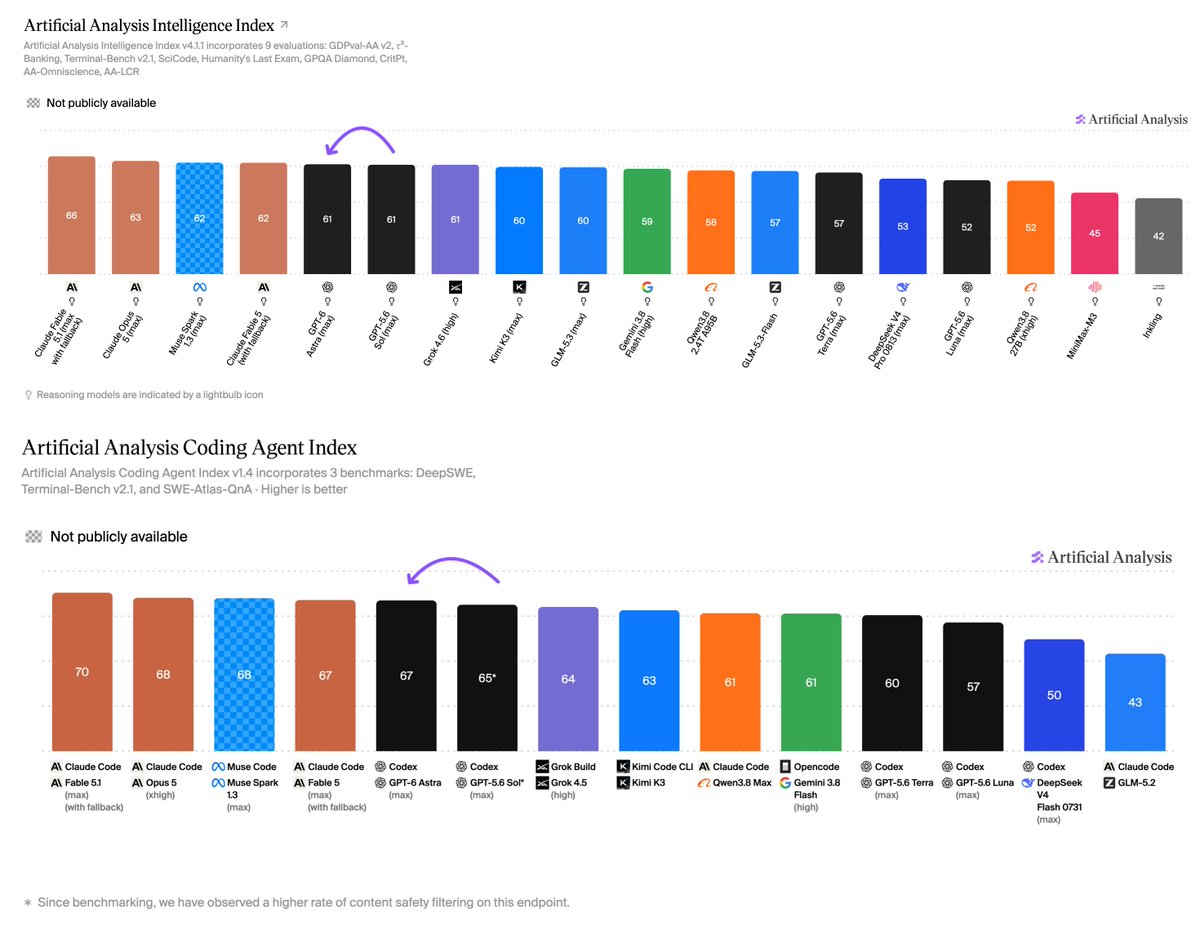
On the Intelligence Index, Artificial Analysis says GPT-6 Astra (max) scores 53, matching Claude Fable 5.1 at $3.26 versus $7.63 per task, because it uses about 27k output tokens per task against Fable 5.1's 78k; every Astra effort level sits on the cost frontier.
In the Coding Agent Index, Astra in Codex scores 62 like Fable 5.1 in Claude Code, at $7.09 per task, about 40% cheaper; its 7-point gain over GPT-5.6 Sol comes from Terminal-Bench and SWE-Atlas-QnA, partly offset by a lower DeepSWE score (68% vs 72%).
Astra's drop in AA-Omniscience hallucinationWhen a model states something false with full confidence — inventing facts, citations, or APIs that don't exist.Full definition → rate, from 92% to 51% at max effort, came with a 4-point accuracy gain, which Artificial Analysis notes is not always the case when models hallucinate less.
Not every result improved: Astra lost about 45 Elo on GDPval-AA v2 versus GPT-5.6 Sol, using 24 turns per task against 45 for Sol and 60 for Fable 5.1, and its AA-Briefcase gain of about 90 Elo came with lower Presentation Quality Elo.
Terms in this piece · Glossary
token — The chunk of text a model reads and writes in — roughly three-quarters of a word — and the unit AI usage is billed in.
AI agent — An AI system that doesn't just answer once but works toward a goal in a loop — taking actions, reading the results, and deciding what to do next.
agent harness — The scaffolding around a model that turns it into a working agent — the loop, the tools it can call, and the rules for when to stop.
hallucination — When a model states something false with full confidence — inventing facts, citations, or APIs that don't exist.