GPT-6.1 Sol launches with near-Astra performance and cheaper caching
- Source
- x.com
- Date

GPT-6.1 Sol is here. Upgraded with stronger agentic coding and computer use, near-Astra performance, and cached input at a 95% discount to standard input pricing. GPT-6.1 Sol is built for complex refactors, deep codebase investigations, and long-running agents across apps.

Context
OpenAI released GPT-6.1 Sol as a model for long coding and work, claiming "near-Astra performance" and cached input at a 95% discount to standard input pricing, so cached input costs one twentieth of the normal input rate. Astra refers to GPT-6 Astra, which OpenAI launched earlier in September.
Cached input is the part of a request that the provider has recently processed already, such as a long set of instructions or a conversation history sent again with each new step. OpenAI says the model is built for complex refactors, deep codebase investigations and long-running agents across apps. Work of that kind can involve resending the same many times, so much of its input could be billed at the cached rate.
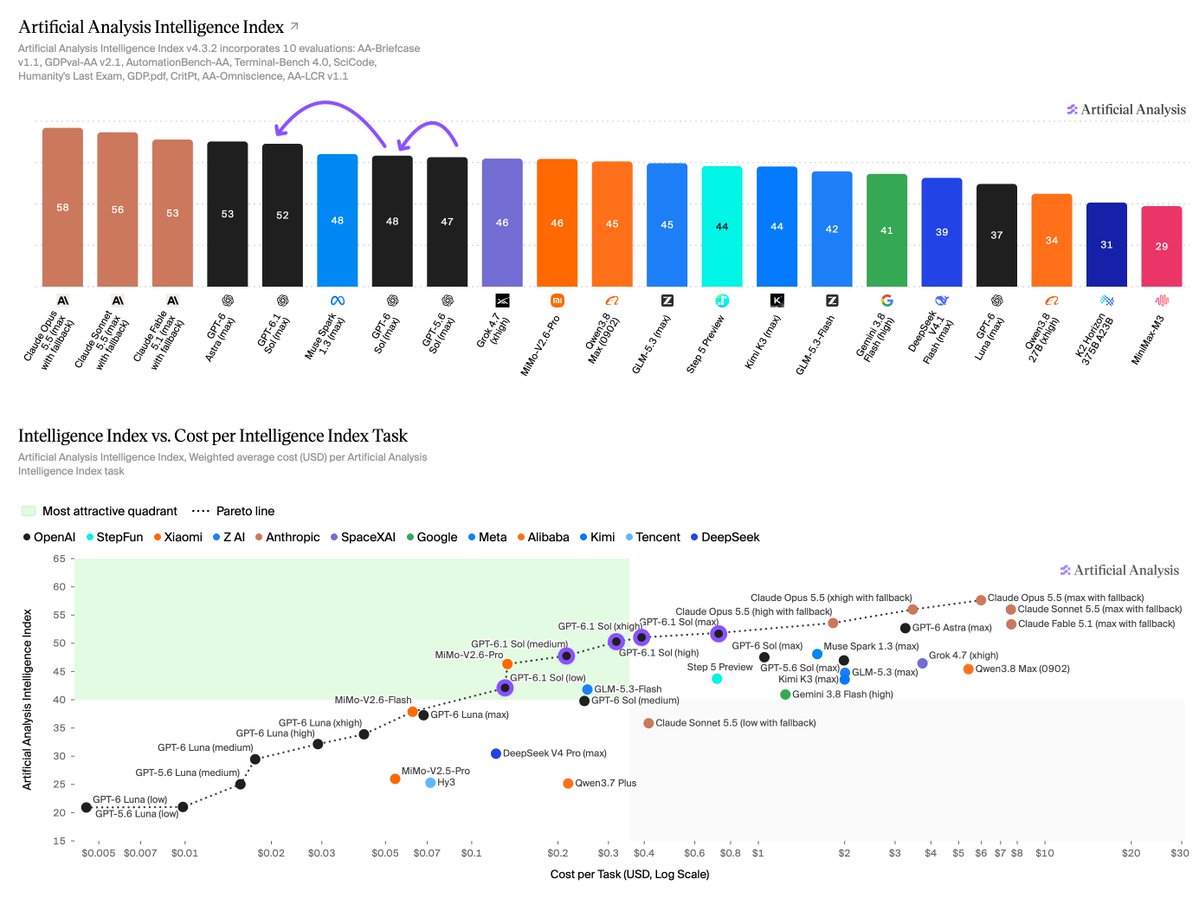
The post gives no actual prices, scores or measure of what "near-Astra" means, and its attached video could not be transcribed, so the performance claim rests on OpenAI's wording alone. In a separate report, the benchmarking group Artificial Analysis measured the model's cost per task against GPT-6 Astra.
- AI agent — An AI system that doesn't just answer once but works toward a goal in a loop — taking actions, reading the results, and deciding what to do next.
- context window — The maximum amount of text a model can consider at once — its working memory for the current conversation or task.
- benchmark — A standard public test set for comparing AI models — the shared scoreboards behind every "model X beats model Y" claim.
- token — The chunk of text a model reads and writes in — roughly three-quarters of a word — and the unit AI usage is billed in.

Checking sign-in…
Loading comments…