Mercury brings diffusion-based parallel generation to production chat
- Source
- x.com
- Date

We’re excited to launch Mercury, the first commercial-scale diffusion LLM tailored for chat applications! Ultra-fast and efficient, Mercury brings real-time responsiveness to conversations, just like Mercury Coder did for code.

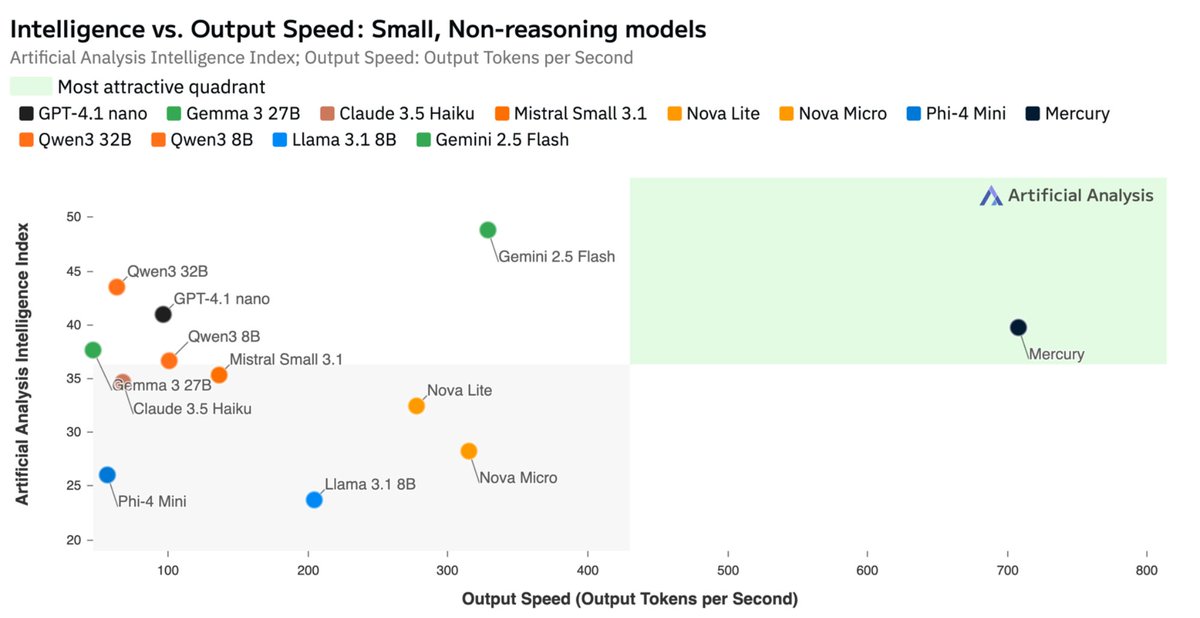
According to 3rd-party benchmarking from @ArtificialAnlys, Mercury matches the performance of speed-optimized frontier models like GPT-4.1 Nano and Claude 3.5 Haiku while running over 7x faster.
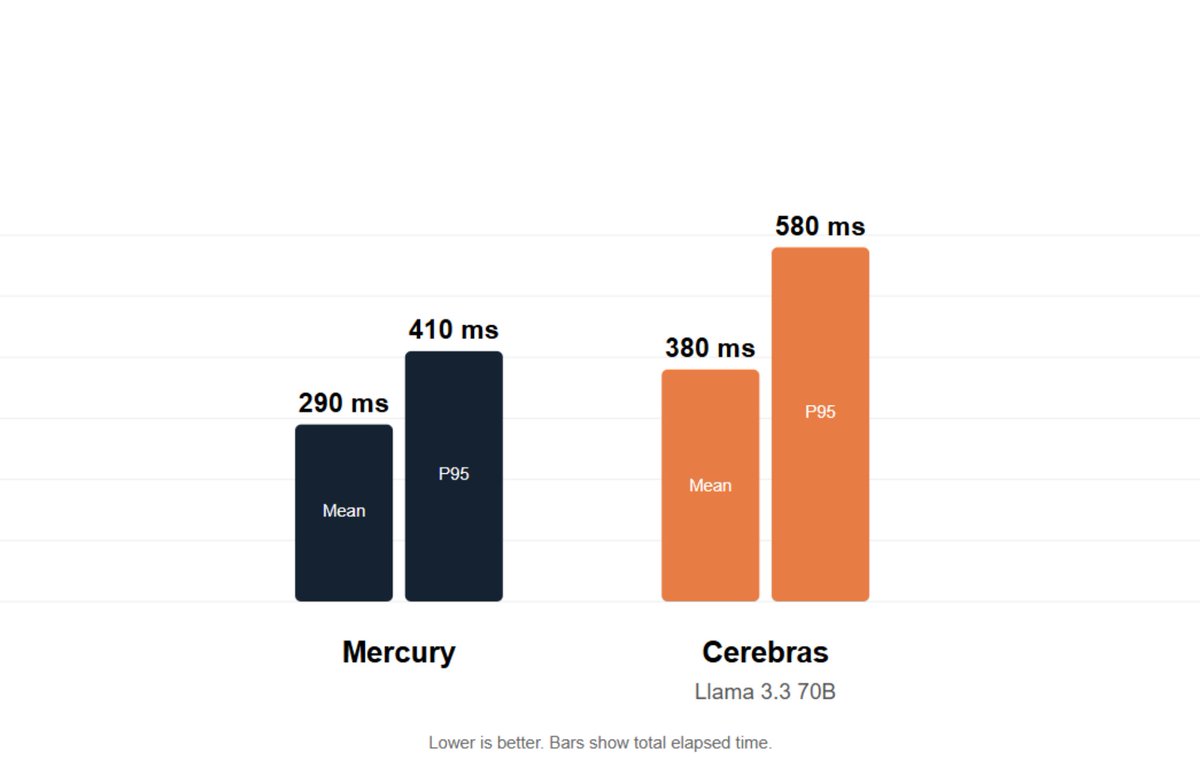
Mercury’s low latency enables it to power responsive voice applications, ranging from translation services to call center agents. On real-world voice prompts and standard Nvidia hardware, Mercury provides lower latency than Llama 3.3 70B running on Cerebras.
Mercury is also the founding LLM partner for @Microsoft NLWeb project. Compared with other speed-focused models like GPT-4.1 Mini and Claude 3.5 Haiku, Mercury runs far faster, ensuring a fluid user experience. https://t.co/g647IORy8y

Context
Inception's June 2025 Mercury release extended its diffusion-model approach from coding to general conversation. The underlying approach trains models to predict multiple text units in parallel, as described in the research abstract. The chat release made that approach available for a wider range of text applications through an API. Its intended benefit was shorter waits in interactive services such as voice assistants. Inception's launch article reported output speed of 708 per second, alongside task scores that varied across the suite.
- token — The chunk of text a model reads and writes in — roughly three-quarters of a word — and the unit AI usage is billed in.
- benchmark — A standard public test set for comparing AI models — the shared scoreboards behind every "model X beats model Y" claim.
- LLM — A large language model — the neural network behind tools like Claude and ChatGPT, trained on huge amounts of text to predict what comes next.
 postInception ships Mercury Decide update with ZDR and 66k context
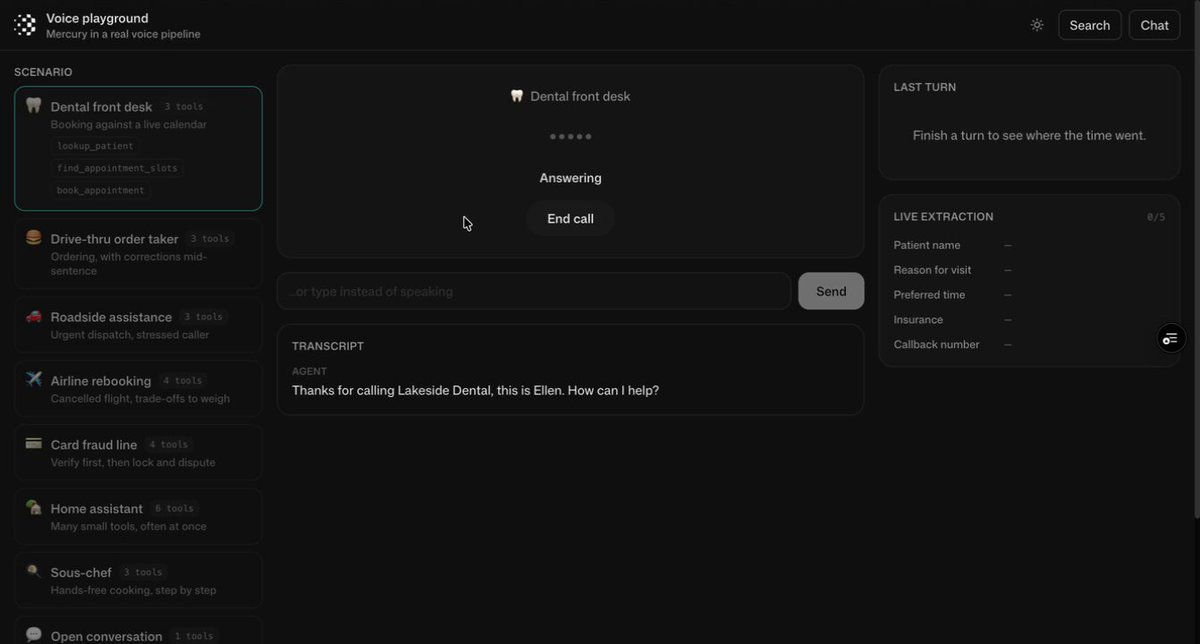 postInception launches Mercury Voice, a diffusion LLM for low-latency voice agents
 postToday, we’re introducing Mercury 2.5, the most capable diffusion LLM on the…
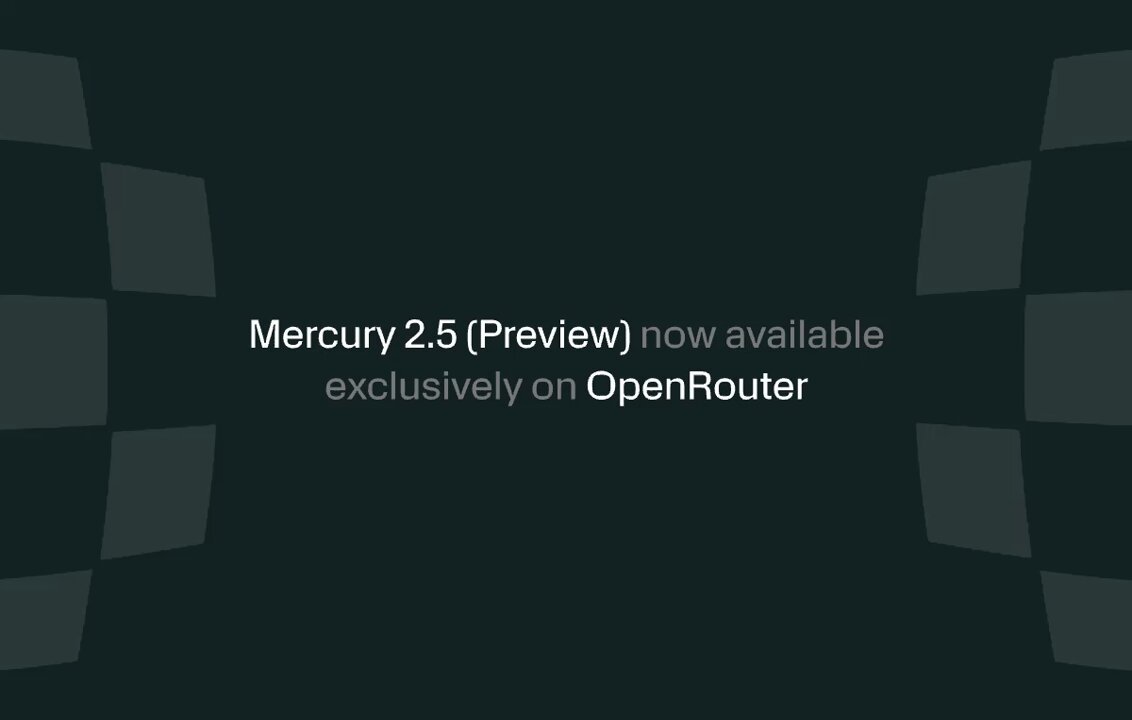 postInception ships Mercury 2.5 Preview at roughly 1,100 tokens per second

Checking sign-in…
Loading comments…