← All IntelIntel / article
Enhancing Conversational Ai Latency With Efficient Tts Pipelines
- Source
- elevenlabs.io
- Publisher
- ElevenLabs
- Author
- ElevenLabs editorial sitemap
- Date
Context
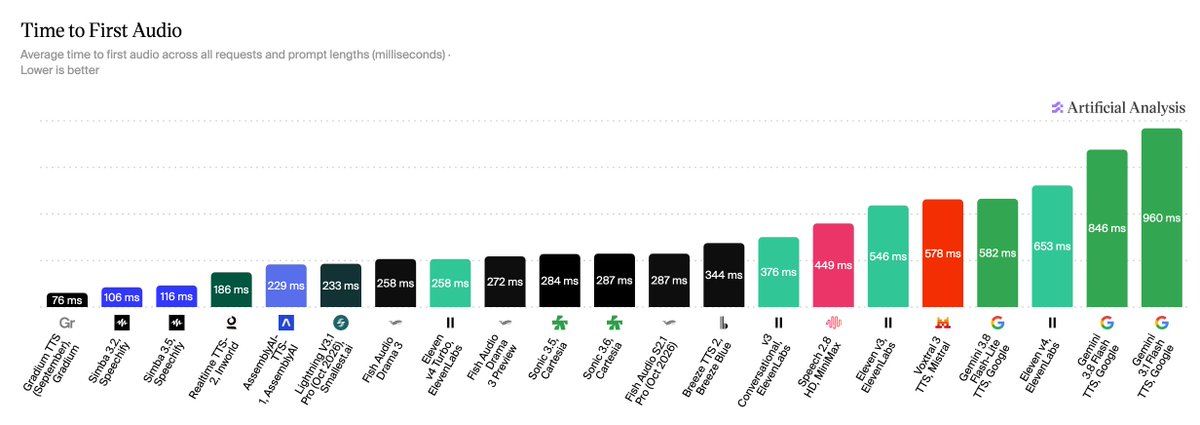
A 's response speed is the whole pause a caller experiences after finishing a sentence. ElevenLabs explains that this includes recognizing speech, deciding the speaker has finished, generating a reply and turning it into audio, plus communication between those stages. A speech model's processing time measures only part of that wait. Its latency guide explains the distinction.
Streaming can shorten the wait by overlapping work: speech generation begins from an early part of the reply while the continues writing, and playback starts before all the audio is ready. That makes the full conversation pipeline the useful unit to measure when improving responsiveness. The guide describes this overlap.
Key takeaways · AI-distilled
- ElevenLabs says agents with end-to-end latency above 700 ms may feel unnatural, and those over 1,200 ms see high abandonment rates; it suggests 700 ms as a production target while watching P95, not just averages.
- Speech recognition latency is not transcription time, since transcription runs while the user talks; it is the gap between end of speech and the finalized transcript, which ElevenLabs claims Scribe v2 Realtime cuts to about 150 ms.
- A voice activity detector adds latency on purpose: it waits for sustained silence before ending the user's turn. That avoids responding mid-sentence, but the wait stacks on top of every other stage's delay.
- Function calls range from tens of milliseconds for internal lookups to seconds for payment or inventory systems. The suggested fix is having the LLM say something like "Let me check that for you" while the tool runs in parallel.
- Two pipeline overlaps the article recommends: start TTS on the LLM's first sentence while later sentences are still generating, and run in streaming mode so playback is not blocked until the check finishes.
Terms in this piece · Glossary
- Realtime conversational agent — An agent that processes streaming audio or visual input while a session is live.
- Large language model — A model trained on large amounts of data to process and generate language.
- time to first token — The delay between sending a model request and receiving the first piece of its response.
- guardrails — The checks around a model that block bad inputs and outputs — filters, validators, and permission rules the model itself can't override.
Read the source elevenlabs.io
More from ElevenLabs editorial sitemap
Recommended reads