New benchmark measures how fast TTS models start speaking
- Source
- x.com
- Date

Announcing Artificial Analysis Time to First Audio, measuring how quickly Text to Speech models start speaking. Among the leading models the wait ranges from 76 ms to nearly a second Our Text to Speech benchmarks already cover quality, pronunciation and generation speed, but not how long a user waits before hearing anything — the number that decides whether a voice agent feels responsive. We measure every model daily on the same 12 prompts across four input lengths, timing audible speech rather than the first byte, and report a rolling 7-day mean. Key results: ➤ Fastest at the frontier: @SpeechifyAI's Simba 3.5 starts in 116 ms — the highest Arena Elo of any model that begins speaking in under 200 ms. @InworldAI's Realtime TTS-2 follows at 186 ms. ➤ Turbo variants earn their name: @ElevenLabs' Eleven v4 Turbo starts in 258 ms against 653 ms for Eleven v4, at the same Arena Elo. @FishAudio's Fish Audio Drama 3 matches it at 258 ms and @cartesia's Sonic 3.6 is at 287 ms. ➤ Streaming is the dividing line: The 65 streaming models typically begin speaking within a few hundred milliseconds, a median of 376 ms. The 20 non-streaming models must finish generating before they return…

Context
Artificial Analysis, a firm that benchmarks AI models, now measures how long a text-to-speech model makes a listener wait before any speech is heard. Among the leading models it charts, the wait runs from 76 milliseconds for Gradium TTS to 960 milliseconds for Google's Gemini 3.1 Flash TTS. The firm's existing speech benchmarks already rate quality, pronunciation and generation speed. It argues that the wait before the first sound is the number that decides whether a voice , software that holds a spoken conversation with a user, feels responsive.
Time to First Audio runs from the moment the complete text is submitted to the moment a listener would first hear speech. According to the firm's methodology page, the clock stops at the first 10-millisecond stretch of audio loud enough to count as sound, not when the first byte of data arrives, so silence at the start of a clip counts as waiting. Each model is tested once a day on 12 prompts spread across four text lengths, from 20 to 45 characters up to 450 to 700, and the published figure is the average over the past seven days.
The clearest divide is between and non-streaming models. A streaming model sends audio in pieces as it generates, so playback can begin before the clip is finished; a non-streaming model must finish generating before it returns anything. Artificial Analysis reports a median of 376 milliseconds for the 65 streaming models it measures and 2.0 seconds for the 20 non-streaming ones.
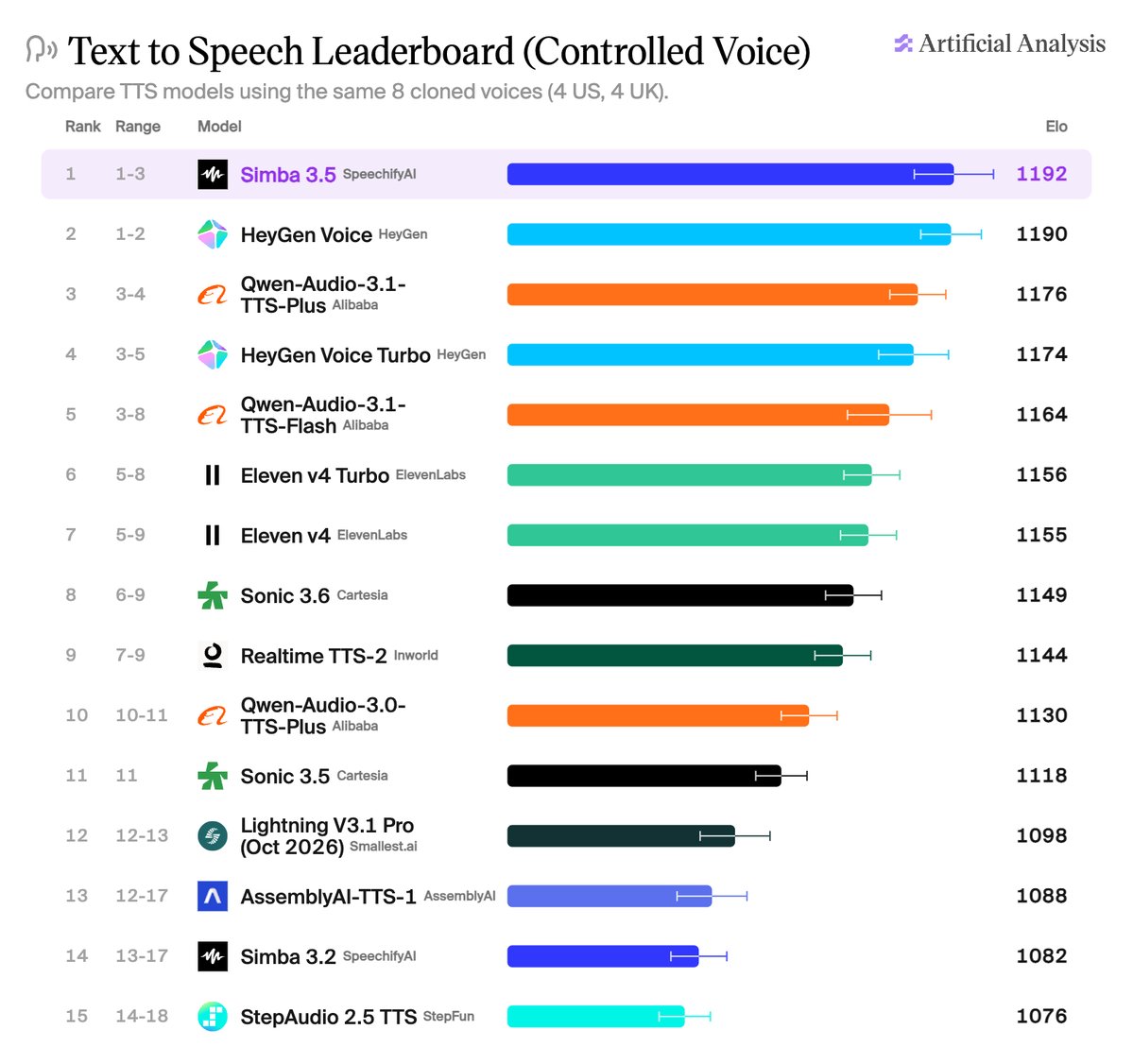
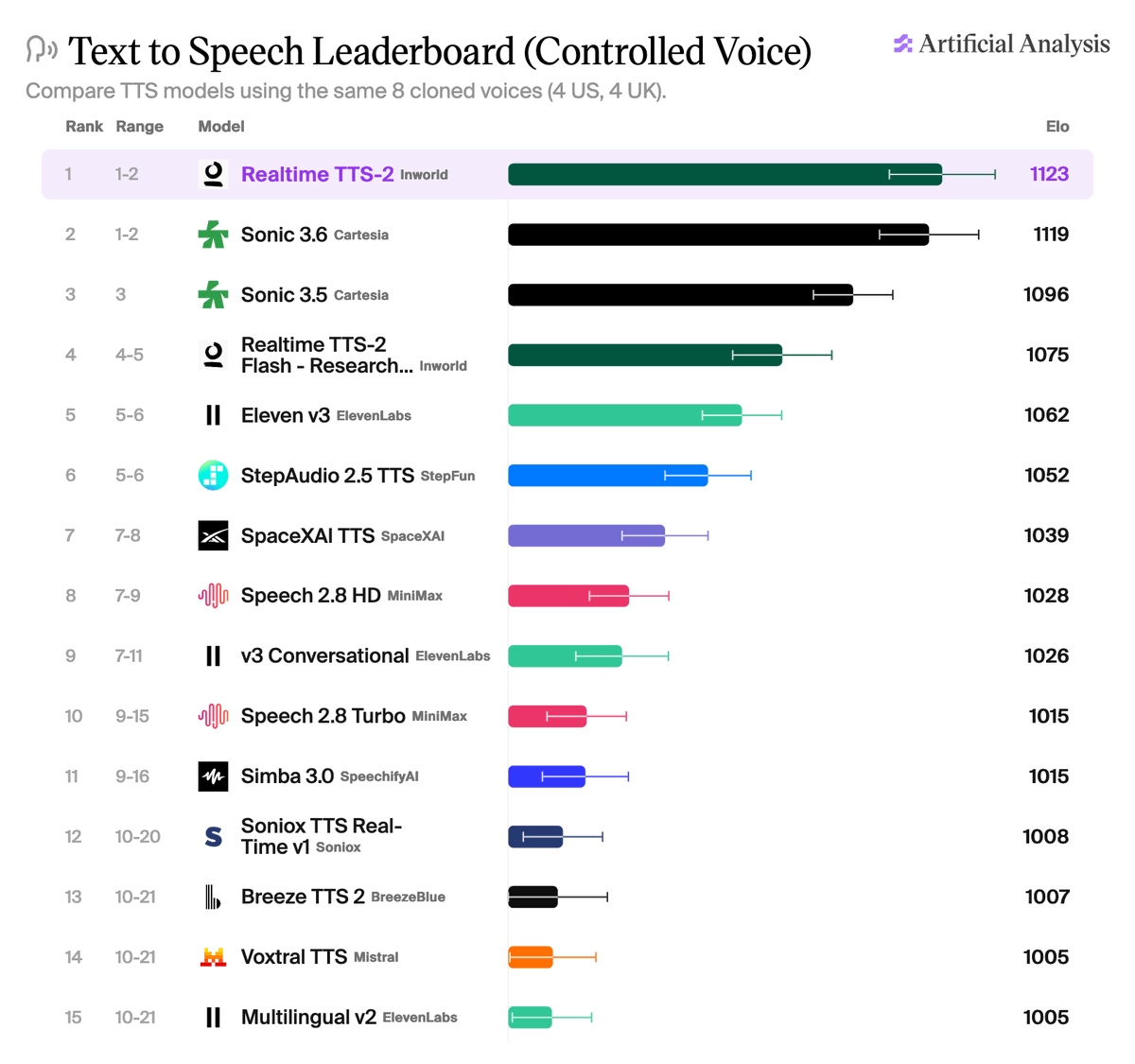
Some fast models also rate well with listeners. The firm judges that with Arena Elo, a rating from its arena in which listeners vote between voices. Speechify's Simba 3.5 starts speaking in 116 milliseconds, and the firm says it has the highest Arena Elo of any model that begins in under 200 milliseconds; Inworld's Realtime TTS-2 follows at 186. Within ElevenLabs' lineup, Eleven v4 Turbo starts in 258 milliseconds against 653 for Eleven v4, at the same Arena Elo, so in this comparison the faster variant gives up nothing on listener preference. The post gives no Elo figure for the fastest model on the chart, Gradium TTS, so it does not show what, if anything, the very fastest models trade away.
The covers only the speech step. Its clock starts once the full text exists, so in a voice agent the time spent producing that reply comes first and is not counted here. Within that limit, it gives builders a daily, like-for-like number for one part of the delay a user hears.
- AI agent — An AI system that doesn't just answer once but works toward a goal in a loop — taking actions, reading the results, and deciding what to do next.
- streaming — Sending a model's response token by token as it is generated, so the reader sees text immediately instead of waiting for the whole answer.
- benchmark — A standard public test set for comparing AI models — the shared scoreboards behind every "model X beats model Y" claim.
Checking sign-in…
Loading comments…