Devin bots and the case for outcome-owning agent managers
- Source
- x.com
- Date

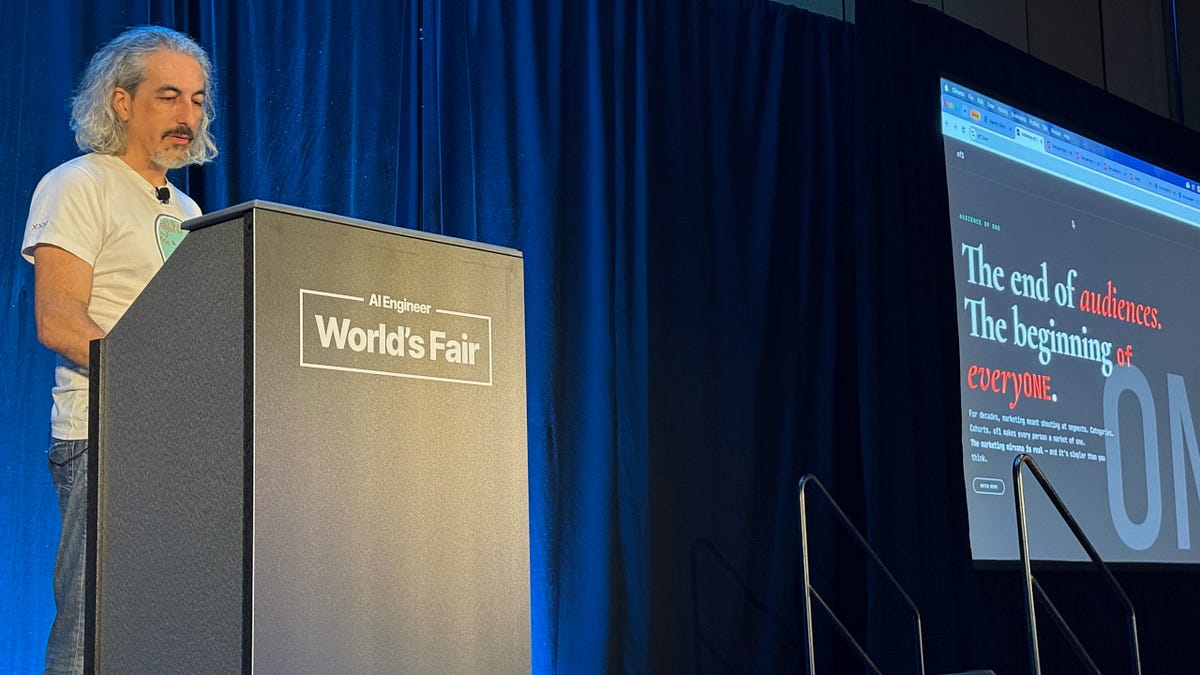
devin bots are multi-agent teams done right: - always on, proactive (but tuned for ROI) - own outcomes not tasks (but can collab w others) - manages teams of subagents (and reviews itself) - available everywhere (call text slack whatever hello @interaction) - consistent reporting thru interactive artifacts aka devinapps not long chats (HTML is all you need™ @trq212) this is the preview that @walden_yan gave at AIE. i've been trialing them for a week and i've been able to hand over my AEO, QA, cross-platform app porting, personal admin automation, and video editing work (also simultaneously moving from local agent worktree hell to cloud because ofc this is all cloud based thank god) hyped concepts this replaces: - /goal - "ultracode" / "ultra mode" - "loop engineering" - "agent to agent" - "agent swarms" - AI employees (see below) my main aha moment is that you don't want "AI Employees", we do not have agi yet and you will just fail if you overpromise/overexpect. what you want is the "just" the next level of abstraction above single tasks, and the overwhelming consensus I've had talking to everyone at the frontier of agents (yes incl cog competitors) is agent managers that own…
Context
Shawn "swyx" Wang's case for Devin bots is an argument about what to hand an , not a product review: he says the useful step beyond agents that finish one assigned task is an agent manager that owns an ongoing outcome and decides for itself what work that outcome needs (swyx). Devin is the coding agent made by Cognition, and swyx describes the bots from a preview that Walden Yan, a Cognition co-founder, gave at the AI Engineer conference. As he lists them, a bot is always on and acts without being prompted, owns a result rather than a single task, manages its own team of subagents (smaller agents it hands pieces of work to) and reviews its own work, can be reached by phone, text or Slack, and reports through interactive web pages known as devinapps instead of long chat transcripts.
The evidence is one person's week. swyx says he has been trialing the bots for a week and has handed over QA, porting an app across platforms, personal admin and video editing, and that the move also took him off local setups where several agents each work in a separate copy of a repository on his own machine, since the bots run in the cloud. He gives no measure of how well that work went. His broader claim, that the people he talks to at the frontier of agent building, including Cognition's competitors, agree on outcome-owning managers, is his own report of conversations he does not detail. He frames this as the realistic alternative to selling agents as AI employees: today's models are not general intelligence, he writes, so overpromising leads to failure, and what works is one level of abstraction above single tasks. He compares it to the human employees he values, who own a problem area and bring solutions rather than doing exactly what they were told.
Read it as an early-access opinion from someone close to the product. The post previews something that was not independently tested here, the talk it cites was not reviewed, and it ends by promoting Devin for Startups credits. Cognition's own direction toward agents that work in the background without a person steering each step is laid out in an earlier Latent Space interview with Walden Yan, which gives the background for what swyx says the bots add.
- AI agent — An AI system that doesn't just answer once but works toward a goal in a loop — taking actions, reading the results, and deciding what to do next.


Checking sign-in…
Loading comments…