Cloning a $43K SaaS in a Weekend: Lessons From 72 Agent-Built Entries
- Source
- youtu.be
- Publisher
- Latent Space
- Author
- swyx 🗽 @aiDotEngineer
- Date
Context
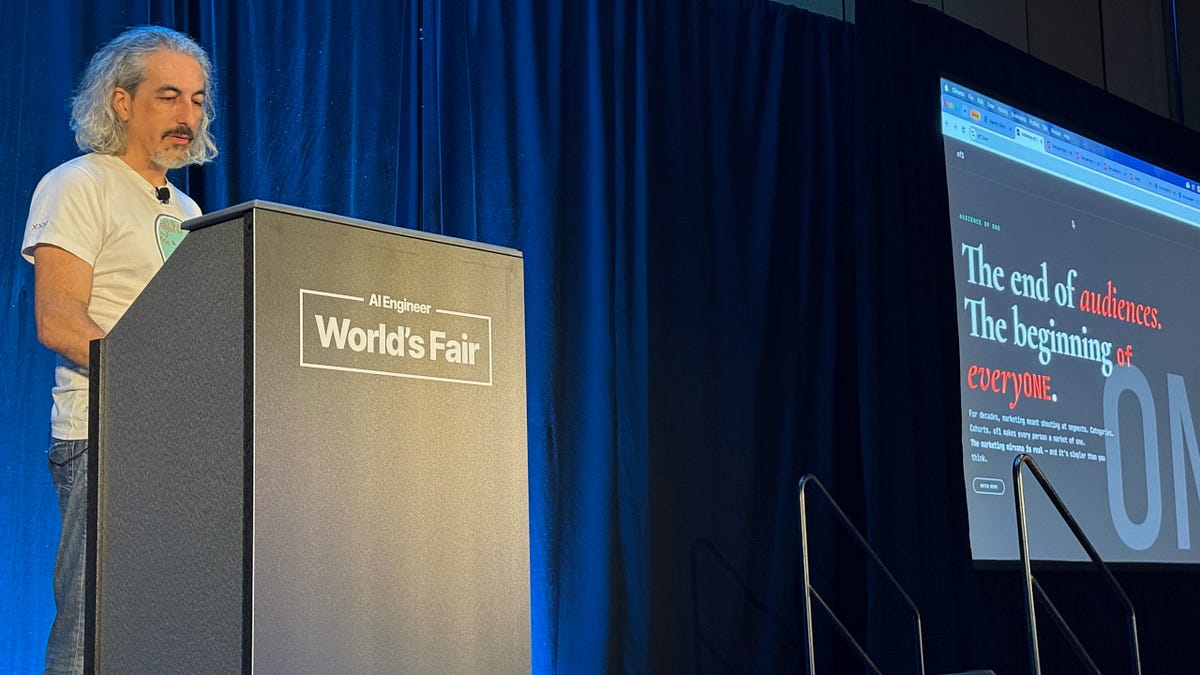
The Kill My SaaS contest found that getting coding agents to produce a convincing copy of a business was the easy part. swyx, who runs the AI Engineer conferences, had been quoted $43,000 a year for speaker-management software covering four events. Instead of buying it, the organizers gave outside builders a written brief, a walk-through video of the real product and 42 screenshots, offered $10,000 to the winner, and left the final decision to the company's non-technical events team. Seventy-two teams submitted, and the organizers report that the median public repository ran to 91,000 lines of code and that almost every entry was a substantial build. The organizers' video account covers the , findings and finalist interviews.
The entries fell short in places that only appear when the software is used for real work. The organizers name three: separate portals for speakers, invited speakers and sponsors; drag-and-drop scheduling that shows a move took effect and prevents double-booking a room; and adding an invited talk without faking a public submission. They say none of these was well specified in their own documentation of the product. An automated judge, in which Claude logged in as each role, clicked through 20 scripted scenarios and graded the results, ranked entries poorly against the humans: six of its top ten were rated weak by the events team, and the eventual winner placed 19th on its leaderboard. Some of that gap was intended, because builders were encouraged to depart from the spec where their judgment improved the product. The three finalists shared two habits: heavy research and planning before prompting, and clicking through their own apps as users. That second habit caught bugs such as a headshot upload that saved the photo somewhere the public speaker page never read from.
The contest supports a narrower claim than the death of SaaS. swyx estimates that cloning a mid-tier tool costs about $1,000 in and perhaps $10,000 in engineering expertise, and points out that whoever owns the clone must then maintain it. Kelsey, the head of operations at AI Engineer, describes the requirement plainly: when something breaks, someone has to fix it immediately. The organizers say they will probably run their 2027 conferences on a mix of the winning entry, Open Rostrum, and the runner-up, Konferencer. That decision reflects one buyer's experiment, with the cost figures as swyx's own estimates, and this account is drawn from the video's captions rather than its on-screen material. The original announcement post describes the same contest.
- Tool — An operation that the software around a model makes available for the model to request, with a name, expected inputs and a kind of result.
- Setup — The combination of a model, a harness, its connections and the path the task's data takes, considered together for a task.
- Token — A piece of text, such as a word, part of a word or a punctuation mark, that a language model represents as numbers and handles as a unit.