GPT-Realtime-2 arrives in the OpenAI API
- Source
- x.com
- Publisher
- Sam Altman
- Date

people are really starting to use voice to interact with AI, especially when they have a lot of context to dump. GPT-Realtime-2 comes to the API today; it is a pretty big step forward. (we are working on improvements to voice in chat.)
Context
GPT-Realtime-2 is a voice model that developers reach through OpenAI’s API. OpenAI’s model documentation calls it the company’s “most capable realtime voice model”: it takes in text, audio and images and replies in text or audio, so an application can hold a spoken conversation with it directly. Chief executive Sam Altman announced its arrival in the API in a May 7, 2026 post, calling it “a pretty big step forward.” His reason for caring about voice was that people increasingly talk to AI “especially when they have a lot of to dump”: long, detailed requests that a person may prefer to say rather than type.
The documentation says GPT-Realtime-2 supports speech-to-speech interaction with configurable . Developers can set how much reasoning effort it spends before answering, and the page notes that higher effort can increase latency (the delay before the reply starts) and output token usage, which is billed. That setting is the main trade-off for anyone building a , because a caller hears every pause: a quick setting suits simple exchanges, while a higher one buys more careful handling of complicated requests at the cost of waiting. The model also supports , which lets it trigger actions in the developer’s own software (for example, a hypothetical order lookup), and OpenAI says it offers “more reliable tool use for complex voice-agent workflows.”
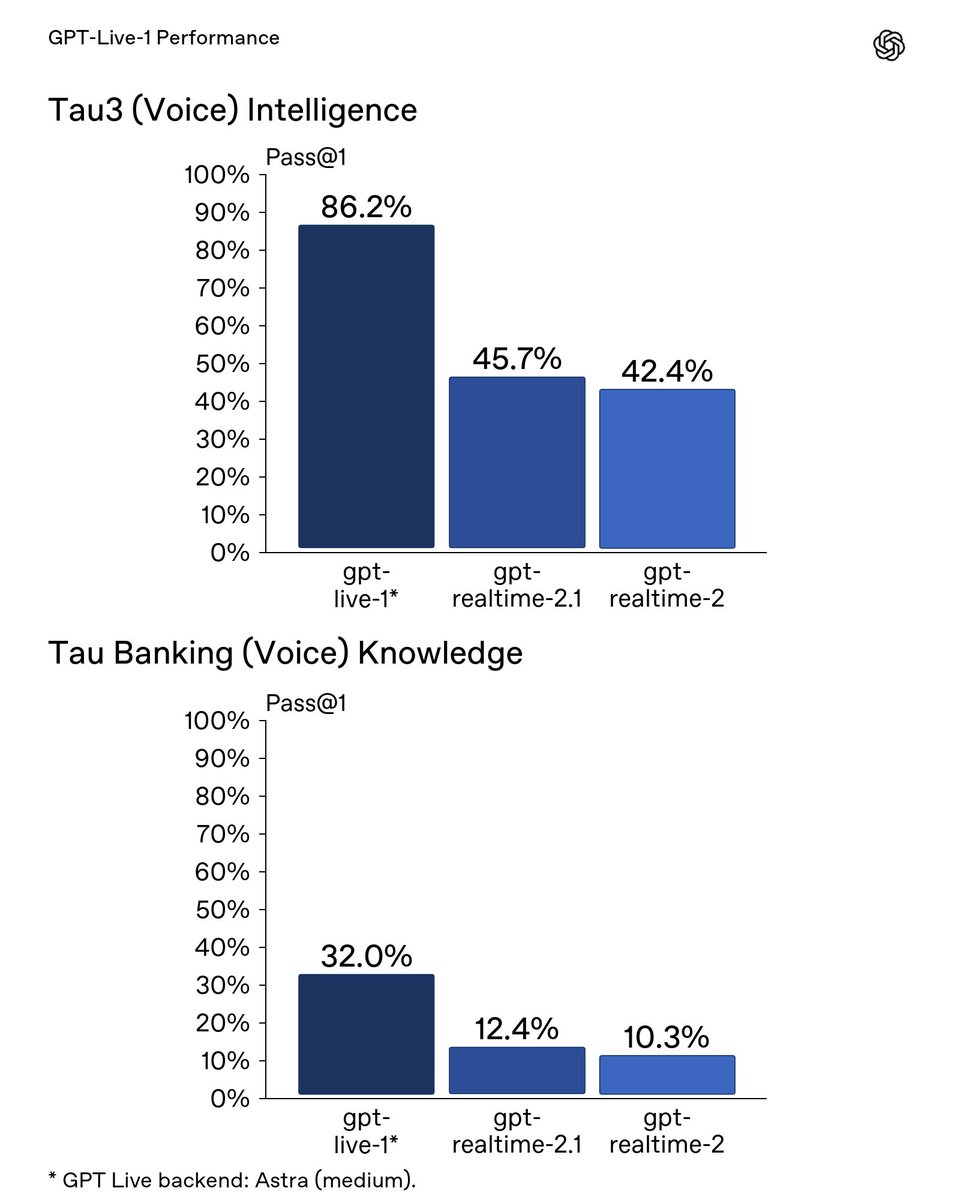
Altman’s post gives no benchmarks or comparisons, and OpenAI’s launch announcement could not be read for this explanation, so how much GPT-Realtime-2 improves on earlier voice models is not established here. The documentation was read in October 2026 and may reflect changes made after launch. The post also separated this release from ChatGPT: Altman said improvements to voice in chat were still being worked on, so this launch concerned developers building on the API rather than the ChatGPT app. A later Altman post announced GPT-live, a voice model for ChatGPT.
- Context and context window — Context is the information available for a generation; the context window is the capacity available to hold it.
- Reasoning effort — The inference-time budget a reasoning model spends before answering.
- Realtime conversational agent — An agent that processes streaming audio or visual input while a session is live.
- tool use — A model's ability to call external functions — run code, search the web, edit files — instead of only generating text.