Cua Ships Compositor-Native Multi-Cursor Computer Use for Omarchy
- Source
- Cua
- Date

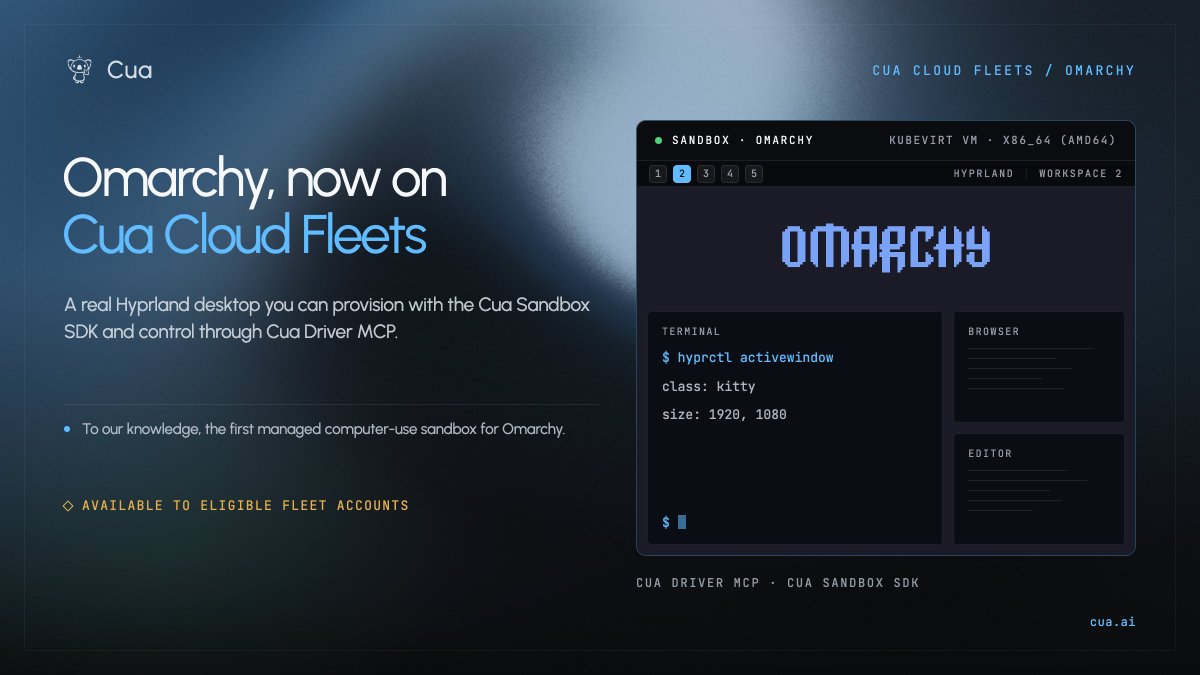
1/ Today we're announcing the stable Cua Driver release for Omarchy - a new foundation for computer use, built into the OS from the ground up. Over the last month, we worked directly with @dhh, @SpencerGBull and @vaxryy to bring a native synthetic cursor to Omarchy's Hyprland compositor, enabling true multi-cursor computer use at the OS level. Cua Driver is open source and available at

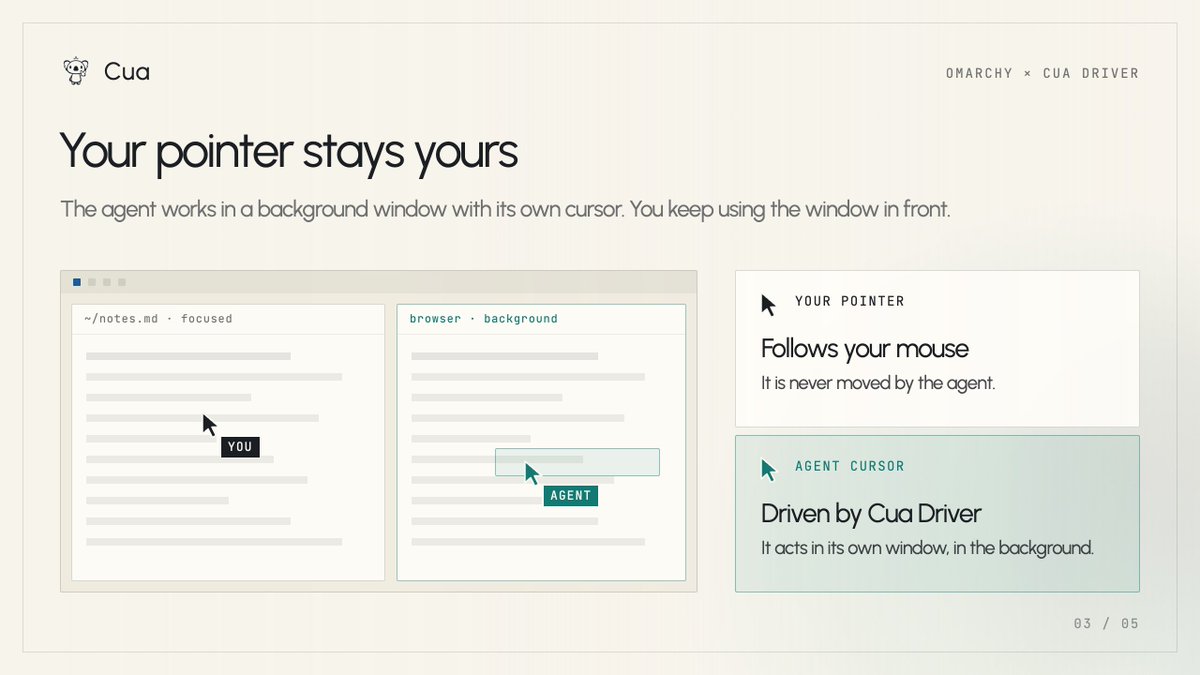
2/ Background computer use on macOS and Windows still relies on compromises and workarounds in their respective window servers to support multiple synthetic cursors. With Omarchy, we had the chance to take a different approach: the agent gets a synthetic cursor that exists inside the Hyprland compositor, so it can work in a background window while your own pointer stays available for the work in front of you.
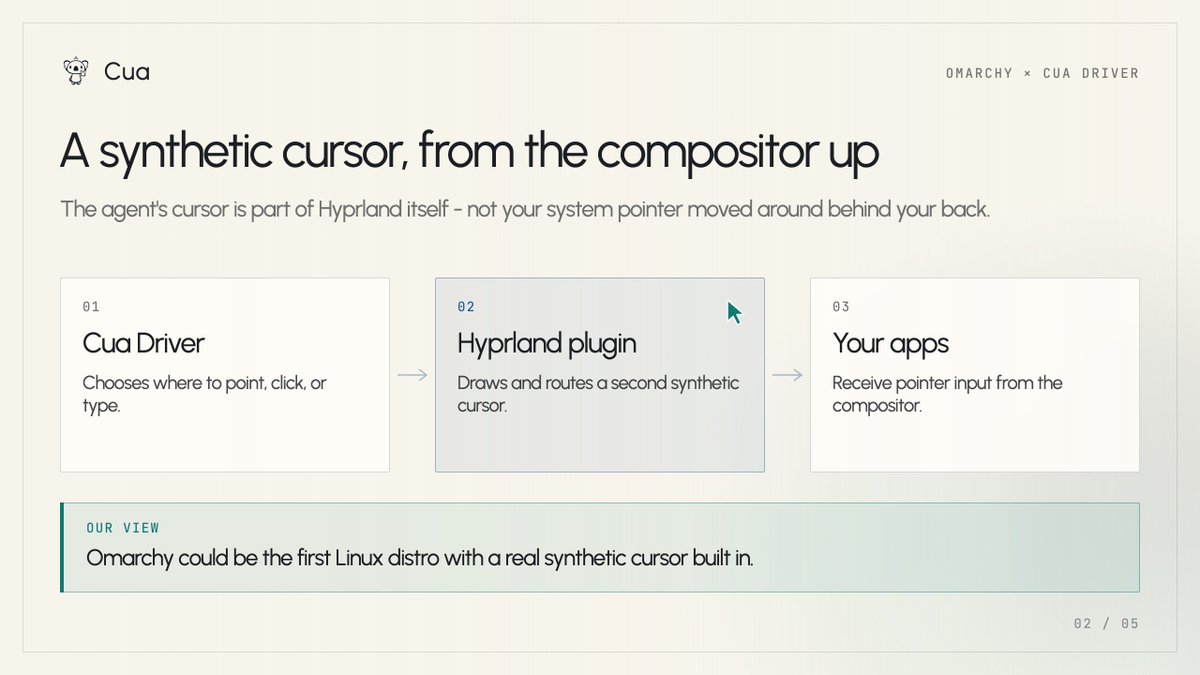
3/ The compositor owns both cursors and routes them to the right windows. That is the practical difference between background computer use and software that simply moves your visible mouse around: the agent's input stays separate from yours instead of taking over the desktop.
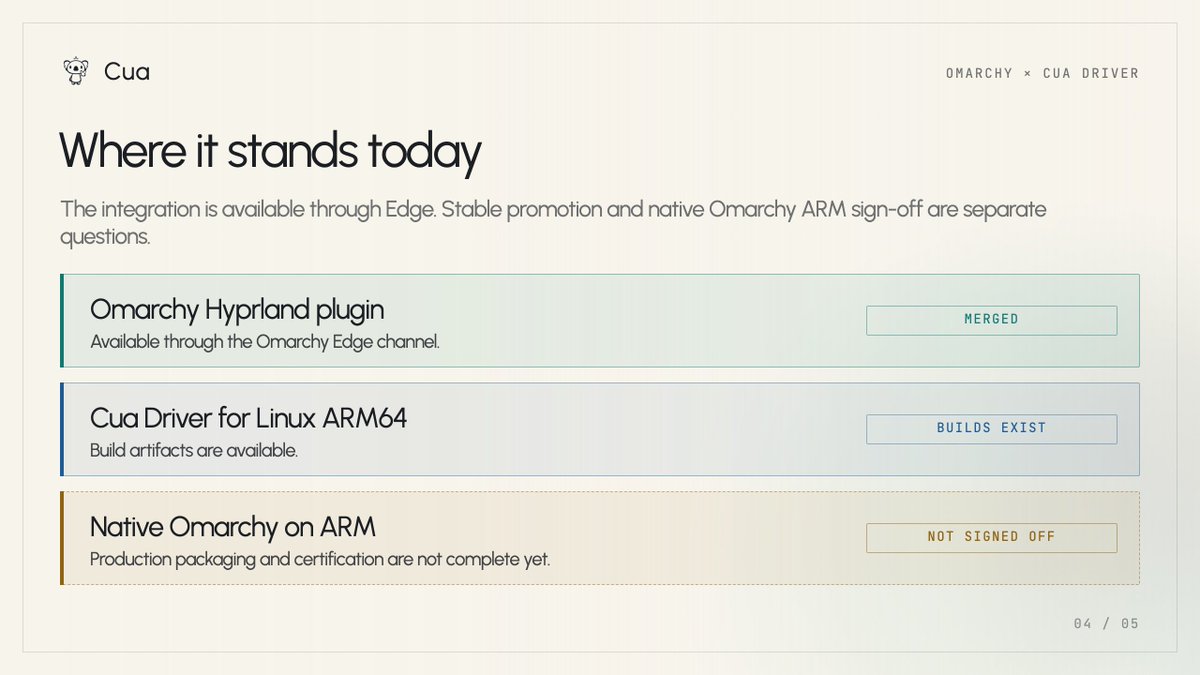
4/ The current Omarchy Cua integration is available through the Omarchy Edge channel. Cua Driver also publishes Linux ARM64 artifacts.
- Cua's stable Cua Driver for Omarchy gives an its own synthetic cursor inside the Hyprland compositor, so it can work in a background window while the user's own pointer stays available. Cua built it with @dhh, @SpencerGBull and @vaxryy.
- Cua says background computer use on macOS and Windows still relies on workarounds in their window servers to support multiple synthetic cursors; on Omarchy the compositor owns both cursors and routes each to the right window.
- The integration is available through Omarchy's Edge channel, Cua Driver is open source, and Cua also publishes Linux ARM64 artifacts for it.
- AI agent — An AI system that doesn't just answer once but works toward a goal in a loop — taking actions, reading the results, and deciding what to do next.
It demonstrates a concrete OS-level architecture, compositor-owned synthetic cursors, for running a computer-use agent in the background without hijacking the user's mouse, something macOS and Windows can't cleanly do today.




Checking sign-in…
Loading comments…