PrismML puts its 1-bit Bonsai 2 27B through iterative coding and IMO tests
- Source
- PrismML
- Date

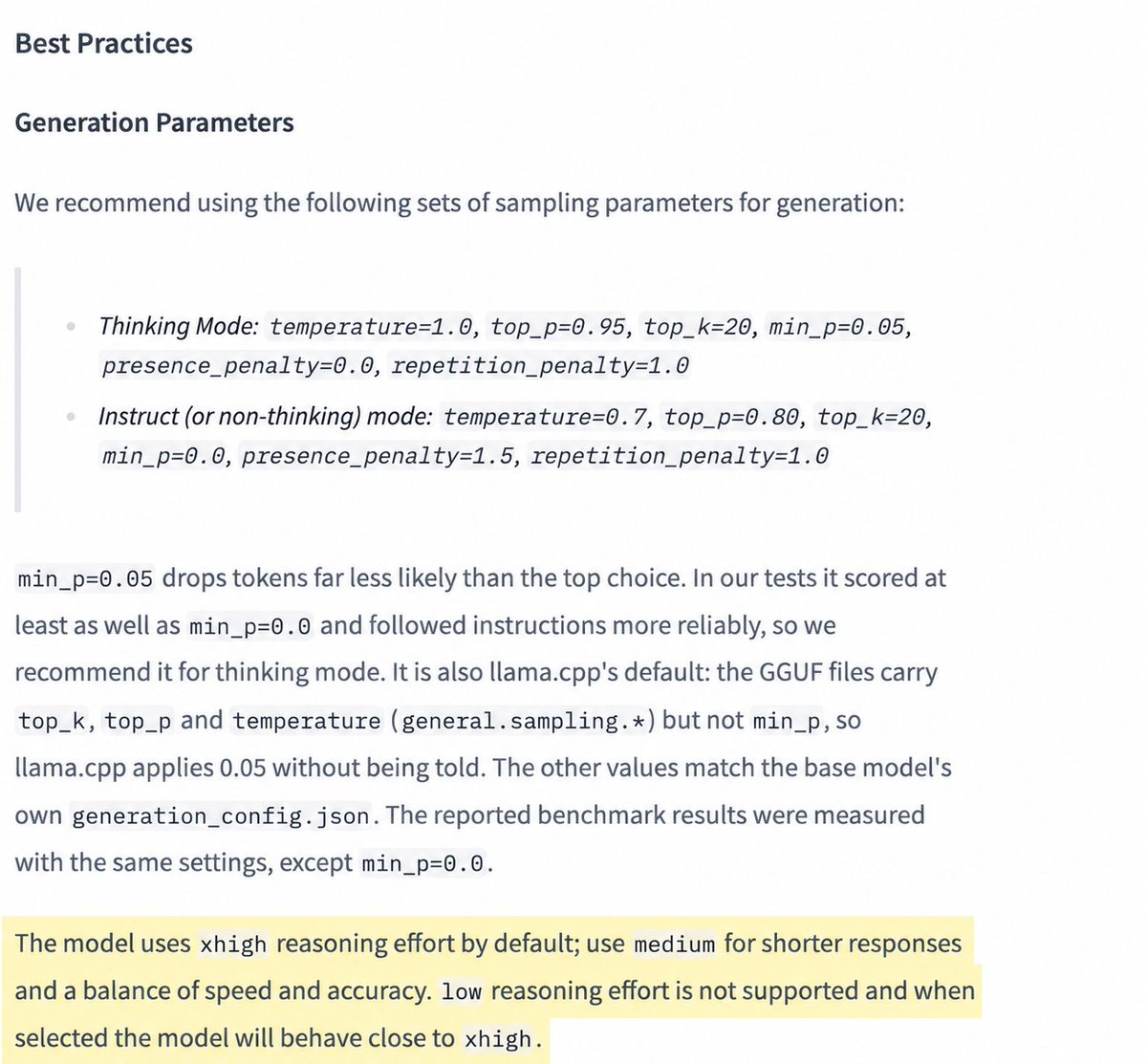
We have been very excited to see how the community has been utilizing our Bonsai 2 model, well beyond use cases that we had originally envisioned it for. We’ve spent the last few days putting Bonsai 2 27B through various examples inspired by what the community has shown us. These examples showcase the strengths, and some of the shortcomings–particularly on longer multi-turn agentic workflows, and will be extremely helpful as we continue to improve. We’ll be sharing a few of those demos, along with some practical guidance on the settings and prompting that get the best results from the model. Demo repo:
First up: building a 3D skateboard game from scratch in a single HTML file. The first attempt isn't perfect. Instead of restarting a better generation, we keep the same conversation going, point out the issues, and give the model feedback. It progressively fixes the gameplay, visuals, and controls over several iterations. That iterative loop being able to take feedback, debug its own work, and improve an existing artifact is much closer to how we think language models are most useful in practice. Code:

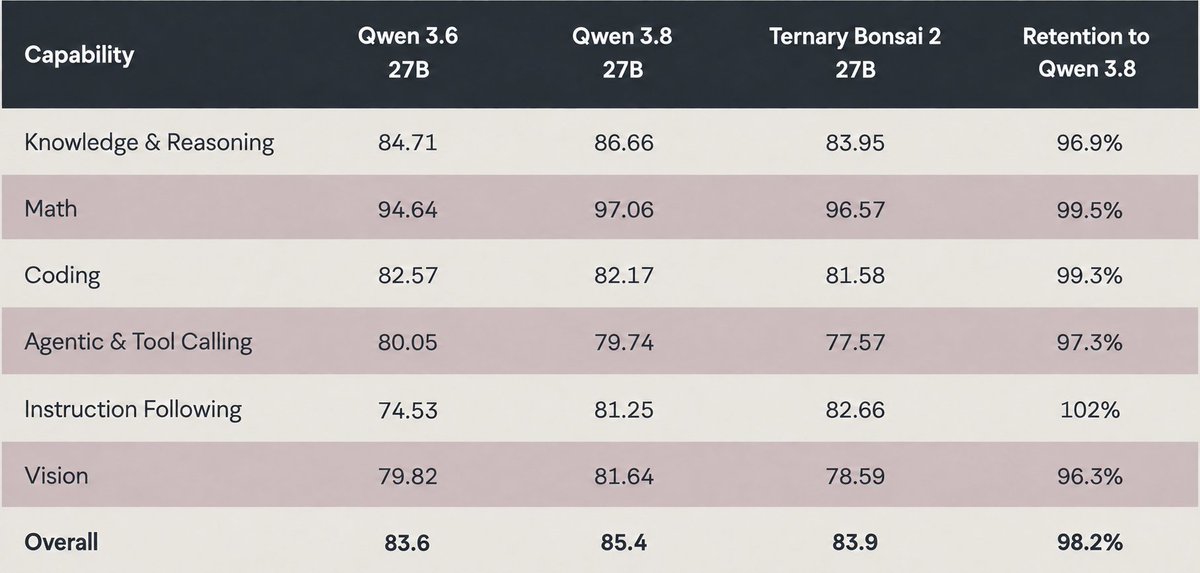
We also tested Ternary Bonsai 2 27B on the 2026 IMO problems against full-precision Qwen3.8 27B (54GB) and Gemma 4 12B QAT (~7GB). No internet. No tools. 131K-token reasoning budget. Bonsai scored in the upper end of the human bronze-medal range and retained 95% of Qwen’s IMO score, while completing the problems in 70% of the time. Code:

Starting from an empty workspace, Bonsai 2 27B built a browser-based desktop in a single HTML file, then iteratively fixed issues across multiple rounds of feedback, from broken windows and UI behavior to complete functionality and final styling. Code: https://t.co/XjC1YB8xO6

- PrismML ran Ternary Bonsai 2 27B on the 2026 IMO problems with no internet, no tools and a 131K- reasoning budget, against full-precision Qwen3.8 27B (54GB) and Gemma 4 12B QAT (about 7GB).
- PrismML says Bonsai's IMO score landed in the upper end of the human bronze-medal range, and it published the test code alongside the result.
- Rather than regenerating from scratch, PrismML's demos keep one conversation going, point out bugs, and let the model repair the same artifact: a single-file 3D skateboard game improved in gameplay, visuals and controls over several rounds.
- Starting from an empty workspace, Bonsai built a browser-based desktop in one HTML file but needed multiple feedback rounds to fix broken windows and UI behavior before reaching full functionality and final styling.
- PrismML acknowledges the model has shortcomings, particularly on longer multi-turn agentic workflows, and says it will share guidance on the settings and prompting that get the best results.
- token — The chunk of text a model reads and writes in — roughly three-quarters of a word — and the unit AI usage is billed in.
PrismML's 1-bit-weight Bonsai 2 27B retained 95% of full-precision Qwen3.8 27B's IMO-2026 score in 70% of the time with no internet or tools, and demonstrated an iterative feedback loop for self-correcting generated code.


Checking sign-in…
Loading comments…