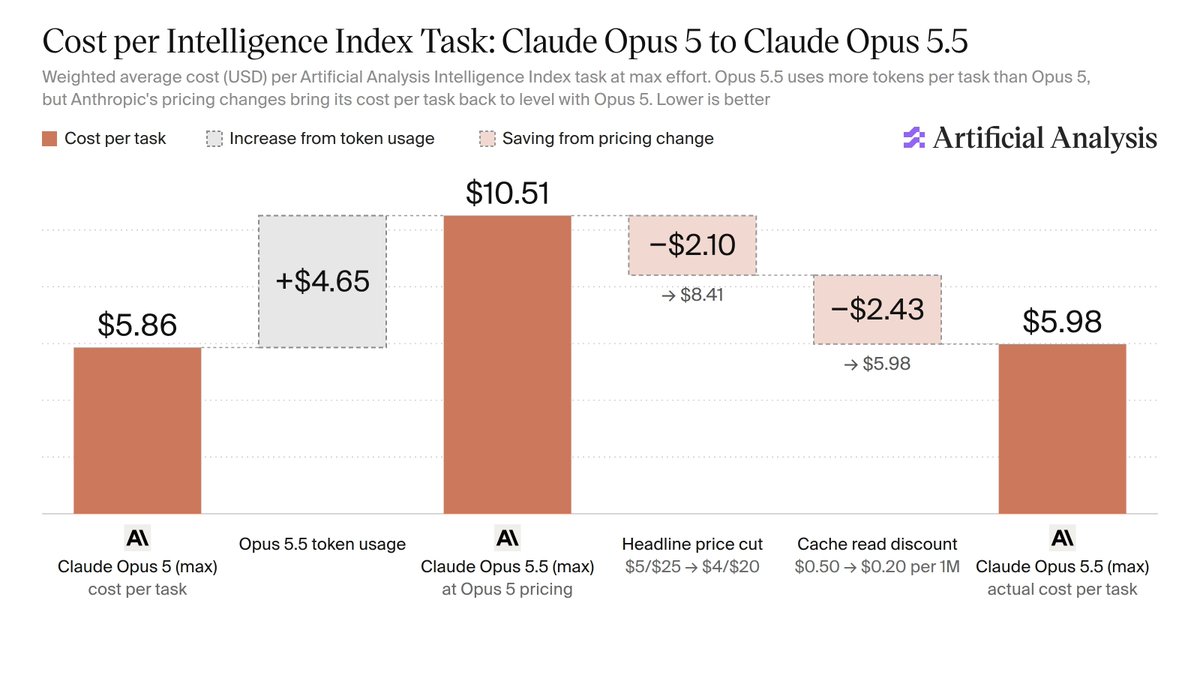
An unchanged price per TokenA piece of text, such as a word, part of a word or a punctuation mark, that a language model represents as numbers and handles as a unit.Full definition → can still produce a higher bill when a ModelA computational system that uses learned patterns to produce an output from information supplied to it.Full definition → counts text differently. OpenRouter examined over one million requests from users switching between Anthropic's Opus 4.6 and 4.7. Using its own consistent text-counting method, it found roughly 12–27% higher normalized costs in PromptInformation or instructions supplied to a model; in a chat, the request you type is often called your prompt.Full definition →-size groups above 2,000 units; the shortest group became slightly cheaper. Analysis and methodology.
Discounted reuse of cached prompts softened the increase, while changes in answer length also affected bills. These were observations of changing workloads from the same users, not an experiment sending identical text to both models. The findings describe migration costs in that cohort, rather than a universal tokenizer surcharge. Cost breakdown.
Terms in this piece · Glossary
Token — A piece of text, such as a word, part of a word or a punctuation mark, that a language model represents as numbers and handles as a unit.
Model — A computational system that uses learned patterns to produce an output from information supplied to it.
Prompt — Information or instructions supplied to a model; in a chat, the request you type is often called your prompt.