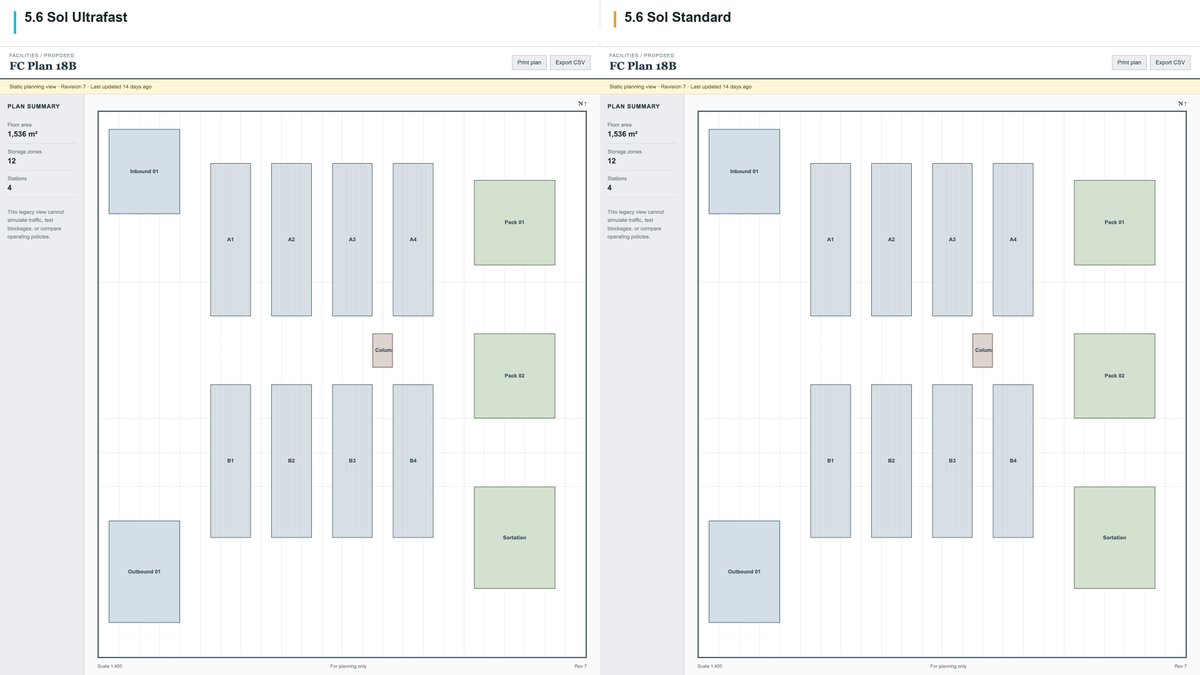
Powered by @Cerebras, Ultrafast generates up to 750 tokens per second, bringing
- Source
- x.com
- Publisher
- OpenAI
- Date
Previewing Ultrafast mode: GPT-5.6 Sol at up to 14x the speed. Launching first in the OpenAI API to a select group of customers with expanded access to more businesses as capacity grows.

Powered by @Cerebras, Ultrafast generates up to 750 tokens per second, bringing our most intelligent model to products and workflows where every second counts. Ultrafast is designed for businesses where faster frontier intelligence creates a measurable advantage, including real-time voice and customer support, commerce, coding and design, financial research, and security response. https://t.co/QLBhmodeI4
Context
Ultrafast is a faster way for OpenAI to serve its existing GPT-5.6 Sol model, not a new or smaller model. OpenAI's announcement thread says it runs on Cerebras hardware at up to 750 , up to 14 times the speed, and is opening first to a select group of API customers, with wider access as capacity grows. Cerebras, which builds processors from an entire silicon wafer, says in its technical write-up that the service uses the same weights, precision, configuration and reasoning settings, and that the model has not been into a smaller copy or to lower numerical precision.
The speed comes from keeping the model's weights next to the processors. On conventional GPUs, Cerebras writes, the weights live in separate memory chips and must cross into the compute units over and over while the model generates text. Its wafer-scale chip instead spreads 44 GB of on-chip memory beside 900,000 cores. Sol is too large for one chip, so Cerebras splits it at layer boundaries across several CS-3 systems and passes only intermediate results from one to the next.
A higher token rate does not shrink finished work by the same multiple. Cerebras reports that the same model on Ultrafast completed GDP-Val tasks 5.6 times faster than on OpenAI's standard endpoint, and finished matched Humanity's Last Exam questions, where model inference dominates the work, 6.9 times faster. Those are Cerebras's own figures, and it says results vary by workload and configuration.
- throughput — How much model output a provider can generate over time, commonly measured in output tokens per second.
- Context and context window — Context is the information available for a generation; the context window is the capacity available to hold it.
- distillation — Training a small, cheap model to imitate a big one's outputs, keeping much of the capability at a fraction of the cost.
- quantization — Shrinking a model by storing its numbers less precisely — like rounding — so it runs faster and fits on smaller hardware, at a small quality cost.