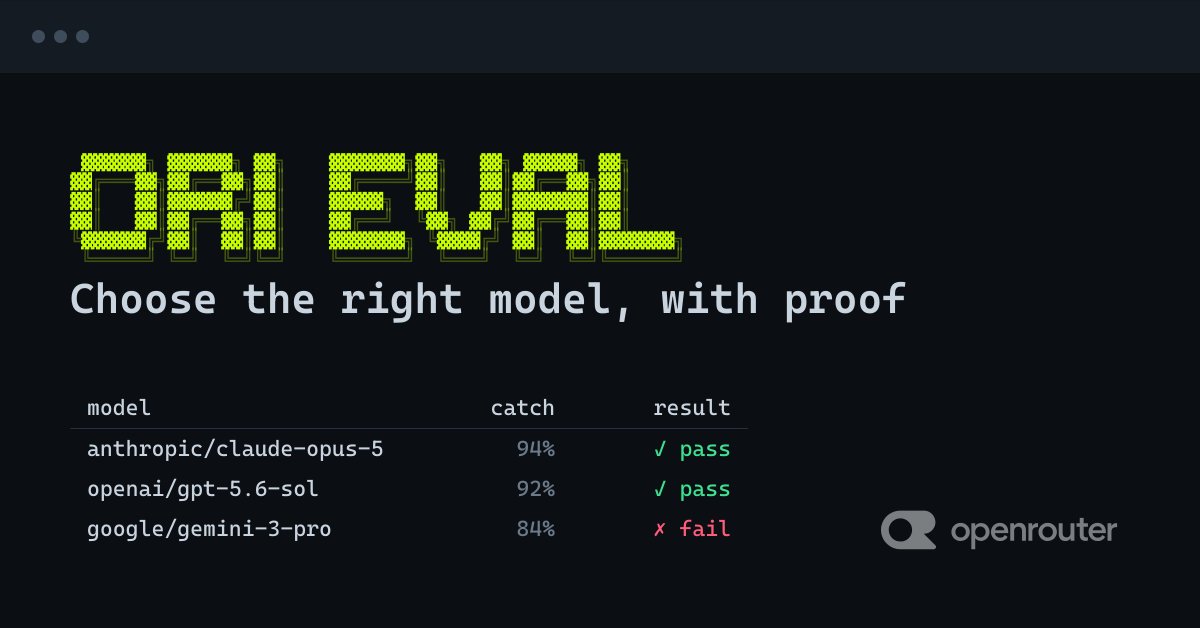
Optima lets teams benchmark models on their own workloads
- Source
- artificialanalysis.ai
- Publisher
- Artificial Analysis
- Author
- Artificial Analysis
- Date
Context
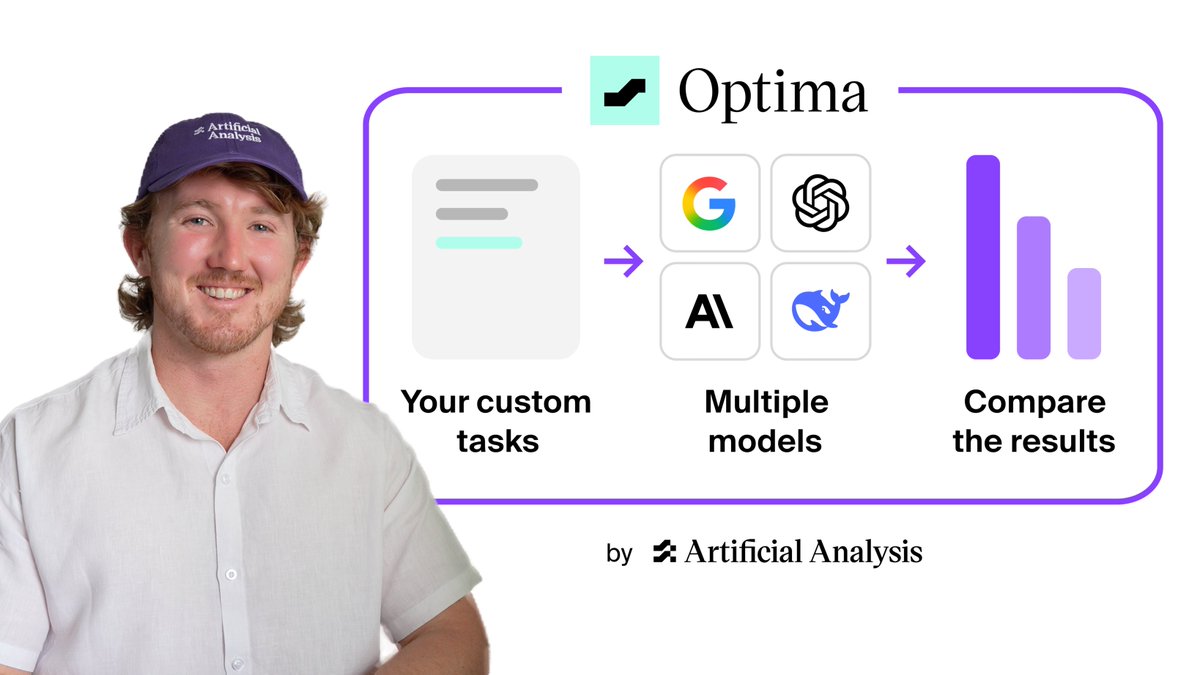
Optima is a paid from Artificial Analysis, a company that publishes model benchmarks, for building a private out of your own work. Public benchmarks measure general ability, and the Optima page argues they cannot tell you which model is right for a specific job. Optima tests models on that job directly and reports each model's score next to its cost and time per task.
You describe the work, import examples or traces, or connect a , and Optima's build agent drafts the tasks and the grading rubric with you. Tasks can be questions with known answers, questions about uploaded documents, or agentic jobs in which the model uses tools to produce a deliverable. Optima then runs the models you pick, or your own agent over HTTP, and grades the outputs either against the rubric with a judge model or by comparing models head to head. Running the models is billed at their raw price, and rubric grading starts at $0.002 per criterion per model.
In the launch walkthrough, a presenter turns a made-up insurance task, pulling structured claim details out of call transcripts, into 24 tasks and runs six models for about $13.90. GPT-5.6 Sol, at its maximum setting, scored 93% at about four to five cents per task, while Gemini 3.5 Flash Lite scored 89% for a fraction of that and answered much faster. That trade-off is what Optima is built to expose. The results are only as good as the tasks and rubric, which an AI agent drafts and the user reviews, and the company's claim of cutting cost and time by over 10x describes a possible saving from choosing a cheaper model, not a measured average.
- Tool — An operation that the software around a model makes available for the model to request, with a name, expected inputs and a kind of result.
- Benchmark — A fixed set of tasks with a stated way of scoring them, used to compare models or setups.
- Agent mode — A mode in which one agent can inspect, edit, run commands, and iterate toward an outcome.
- Token — A piece of text, such as a word, part of a word or a punctuation mark, that a language model represents as numbers and handles as a unit.