Anthropic ships zero-data-retention misuse monitoring in public beta
- Source
- claude.com
- Author
- claudeaiTop Viber
- Date

Context
Anthropic has opened Enterprise Frontier Safeguards (EFS) to business customers as a public beta. EFS addresses a conflict for companies that require zero data retention, meaning neither Anthropic nor a cloud provider keeps their prompts and responses. Until now, Anthropic says, those customers were protected only by classifiers that screen each request on its own, while sophisticated attacks usually spread across many requests that each look harmless. Its example is an operation described in its September threat intelligence report, in which an AI agent split an attack on roughly fifty organizations among many agents running in parallel and saved harvested credentials between sessions. Detecting that kind of pattern means looking across many requests, so the requests have to be stored somewhere.
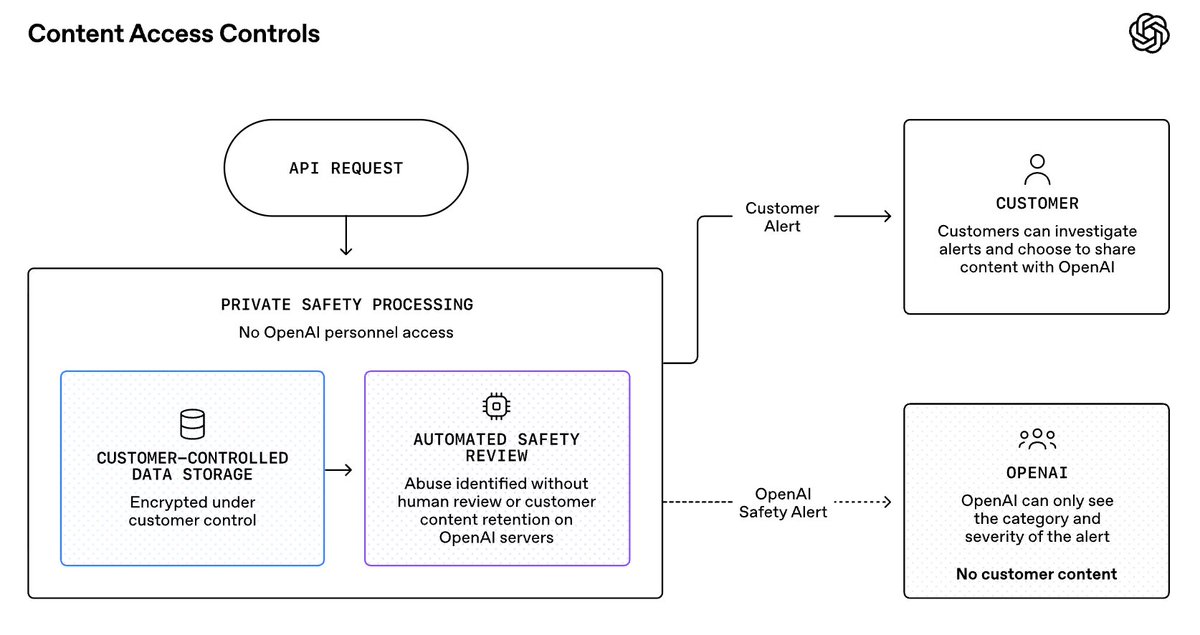
EFS stores them in the customer's own cloud account. The customer supplies Amazon S3 or Google Cloud Storage, inputs and outputs are written there, and neither Anthropic nor the cloud provider keeps a copy once they are delivered. The customer sets the access policies and audit logging and encrypts the data with its own keys. Anthropic's automated safety monitoring analyzes the data in that storage. When it finds a risk, such as deliberate misuse for offensive cyber operations or an agent acting beyond what its user intended, it creates a Safety Case that the customer reads from its storage or through an , and the case contains no inputs or outputs. Anthropic says no Anthropic or cloud-provider staff access the data and that it is never used to train models or classifiers. Through Amazon Bedrock or Claude on Google Cloud (Google Managed), the cloud provider operates EFS and the data stays within that cloud. The customer pays its cloud provider for the storage as usual.
The beta follows Anthropic's September announcement of EFS, which said it would roll out in phases starting later in the fall. Anthropic says it has since developed EFS with more than 100 customers, including a quarter of the Fortune 100, and that Bridgewater, Salesforce and Stripe evaluated it in private beta. EFS is available on the Claude Platform, Claude Platform on AWS, Amazon Bedrock and Claude on Google Cloud, with Microsoft Foundry support described as coming soon, and Anthropic will notify eligible customers how to start. The post sets out these guarantees and the data flow but gives no figures on how much misuse the monitoring detects, and it leaves the architecture details to its developer docs and a security whitepaper.
- Anthropic says per-request classifiers can miss attacks spread across many queries, citing an operation against roughly fifty organizations where an AI agent split the attack among . EFS adds cross-request monitoring.
- Monitoring runs on inputs and outputs kept in the customer's own S3 or Google Cloud Storage. Flagged risks become Safety Cases, readable via storage or API and SIEM-compatible, that exclude inputs and outputs.
- Under EFS, inputs and outputs are deleted promptly after being written to customer storage, no Anthropic or cloud-provider staff review them, and they are never used for or classifier .
- Customers pay their cloud provider for the storage EFS uses, including reads, writes and key operations plus any network transfer, so the retention model carries its own infrastructure cost.
- EFS works on the Claude Platform, Claude Platform on AWS, Amazon Bedrock and Claude on Google Cloud, with Microsoft Foundry support coming; Anthropic has been developing it further with over 100 customers, including a quarter of the Fortune 100.
- API — Application programming interface: the agreed set of operations, inputs and outputs through which one piece of software uses another.
- Parallel agents — Multiple isolated agents working simultaneously on independent work streams.
- Model — A computational system that uses learned patterns to produce an output from information supplied to it.
- Training — The process that adjusts a model using examples and a measure of how well it performs.




Checking sign-in…
Loading comments…