Liquid AI's d1.2-ultra tops Artificial Analysis decision benchmark
- Source
- x.com
- Date

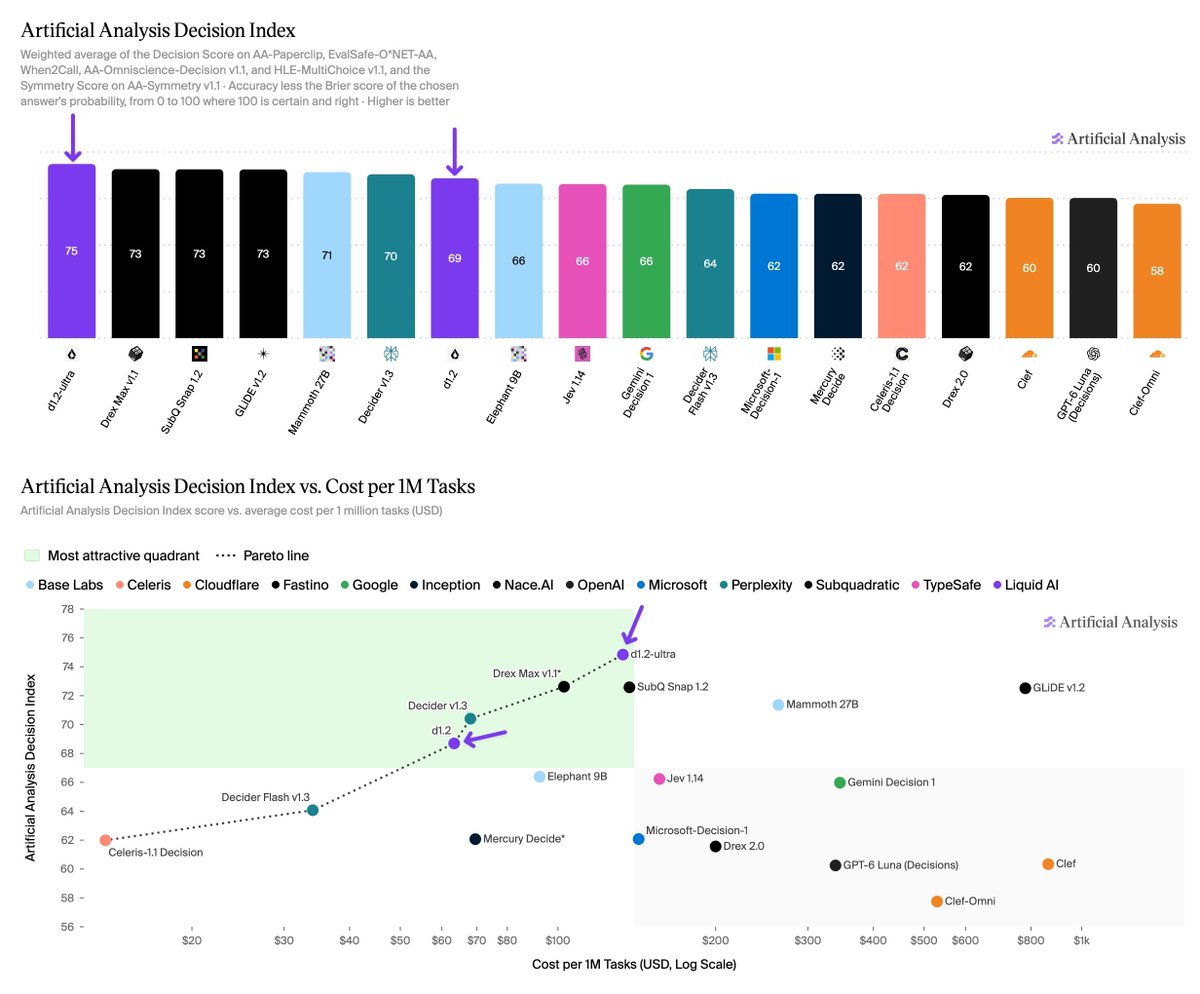
d1.2-ultra is the #1 model on the Artificial Analysis Decision Index v2.1, with d1.2 placing #6 @liquidai has released d1.2-ultra and d1.2, updating their d1-ultra and d1.1 flagship decision models. Key results: ➤ d1.2-ultra is the #1 model on AA-Paperclip. With a score of 76, d1.2-ultra is the leading model on AA-Paperclip, our first-party private benchmark that assesses decision-making and extraction capabilities. It leads the next-best model, Drex Max v1.1, by 3 points ➤ d1.2-ultra and d1.2 improve over their predecessors. d1.2-ultra scores 75, a 4-point gain over its predecessor d1-ultra, while d1.2 scores 69, a 3-point improvement over d1.1 ➤ d1.2-ultra and d1.2 both sit on the Capability vs. Cost Pareto frontier. d1.2-ultra and d1.2 cost $133 and $63, respectively, per one million Artificial Analysis Decision Index tasks and both models sit on the Capability vs. Cost Pareto frontier Additional model details: ➤ Context window: 64K tokens ➤ Pricing: $0.042 and $0.02 per 1M input tokens for d1.2-ultra and d1.2, respectively ➤ Multimodality: Text and image input ➤ Providers: Available through Liquid AI’s first-party API
Context
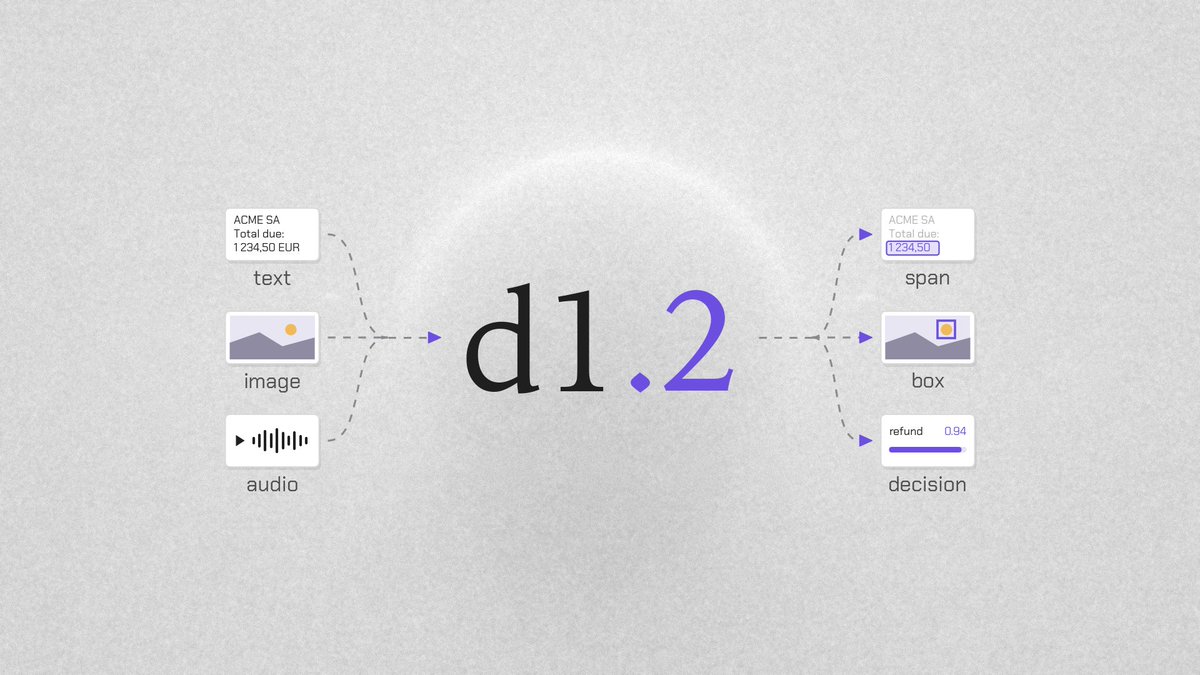
Liquid AI's new d1.2-ultra ranks first on Artificial Analysis's Decision Index, a for models built to choose rather than to write. A decision model is given a case and a fixed set of options and returns a probability for each option in one call, which Artificial Analysis says makes such models cheap and fast and lets their confidence be checked (index page). Artificial Analysis, which benchmarks AI models, reports that d1.2-ultra scores 75 on version 2.1 of the index; its chart shows three models tied behind it at 73: Drex Max v1.1, SubQ Snap 1.2 and GLiDE v1.2. The smaller d1.2 scores 69 and places sixth.
The index rewards right answers given with well-judged confidence. Each question is scored from 0 to 100: a right answer earns between 50 and 100 and a wrong one between 0 and 50, and the probability the model put on its chosen answer sets where it lands within that half, so a confident right answer earns the most and a confident wrong one the least (scoring formula; earlier coverage of the change). The largest component, at 30% of the index, is AA-Paperclip, a private set of 1,500 resumes, receipts, invoices and research papers, each of which asks the model to make decisions and extract facts. d1.2-ultra scores 76 on AA-Paperclip, 3 points ahead of the next-best model, Drex Max v1.1.
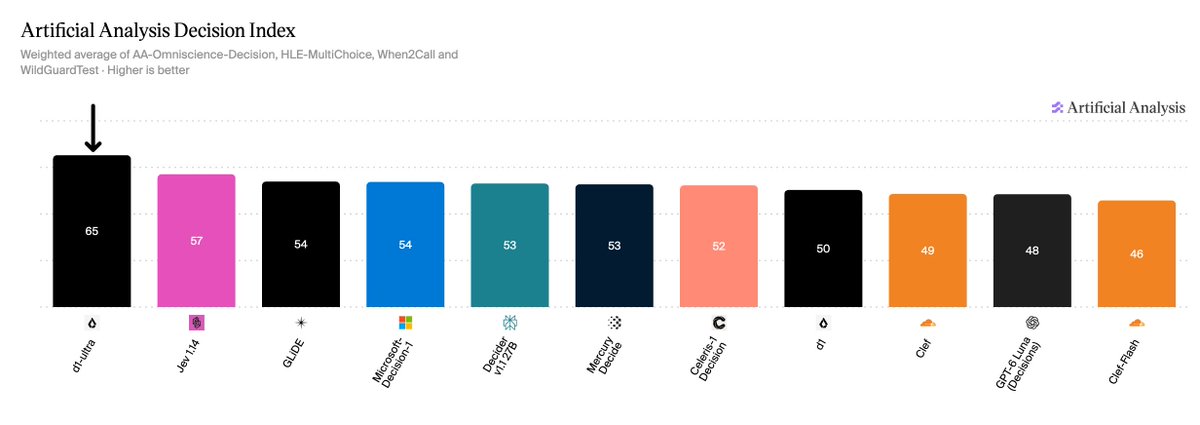
Both new models improve on the ones they replace: d1.2-ultra by 4 points over d1-ultra, and d1.2 by 3 points over d1.1. Liquid's d1-ultra had also taken first place in October on the first version of the index (earlier coverage), but version 2 changed how answers are scored, so those older numbers do not line up with these.
The top score is not the cheapest high score. Artificial Analysis puts d1.2-ultra at $133 and d1.2 at $63 per million index tasks, at list prices of $0.042 and $0.02 per million input ; decision models are billed only for the text they read. Both sit on the firm's capability-versus-cost Pareto frontier, which means no other model in its comparison is both cheaper and higher scoring. On the firm's chart, though, Drex Max v1.1 scores 73 at a lower cost per million tasks, so the two extra points at the top come at a price. These are Artificial Analysis's measurements on its own index, and AA-Paperclip is private data that outsiders cannot check. The models are available through Liquid AI's own API.
- benchmark — A standard public test set for comparing AI models — the shared scoreboards behind every "model X beats model Y" claim.
- token — The chunk of text a model reads and writes in — roughly three-quarters of a word — and the unit AI usage is billed in.
- context window — The maximum amount of text a model can consider at once — its working memory for the current conversation or task.
Checking sign-in…
Loading comments…