Theo: Anthropic's lead began with Fable 5
- Source
- x.com
- Date

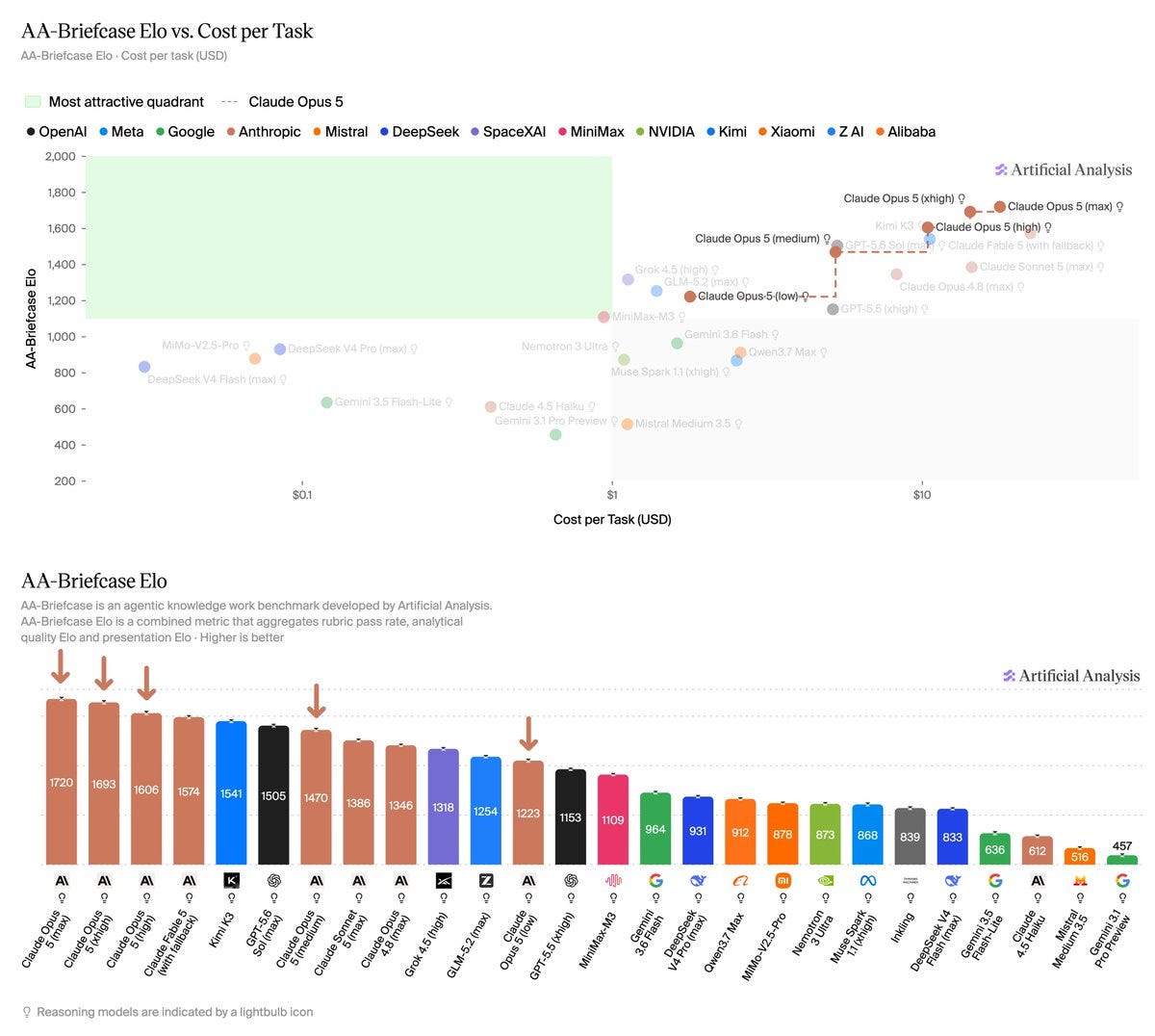
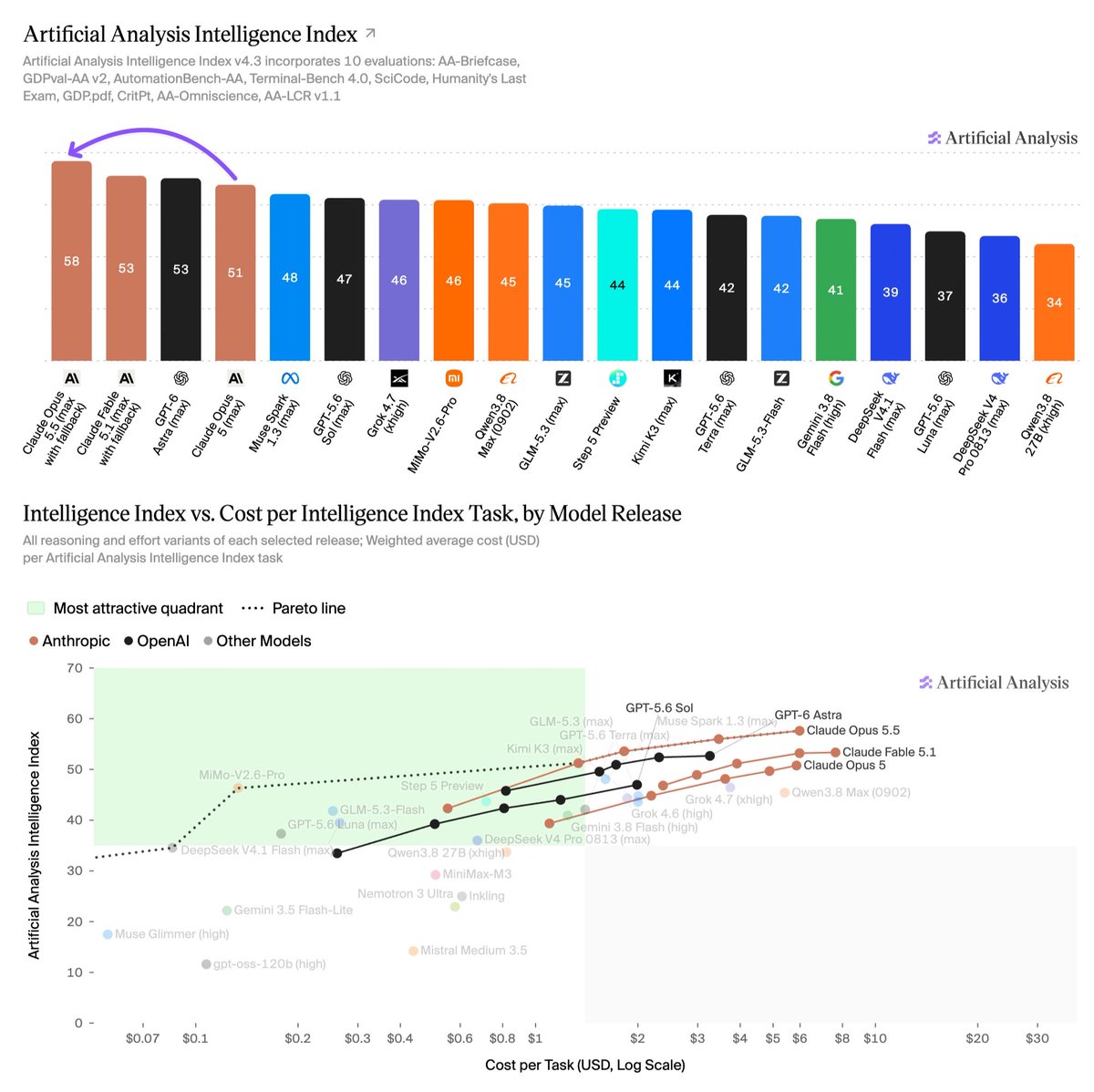
Thought more about this. Anthropic’s lead started with Fable 5. It was the first true “next gen” model. I honestly think most of yall missed just how far ahead Fable was at launch. Understandable tbh. It required you to use the model entirely differently. It was prohibitively expensive. It got taken from us after just 3 days of usage. It had no ZDR policy, so you couldn’t even use it at work in most places 🙃 The result: most people perceived the gap between Fable 5 and GPT-5.6 Sol to be small. IMO, it was massive. GPT-6 Astra mostly caught up on raw capability for short term tasks, but it was unable to stay coherent for long runs. Meanwhile, Opus and Fable keep getting easier to work with and more coherent on long runs, while also gaining in capability. Opus 5.5 brought the Fable wins to everyone, by making it way cheaper, more generous on sub limits, and also great for enterprise (zdr!) OpenAI has maintained pace with capability, at the cost of coherency and readability. Tl;dr - Anthropic has been ahead since Fable 5. OpenAI’s attempts to catch up on benches have hurt the model pretty much everywhere else
Context
Theo Browne argues that Anthropic has led OpenAI since its Fable 5 model, and that most people missed it because Fable 5 was hard to get at, not because the gap was small (Theo Browne). Fable is Anthropic's top model line, and Opus its cheaper everyday model. He lists why the lead was hidden: Fable 5 needed a different way of working, cost too much for most uses, was withdrawn after three days, and lacked zero data retention, a guarantee that the provider does not store prompts and outputs, which many employers require. Some of that is on record. Andrew Ng wrote at the time that Anthropic imposed mandatory 30-day data retention on Fable usage and then disabled Fable access worldwide after the US government required export licenses for it.
The rest is his reading of the competition. He says GPT-6 Astra mostly caught up on raw capability for short tasks but could not stay coherent over long runs, while Anthropic's models kept getting easier to work with on long runs, and Opus 5.5 brought Fable's gains to everyone at a lower price, with more generous subscription limits and zero data retention for enterprises. His conclusion is that OpenAI kept pace on capability at the cost of coherence and readability, and that chasing scores hurt its models elsewhere.
That is opinion without data in the post, but one recent measurement fits its shape. Epoch AI found GPT-6.2 Astra and Fable 5.2 roughly tied on its benchmark-based capabilities index, yet on graded tasks drawn from Epoch's own work Astra averaged 65%, 17 points below Fable 5.2. That is one small, subjectively graded study with one run per task, and it shows a gap between benchmark and work performance, not why the gap exists, so it does not establish Theo's explanation that benchmark-chasing caused it.
- benchmark — A standard public test set for comparing AI models — the shared scoreboards behind every "model X beats model Y" claim.
Checking sign-in…
Loading comments…