Intel
Page 37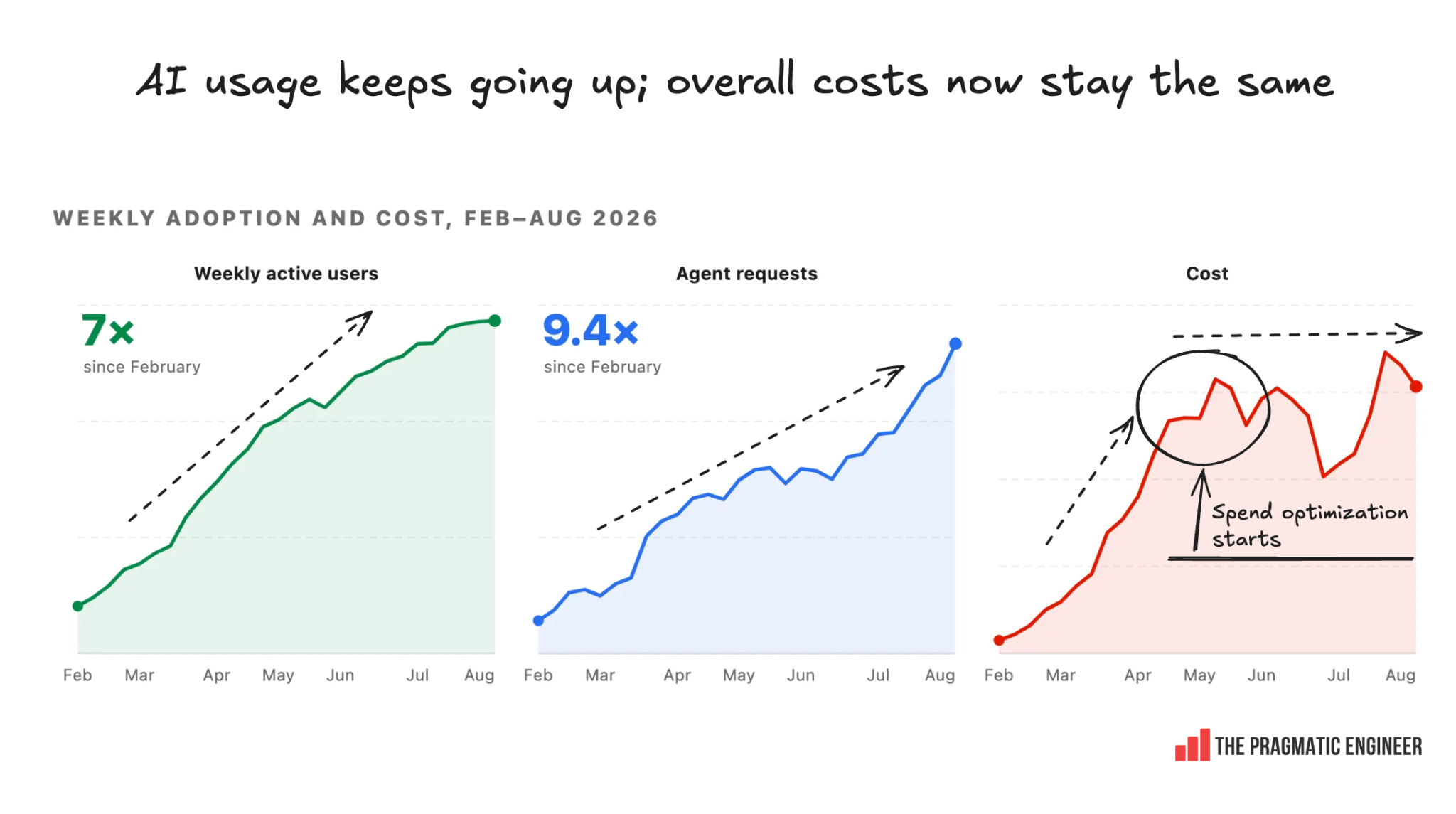
The Pulse: tech companies move to open AI models
Details a cost-cutting pattern spreading across major tech engineering orgs.
Why it mattersShows a repeatable pattern: routing simple workloads to open models while reserving frontier models for hard tasks cuts AI infrastructure bills by about 50% at several major engineering orgs.

Perplexity's Portable Computer, a fully local build of its agent stack with orchestrator LLM, subagent LLM, and harness running on device, now supports Linux on any NVIDIA RTX GPU with 24GB or more of VRAM. At its August 25 launch it required DGX Spark.
Why it mattersA fully offline agent runtime (orchestrator LLM, subagent LLM, and harness) now runs on Linux with a 24GB RTX card rather than DGX Spark hardware, putting local multi-agent execution within reach of a normal workstation.

Google DeepMind's newest weather model skips physics simulation and reanalysis pipelines. It takes live geostationary satellite feeds as input, trains on direct surface and atmospheric observations, refreshes a global forecast every hour, and claims roughly 5x the spatial sharpness of WeatherNext 2.
Why it mattersA learned model now ingests raw satellite observations directly, dropping the six-hour lag of physics-based forecasting to hourly global updates. A concrete case of an observation-trained model displacing a simulation pipeline.
Spotify’s Backstage Portal cut my Claude Code token usage by 90%
Explains how Spotify engineers cut Claude Code token spend 90% using Backstage Portal's 'AiKA Modes,' declarative sub-agents on cheaper models that handle rote I/O (file reads, boilerplate tests, doc updates) so the frontier model is reserved for real reasoning.
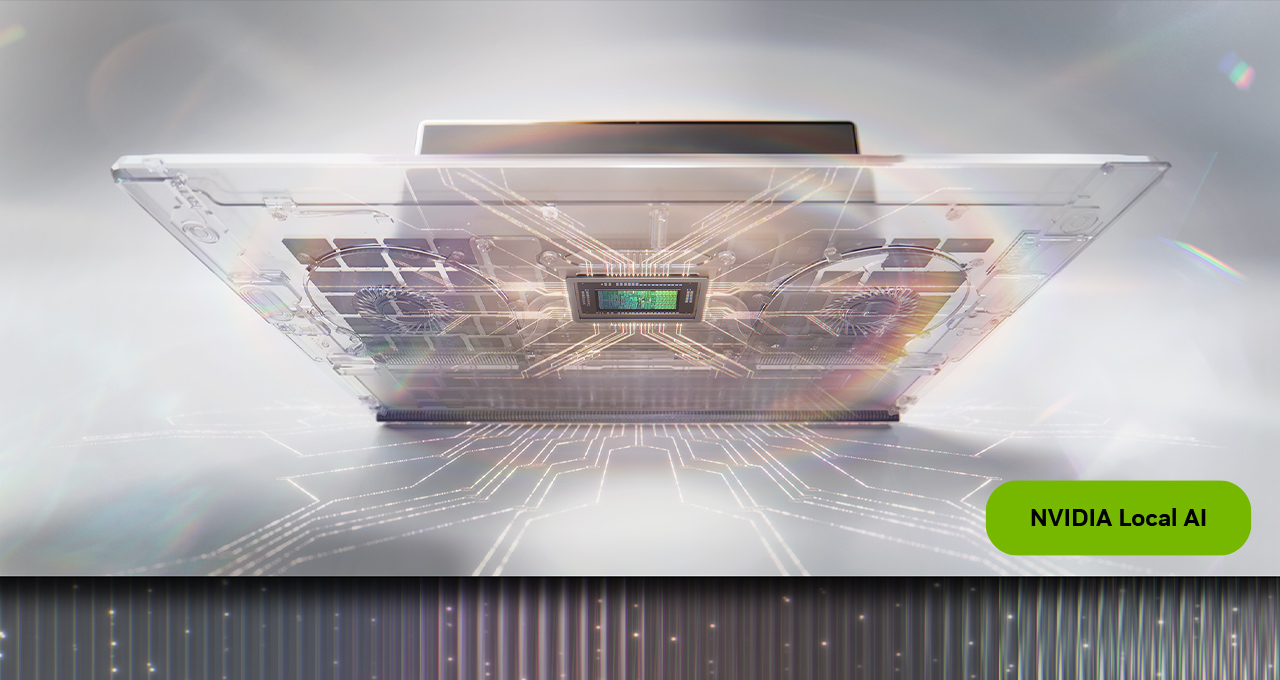
Sparks Fly: NVIDIA Accelerates Local AI at IFA 2026
NVIDIA's IFA 2026 local-AI update: llama.cpp and vLLM optimizations claiming up to 1.9x faster inference, delivered through LM Studio and Ollama.
Why it mattersLocal agent stacks get faster and easier to wire up: up to 1.9x inference gains in llama.cpp and vLLM available through LM Studio and Ollama, plus a router that spreads inference across machines on one network.
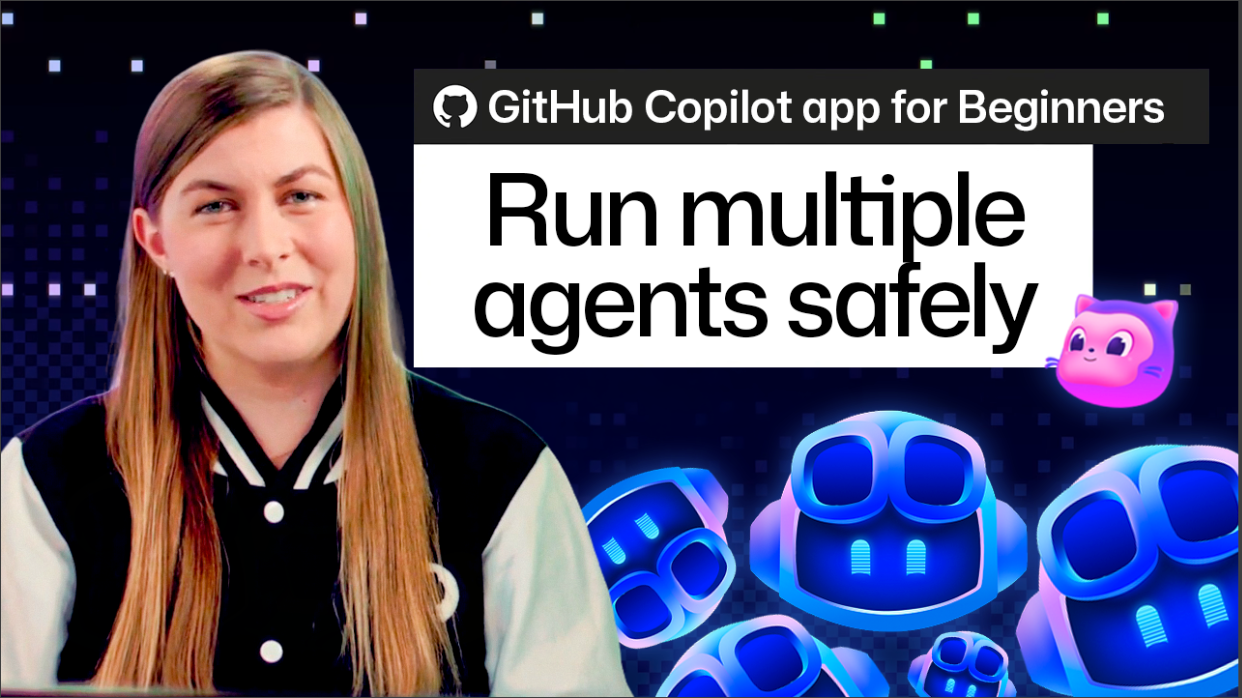
GitHub Copilot app for Beginners: Run several agents at once
A walkthrough of the GitHub Copilot app's parallel agent sessions, each isolated on its own Git worktree with independent context.
Why it mattersEach Copilot app agent session runs on its own Git worktree, so multiple agents can work on the same repo in parallel without interfering with each other's files or context.

NVIDIA PAIR Virtual Inference Router Expands Available Compute on Your Local Network
NVIDIA's PAIR beta is a virtual router, not an inference engine.
Why it mattersMulti-agent runs bottleneck on one GPU.

Runway details GWM Worlds 2, a general world model that renders interactive simulations as continuous 720p video at 24fps with 48kHz audio. Users specify environment, physics and style up front, then steer subjects or the scene with text actions and camera motion across sessions of no fixed length.
Why it mattersWorld models can now run as open-ended, steerable 720p simulations with synchronized audio, so training or testing embodied agents no longer requires a hand-built environment or a fixed-length generated clip.

A filings-level look at the OpenAI and Nvidia 8 GW Portsmouth campus, which turns out to be at least three separate land positions with separate development paths and separate blockers. The groundbreaking was ceremonial: permitting, cleanup and unexercised land options all still gate construction.
Why it mattersAnnounced gigawatts and deliverable capacity are different things.

Your company brain will leak secrets: how we stopped it for big banks — Tanmai Gopal, PromptQL
PromptQL's Tanmai Gopal on building a company-wide agent "brain" as a scoped, linked markdown wiki where agents propose facts but a human approves and owns each write.
Why it mattersPromptQL's design scopes read/write access per markdown file in a shared agent knowledge base, requires a human to approve any agent-written fact.

Ant Group open-sourced Ling-3.0-flash-Fin, a 124B-parameter MoE with 5.1B active parameters and a 256K context window, released on Hugging Face, along with FinFIRST, a financial search agent benchmark of 123 expert-authored tasks, 701 atomic criteria and 12,300 rubric points built with CICC.
Why it mattersOpen weights let teams run a finance-tuned MoE privately and connect it to search, Python and databases, while FinFIRST supplies rubric-scored tasks for measuring whether a financial search agent actually retrieves and reasons correctly.

WeatherNext 3 learns from raw station and satellite observations rather than waiting on conventional six-hour cycles, refreshing forecasts hourly, sharpening temperature output from 25km to 5km, and cutting precipitation error by up to half. Real-time access ships via BigQuery, Earth Engine and GCS.
Why it mattersA frontier weather model now issues a new global forecast every hour at 5km temperature resolution with up to 50% less precipitation error, and its real-time data is reachable from BigQuery, Earth Engine and GCS.

Introducing WeatherNext 3, our most advanced and accurate global weather AI model
WeatherNext 3 moves from physics simulation to direct assimilation of real-time satellite observations.
Why it mattersDeepMind's forecasting model now assimilates real-time satellite observations rather than relying on physics simulation, refreshes hourly at five times the resolution, and is queryable through Google Cloud alongside Search and Maps.

Agents' next frontier: agent-to-agent and network effects — Jean-Denis Greze, Town
Town's CTO rejects agent-to-agent as a framing, calling every LLM system a search problem where privacy is the transaction cost blocking one agent with access to everything.
Why it mattersLays out five multi-agent privacy architectures and the leak in each, including why a shared trust boundary scoped to the most junior member still needs as many humans as models improve.
Cursor Cloud Agents can now run in Vercel Sandbox
Cursor's Self-Hosted Machines API now has a Vercel Sandbox reference implementation.
Why it mattersCursor Cloud Agents can now execute in your own Vercel account instead of Cursor's machines, with per-request microVM isolation, durable retries and short-lived scoped credentials. Requires a Cursor Enterprise plan.
Introducing WeatherNext 3, our most advanced and accurate global weather AI model
WeatherNext 3 replaces physics simulation with real-time satellite data, refreshes hourly.
Why it mattersAnything you build that depends on forecasts can now pull hourly, higher-resolution output with clean-energy variables from Google Cloud and the Maps Platform, sourced from satellite data rather than physics simulation.

Microsoft's MAI-Transcribe 2 is now served through OpenRouter's API. It handles speech to text in 60 languages with automatic language identification, code switching, speaker diarization and word-level timestamps, with pricing published on the model page.
Why it mattersTop-tier transcription with diarization, code switching and word-level timestamps is now reachable through an OpenRouter key in one call, instead of stitching separate speech models together.

Sakana AI keeps a general purpose vision model frozen and fits a Gaussian decision rule to its features, outperforming the strongest released AI-image detector on the Percept-Lens suite of generator, prompt and domain shifts. The signal was already in the representations.
Why it mattersDetector generalisation failures come from the decision rule, not from lost representation.

Tethered: Our Agents Are Us — Shu Fang, Two Sigma
Two Sigma gives every employee a cloud agent that runs as them, not as a service account, using a per-person Kubernetes namespace and an identity sidecar.
Why it mattersA concrete answer to agent identity and web access: run as the user to avoid permission and licensing drift, propagate a trace header for attribution, and deny native search so all web access goes through an in-network index.
Microsoft's new speech model reaches 2.0% word error rate on the AA-WER leaderboard, second only to Alibaba's Fun-Realtime-ASR-preview, at roughly 411x real time and $1.67 per 1,000 minutes. Coverage expands from 43 to 60 languages with diarization and word timestamps.
Why it mattersNear-top transcription accuracy at 411x real time for $1.67 per 1,000 minutes, under half the price of Scribe v2, with diarization and word-level timestamps included.

Unify's Connor Heggie keeps the LLM judge in a different model family from the agent under test. A same-family pairing converges on shared blind spots, so the eval quietly approves the failure modes the judge cannot see either.
Why it mattersA cheap eval rule with teeth: keep the judge model in a different family from the agent it grades, or your grader inherits exactly the blind spots you are trying to detect.

github-mcp-server v1.12.0 — GitHub MCP Server 1.12.0
Release notes for github-mcp-server v1.12.0.
Why it mattersGitHub's MCP server v1.12.0 adds tools for reading and managing repository rulesets and custom properties, pins merge HEADs and recovers file SHAs for safer writes.

Everyone Gets A Software Company — Benjamin Guo, Zo Computer
Zo Computer's cofounder argues that rented software leaves people without a machine they control, and demonstrates a personal cloud server driven in plain language.
Why it mattersMakes the case that agents belong on infrastructure the user owns, with two non-technical operators running sites, invoicing, scheduling and payments from one personal server instead of a stack of subscriptions.

MBZUAI's 375B total, 23B active open weights MoE scores 47 on the Intelligence Index, thirty points above its predecessor. It beats MiniMax-M3 on GDPval-AA and tau-Banking but trails on GPQA Diamond and Humanity's Last Exam, and answers only 40% of AA-Omniscience questions.
Why it mattersAn open weights MoE that leads nearby peers on agentic and real-world knowledge-work evals while trailing on hard reasoning, so it is worth routing tool-use workloads to and keeping off deep reasoning tasks.
NeoMME: an efficient Multimodal-native and Multilingual Encoder
H company released NeoMME, 260M and 800M multilingual encoders that run image patches and text through a single bidirectional Transformer trained from scratch.
Why it mattersA document retrieval encoder that drops the pretrained vision tower and still lands on the ViDoRe v3 frontier, with pooling and quantization that shrink late-interaction indexes from about 1.5 MB to 6 kB per page.
OpenRouter now runs video generation models against shared challenge prompts and reports output quality alongside cost and generation time. Seedance 2.5 leads on physics and prompt adherence, while MiniMax H3 Max sets the speed and price bar. Custom prompts are supported.
Why it mattersPicking a video model has been guesswork. This gives comparable quality, latency and cost figures across models, and lets you run your own prompts before committing to a provider.
NVIDIA to Acquire Hugging Face
NVIDIA is buying Hugging Face for $12.93B.
Why it mattersThe registry holding 3 million models and 500,000 datasets moves under the dominant GPU vendor. The stated terms keep it accelerator neutral, so existing pipelines should hold, but control of a load-bearing dependency has changed hands.

Alibaba's Qwen team released E-Commerce Bench, which hands an agent ¥100,000 and 365 simulated days to source, negotiate, price and manage inventory against 576 suppliers, 152 of them fraudulent. Scoring spans seven axes, and almost no model improves its strategy over the year.
Why it mattersA year-long simulated business gives long-horizon agent evaluation a harder target than task benchmarks, and its headline finding is that models barely learn to buy cheaper or refine strategy across the run.
GPT-6 Astra: A new generation of intelligence
OpenAI launched GPT-6 Astra, described as its most capable and aligned model to date, with state-of-the-art results across computer-use, coding, cybersecurity, and science tasks.
Why it mattersOpenAI's GPT-6 Astra becomes the new frontier reference point across computer-use, coding, cybersecurity, and science tasks, which resets the bar agentic engineers benchmark their own systems and model choices against.
LLaDA Image Turbo FP8 released
The 4-step distilled Turbo variant of InclusionAI's open LLaDA-Image model uses Twin-DMD distillation for fast generation and editing, released alongside the Base checkpoint with Diffusers inference code.
Why it mattersThe Turbo variant of InclusionAI's open LLaDA-Image model uses Twin-DMD distillation to cut inference to 2-4 sampling steps, letting builders trade some quality for much faster local image generation and editing.
LLaDA Image FP8 released
InclusionAI released LLaDA-Image, an open 6B-parameter unified image-generation and editing model with a distilled Turbo variant, claiming SOTA on Qwen-Image-Bench with checkpoints and Diffusers code available now.
Why it mattersInclusionAI released LLaDA-Image, an open 6B-parameter unified text-to-image and instruction-editing model claiming SOTA on Qwen-Image-Bench, with checkpoints and Diffusers inference code available now for local or self-hosted use.
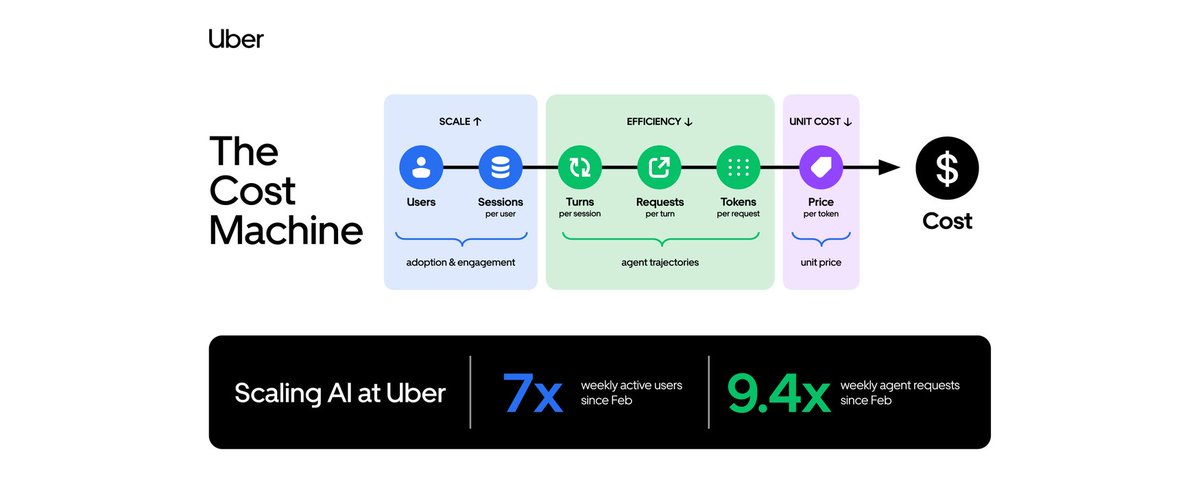
How Uber measures and cuts the cost of agent-written code
Uber describes its internal agent platform and the cost equation it uses to run it.
Why it mattersA concrete method for controlling agent spend at scale: build benchmarks from each agent's real work, re-pick models as the frontier shifts, and default subagents to a cheaper model while the primary plans and evaluates.
Ling 3.0 flash Fin released
Ant Group's first finance-enhanced Ling model, continued-trained on financial data with 124B total/5.1B active parameters and 256K context, evaluated on agentic finance benchmarks like FinFIRST and SpreadsheetBench for research and modeling workflows.
Why it mattersLing-3.0-flash-Fin is an MIT-licensed, finance-tuned MoE model with a 256K context window built for long-horizon agent workflows: source-grounded retrieval, multi-document reasoning, and spreadsheet/valuation tool use.

RosettaBitcoin: An Artifact-Backed Experience Report on Verification Infrastructure for Agent-Assisted Consensus Validators
A single developer built twelve independent Bitcoin consensus validators with agent assistance and published the verification apparatus.
Why it mattersAgent-assisted projects are usually reported by demo or aggregate benchmark. This one publishes the evidence ledger instead, and shows the honest gap: twelve validator ports, none of which met the project's own full-node bar.

Epistemic Sybil Resistance: Multiplying AI Agents Without Multiplying Evidence
An account of why apparently independent agent reports can carry no new information, with a Gaussian shared-root model and controlled LLM experiments.
Why it mattersSpawning more agents multiplies reports, not evidence. The measured collapse in posterior coverage quantifies how badly naive aggregation overstates confidence when sibling reports share one source.

The Memory Trust Gap: Capability-Dependent Failures in Persistent-Memory Agents
A benchmark splits persistent memory into a suite that is unsolvable without the stored fact and one where a live tool always holds the truth.
Why it mattersPersistent-memory agents answered with the stale stored value 92 to 100 percent of the time even when an authoritative tool held the current one, and larger models collapsed hardest once a stale note was dressed to look current.

Harness Engineering in LLM Tool Use via Agent-Native Reusable Tool Primitives
Tool Primitives wrap each tool in an LLM interface so tools communicate in natural language rather than through rigid API schemas.
Why it mattersTwo familiar agent failures, incompatible tool output types and degradation as the tool catalogue grows, get one answer here: wrap each tool in an LLM interface and retrieve tools at inference instead of listing schemas in the prompt.

EvalDetectBench: A Benchmark for Measuring Evaluation Awareness in Frontier Language Models
EvalDetectBench measures evaluation awareness in frontier models and scores how easily individual benchmarks give themselves away.
Why it mattersIf a model can tell it is being evaluated, your benchmark numbers may not describe deployment. This gives a plug-in way to measure both model awareness and how detectable your own eval is.

ExecRetrieval: Measuring the Functional-Correctness Gap in Code-Embedding Retrieval
ExecRetrieval pairs 939 Python tasks with an execution-verified canonical solution and up to four verified buggy near-clones sitting in the same search pool, then ranks 23 dense embedding models on whether they prefer working code.
Why it mattersCode embeddings are usually scored on topical similarity, which hides whether they can separate correct code from a near-identical buggy variant.

Induction and Inquiry via Probabilistic Reasoning over Language and Code
A model of concept learning that encodes hypotheses as mental programs blending natural language and source code, then updates them sequentially with LLM-guided Bayesian inference.
Why it mattersOffers a usable representation for uncertainty-aware learning: hypotheses as language-plus-code programs updated by LLM-guided Bayesian inference, which supports choosing the next informative question instead of guessing.

Automated Vulnerability Injection in Smart Contracts Using Large Language Models
A validation pipeline for LLM-injected Solidity vulnerabilities covering 49 OpenSCV types.
Why it mattersGenerating ground-truth vulnerable code with LLMs works, but only about one in six candidates survives validation, and mostly in simple contracts with localized syntax patterns.

How Do Prompt Variations Affect Energy Consumption in On-Device LLMs?
Empirical study separating prefill and decode energy for on-device LLMs.
Why it mattersOn-device inference cost depends on prompt shape through two separate channels: complexity raises energy per token, phrasing raises token count. Tuning prompts for battery therefore has to be done per model, not once.

Belief-Calibrated Optimization: An Explicit World Model for Agentic Optimization
Belief-Calibrated Optimization targets the coding-agent-as-optimizer loop, where each scaffold edit rests on an implicit belief about what went wrong.
Why it mattersIf you use a coding agent to tune agent scaffolds, the reasoning behind each edit is discarded between rounds. BCO keeps it as a revised world model the next round reads, a small change to an otherwise standard loop.
Alibaba's Wan 3.0 enters public preview on Model Studio as a single system for generating and instruction-editing video, accepting text, image, video, audio and document references. Artificial Analysis measures it first in video editing with audio, up from fifth for Wan 2.7.
Why it mattersOne Alibaba model now covers text to video, image to video, and edit-by-instruction with native audio up to 30 seconds at 1080p, priced $0.05 to $0.20 per second, so a video pipeline no longer needs a separate system per stage.

Meta Muse Spark 1.3 Is HERE – Is THIS a Real Opus Competitor?
Bijan Bowen puts Meta Muse Spark 1.3 through seven build tasks spanning C++ games, an FPS, 3D CAD, Blender and Godot workflows and frontend work, including a browser OS attempt that goes badly, then totals the cost and ranks the results against Claude and GPT.
Why it mattersA worked comparison of Meta Muse Spark 1.3 against leading coding models across game, CAD, frontend and 3D tasks, with the failure cases and the total spend shown rather than summarized.
On the Artificial Analysis Coding Agent Index, Muse Spark 1.3 (xhigh) in the Muse Code harness scores 64 at $1.72 per task, the cheapest agent above 60. The partner-only max variant reaches 68, level with Claude Opus 5 (xhigh) while burning about a third fewer tokens per task.
Why it mattersMuse Spark 1.3 (xhigh) in Muse Code scores 64 on the Coding Agent Index at $1.72 per task, roughly a fifth the cost of Claude Opus 5 (xhigh) in Claude Code at $8.17, which reframes the price floor for competent agentic coding.
SemiAnalysis contrasts NVIDIA Research's influence, LatentMoE in Kimi K3 and GatedDeltaNets in Qwen, with its own frontier training results: Nemotron3 Ultra at 550B total and 55B active parameters is losing to Chinese models roughly 20x smaller.
Why it mattersNVIDIA's research shows up inside Kimi K3 and Qwen while its own 550B parameter Nemotron3 Ultra trails a 27B Qwen model, a reminder that research strength does not transfer to end to end training and that parameter count is a poor proxy for capability.
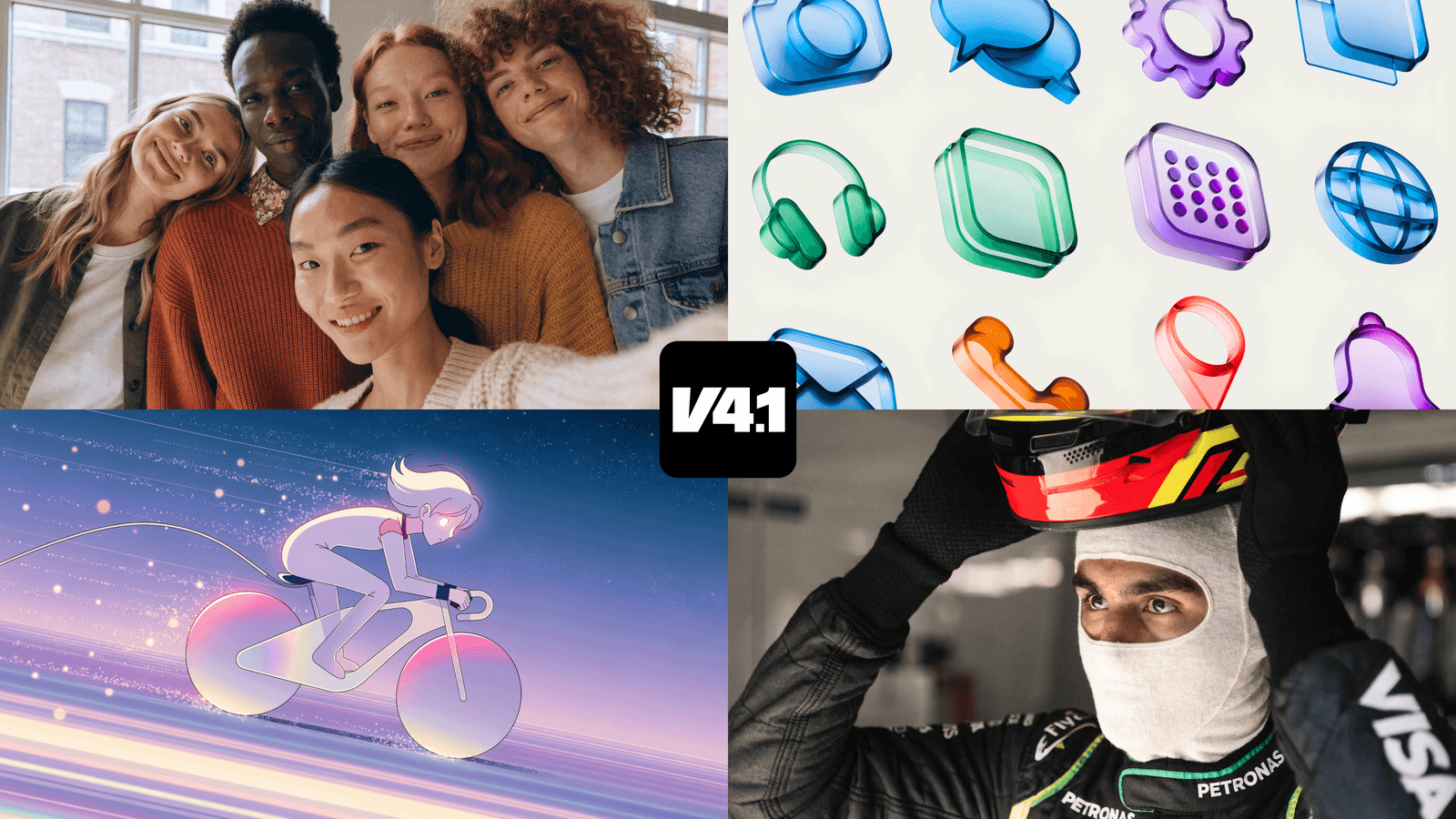
Recraft V4 1 More Beautiful By Nature
Recraft released V4.1, tuned for shorter prompts, less busy backgrounds and more natural photorealism.
Why it mattersIf you generate assets through an API, shorter effective prompts and a Utility variant tuned for predictability change how much prompt engineering and retry logic an asset pipeline needs.

Recraft Mcp
Recraft shipped an MCP server exposing its image and vector generation to MCP-capable clients such as Claude and Cursor.
Why it mattersImage and SVG generation becomes callable from inside a coding agent, so asset creation can be scripted into an agent workflow instead of handled by hand in a separate app.
Inworld's Realtime TTS-2 takes first on Artificial Analysis's Controlled Voice Arena at 1,123 Elo, narrowly ahead of Cartesia Sonic 3.6, and second on the Provider Voice Arena. It handles 100 plus languages, inline delivery direction, and 106 characters per second of generation.
Why it mattersRealtime TTS-2 tops the Controlled Voice Arena at 1,123 Elo while costing $20.83 per million characters against $49 for Sonic 3.6 and $100 for Eleven v3, and it accepts plain text delivery instructions and mixed languages in one request.
An index of the vibe-coding frontier. Corrections welcome.