Aa Robotics
- Source
- artificialanalysis.ai
- Author
- Artificial Analysis articles
- Date
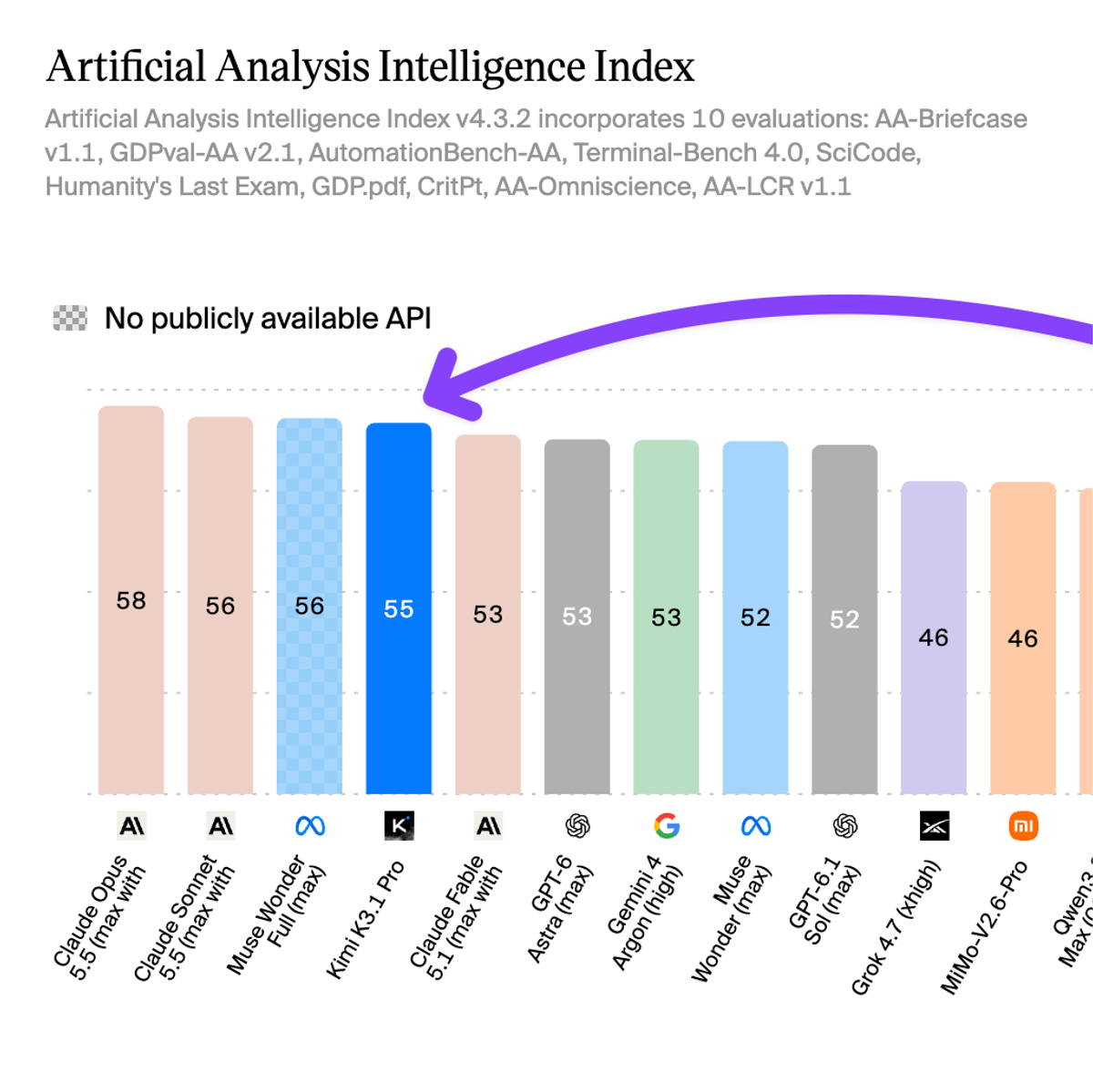
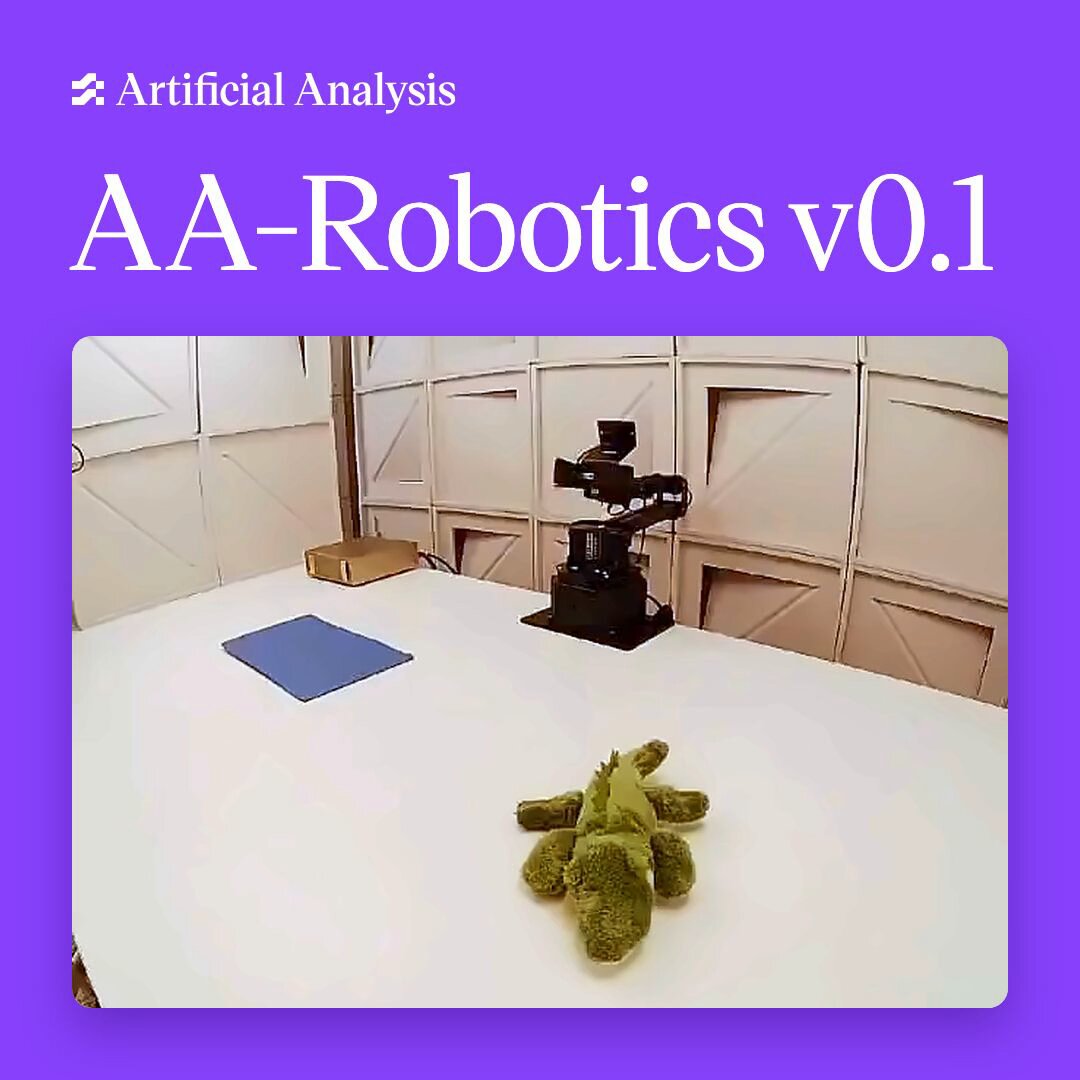
Artificial Analysis released AA-Robotics v0.1 as a research preview. Each model runs inside a coding agent harness and controls a 6-axis arm, five joints plus a gripper, to complete simple objectives: pressing a button, pouring a drink without spilling, tidying blocks into a lid-closed box, writing hello world with a marker, and measuring a box to within 2 mm, among eight tasks. Partial progress earns partial credit. GPT-6 Astra placed first with 69, followed by GPT-6.1 Sol, Gemini 4 Argon, Claude Opus 5.5 and Claude Fable 5.1. The finding is two-sided. Frontier language models can now directly manipulate a robot arm for simple tasks with no robotics-specific training, which Artificial Analysis says has changed quickly during 2026. They are also nearly two orders of magnitude slower and more expensive than humans, with the leader averaging about 30 minutes and $16.36 per task. The benchmark is a baseline for tracking that gap, not evidence of production readiness.

Context
Knowing when to stop is part of completing a physical task. In Artificial Analysis' AA-Robotics preview, one model built a tower that met the pass criteria, kept refining it, and ended up failing the task. The grades the final state, so extra actions can make the result worse.
The combines models with their coding harnesses to control a robot arm across eight tabletop tasks. Its aggregate includes partial credit, rather than measuring the percentage of tasks completed. That makes it a useful look at planning, observation and stopping behavior in a constrained physical setting; it does not establish readiness for general industrial robotics.
- benchmark — A standard public test set for comparing AI models — the shared scoreboards behind every "model X beats model Y" claim.
- eval — A repeatable test for AI quality — a set of tasks plus scoring — used the way software teams use test suites, because model output is too variable to judge by eyeballing.



Checking sign-in…
Loading comments…