What Will Ai Look Like In 2030
- Source
- epoch.ai
- Author
- Epoch AI publications
- Date
Context
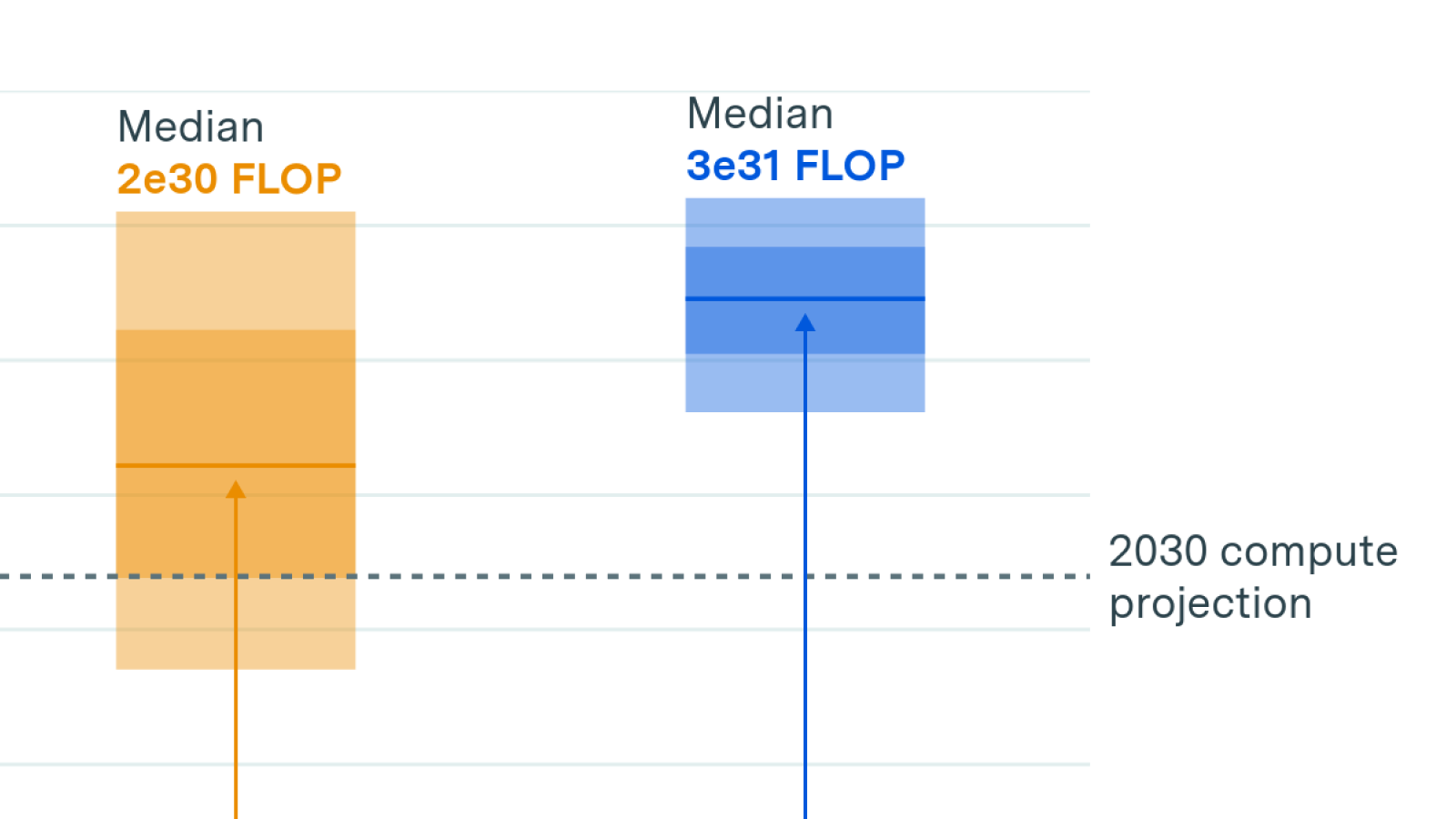
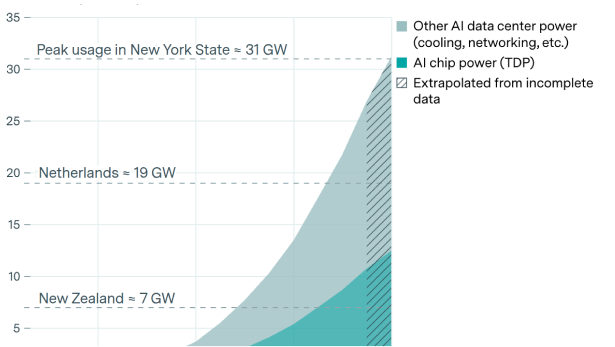
This is Epoch AI's summary of a longer report by David Owen, published September 16, 2025 and commissioned by Google DeepMind (epoch.ai). It asks what continued AI scaling through 2030 would require and what it would make possible. The summary's method is to treat extrapolating current trends as the baseline and then test the arguments for a slowdown. On current trends, the clusters used to train frontier models would cost over $100B by 2030. They could support training runs of about 10^29 FLOP, thousands of times more compute than GPT-4, and would need gigawatts of electricity. Owen acknowledges that continuing the trends leads to extreme outcomes, but argues that over the past decade extrapolation has been a strong baseline.
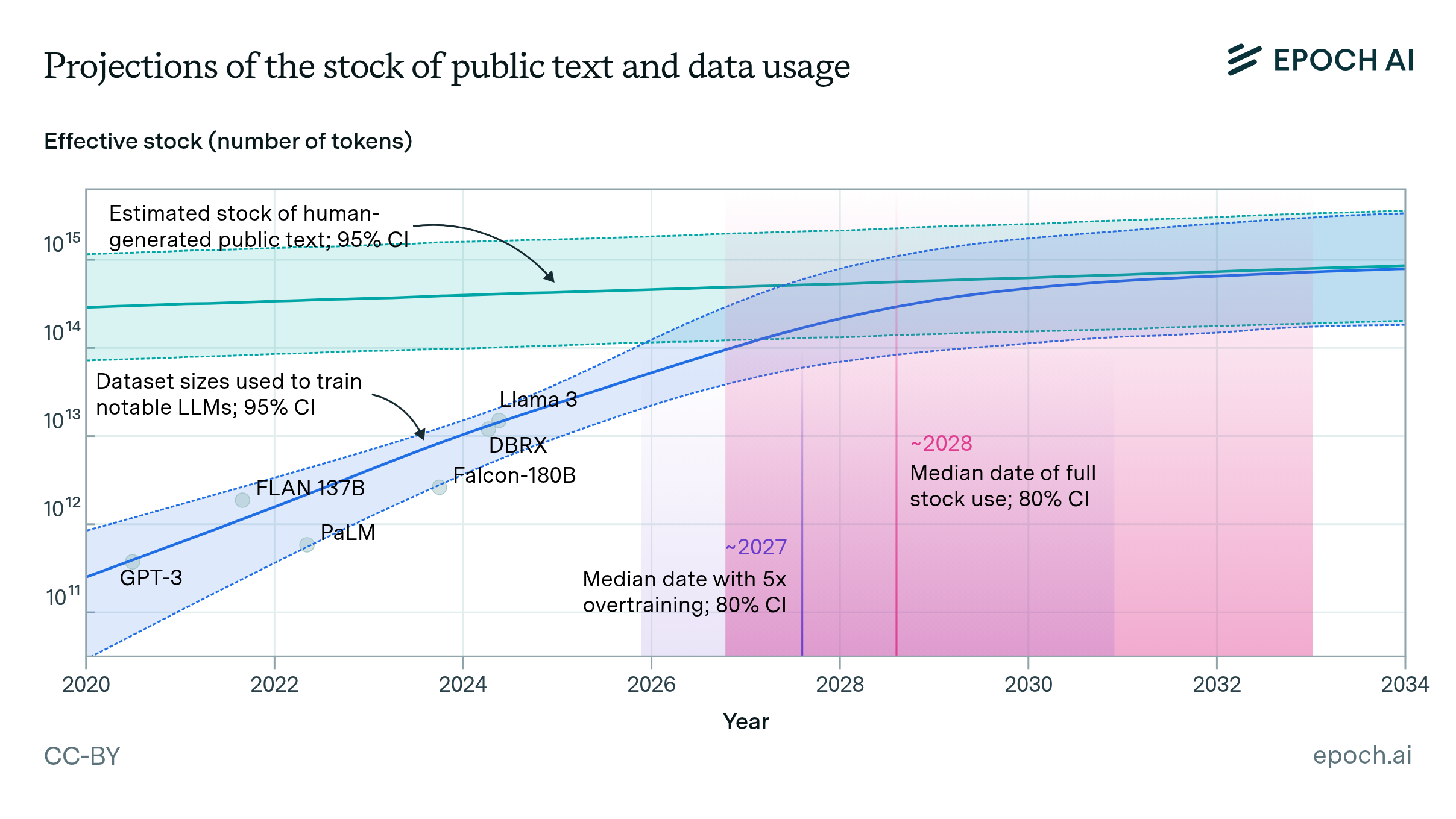
The report takes up six reasons scaling might stall and finds none decisive. Scaling might stop producing better models, but there is no obvious evidence of that yet. Training data might run out, but there is enough public human-written text to scale to at least 2027, and synthetic data looks more useful since reasoning models arrived. Power is unlikely to be a bottleneck before 2028 and seems solvable after that. Cost is answered by revenue: if AI developers' revenues keep growing on recent trends, they would match the $100B+ investments projected for 2030. Algorithmic efficiency gains and a shift of compute toward are judged unlikely to slow training growth. Epoch's earlier analysis of the data question is covered in Will we run out of data?, and the report lists Epoch's August 2024 report Can AI scaling continue through 2030? among its related work.
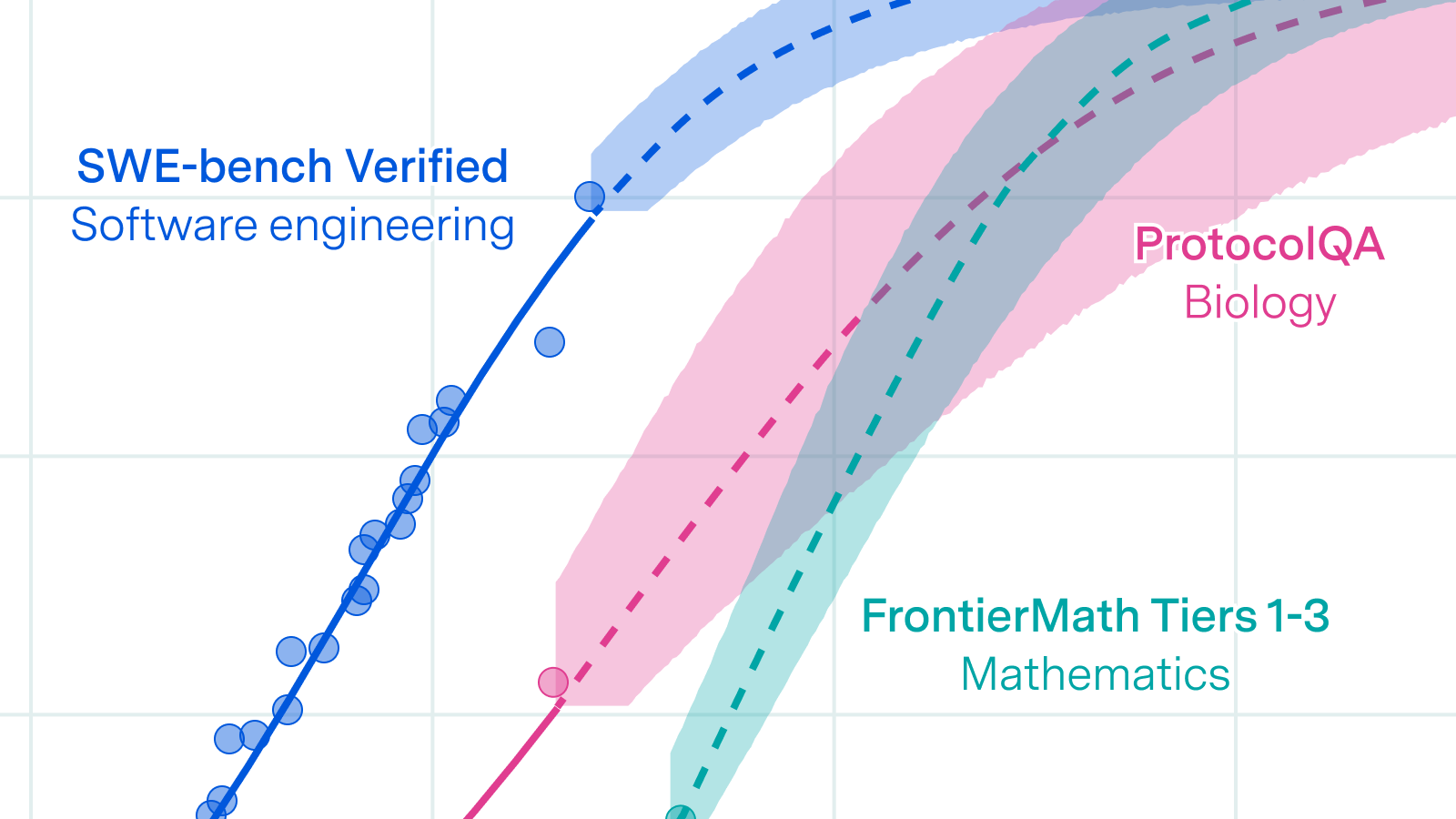
The capability forecasts come from extending trends in software engineering, mathematics, molecular biology and weather prediction. On that basis, the report expects AI by 2030 to implement complex scientific software from natural language, help mathematicians formalise proof sketches, and answer complex questions about biology protocols. It predicts a 10-20% productivity improvement within tasks, based on software engineering. A footnote flags the uncertainty: six of seven studies reviewed found 20-70% speed-ups, but the remaining one found a 20% slowdown, and Owen notes that study arguably has the most thorough methodology. The report also expects deployment to lag capability. It predicts that few if any drugs approved for sale by 2030 will have benefited from today's AI tools, even as software engineering changes dramatically.
- Epoch AI projects that on current trends, frontier training clusters will cost over $100B by 2030 and support runs of about 10^29 FLOP, thousands of times GPT-4's training compute, drawing gigawatts of electrical power.
- The report argues revenue can fund that scale-up: if AI lab revenues keep growing at their current rate, they would match the $100B+ investments Epoch extrapolates for frontier training in 2030.
- Epoch weighs six slowdown arguments, including data exhaustion, power limits, cost and a shift to inference, and still treats trend extrapolation as the strong baseline. It judges power unlikely to bottleneck scaling before 2028 and public text sufficient to at least 2027.
- Using software engineering as its model, Epoch expects AI to eventually lift productivity within scientific tasks by 10-20%. It notes six of seven studies it reviewed found 20-70% speedups, while the most methodologically thorough found a 20% slowdown.
- Epoch expects deployment to lag capability: few if any drugs approved by 2030 will have benefited from today's AI tools, since pharma depends on wet labs and clinical trials, while software engineering will have changed dramatically by then.

Checking sign-in…
Loading comments…