Ling-3.0-tiny launches with 1.3B active parameters and tool use
- Source
- x.com
- Date

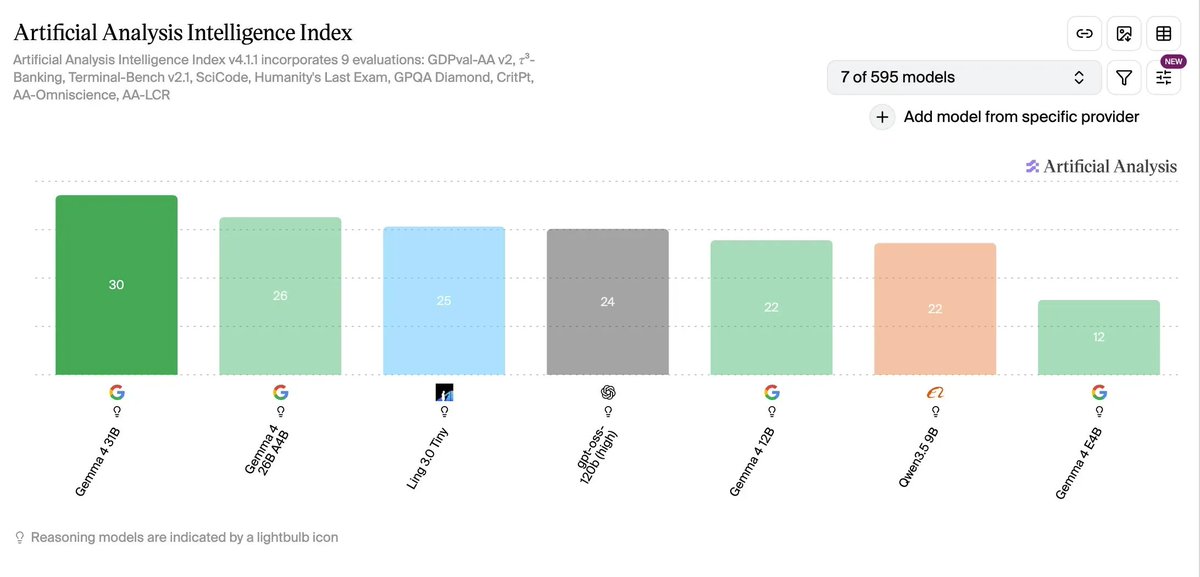
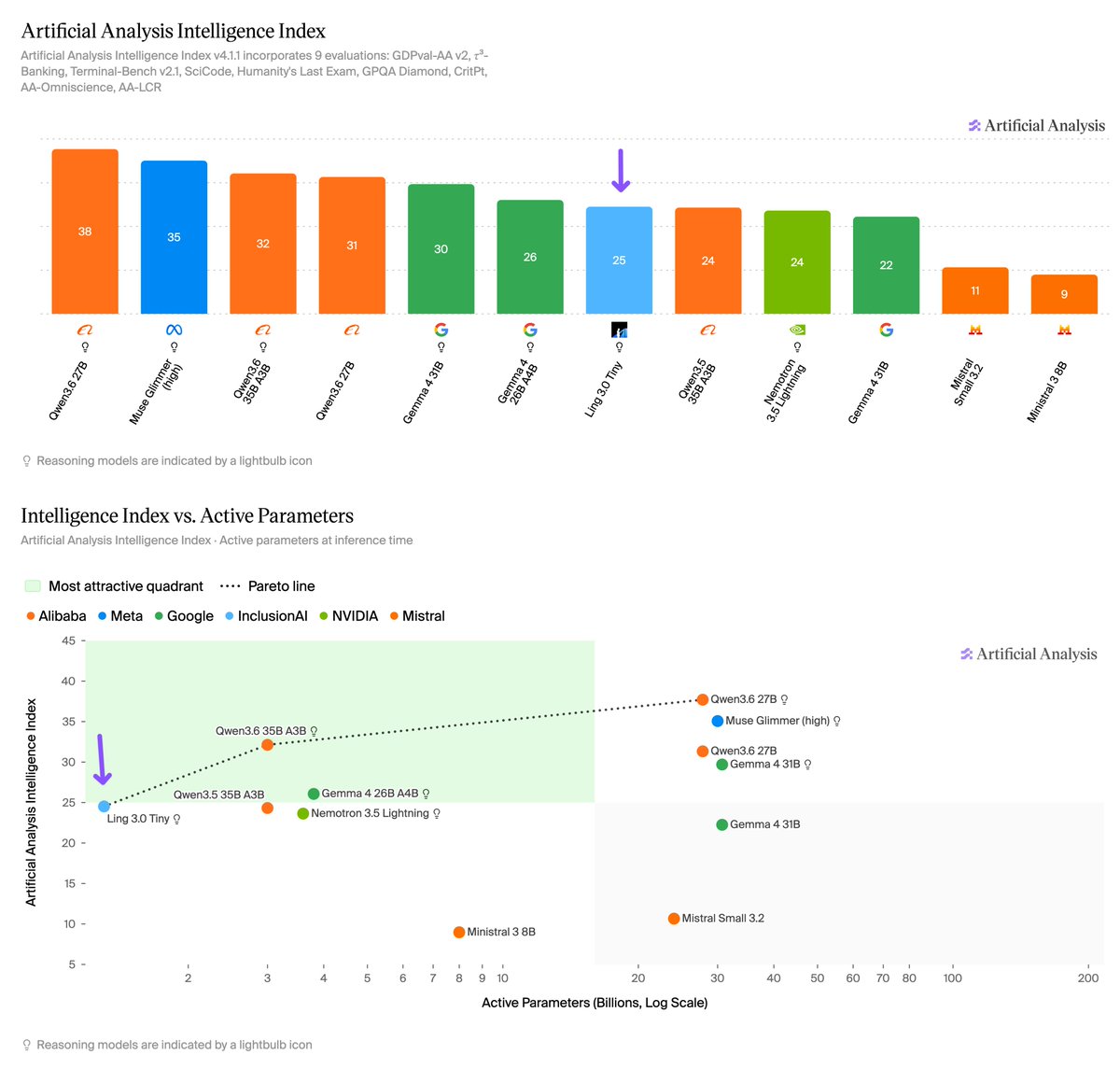
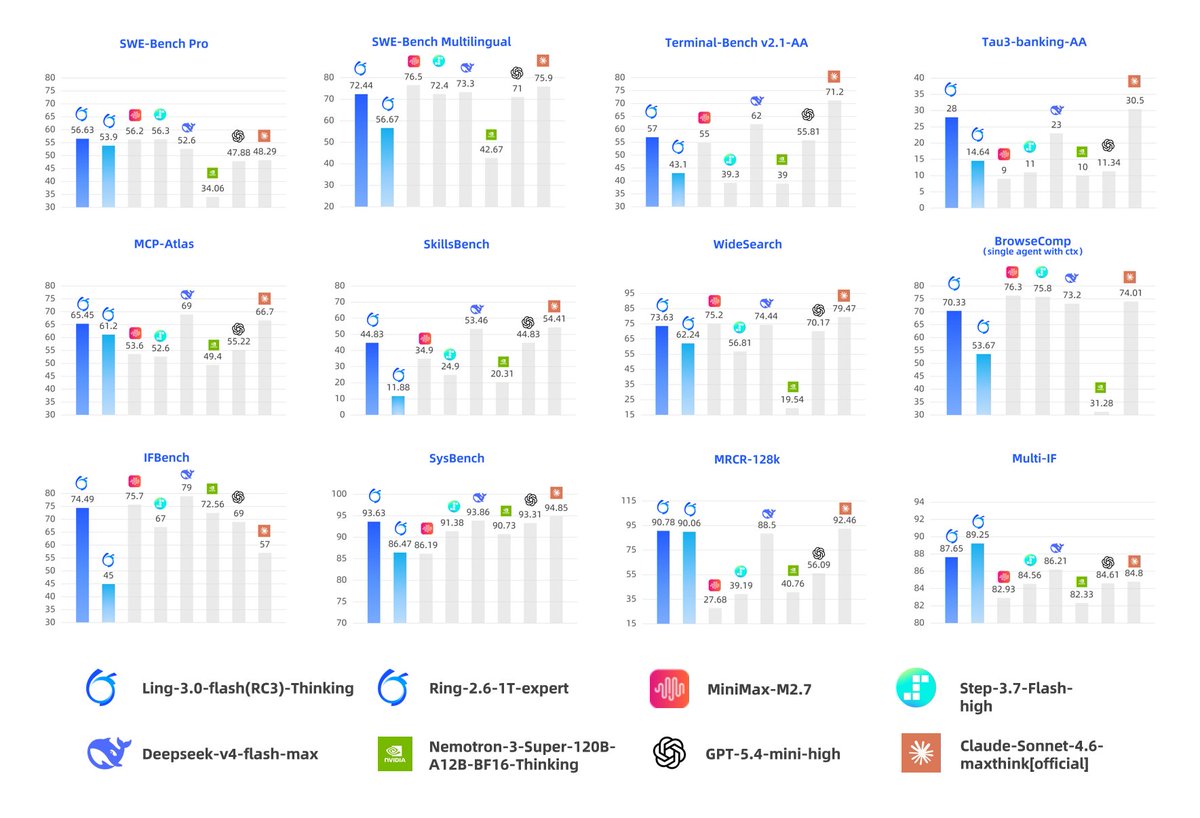
Today, we’re releasing Ling-3.0-tiny: 7.9B total parameters, with only 1.3B active per token. A native hybrid reasoning model built for real-world tasks, math, instruction following, and resource-sensitive deployment. More intelligence with less compute. 🧵

Context
Ant Group's Ling team launched Ling-3.0-tiny on August 6, 2026 as a small model aimed at real-world tasks, math, instruction following and deployment where computing resources are limited. It is a model: its 7.9 billion parameters are divided among many expert sub-networks, and each token passes through only about 1.3 billion of them, so the work per token depends on that active share rather than the full size. Ant calls it a native hybrid . Its model card explains what that means in practice: a step-by-step thinking mode that can be switched on or off for each request, with thinking on by default, so routine tasks can get fast answers without the extra reasoning.
The open weights followed on August 10 in BF16, FP8 and INT4, and OpenRouter's listing for the model gives the same 7.9 billion total and 1.3 billion active parameters.
- mixture-of-experts — A model built from many specialist sub-networks where only a few activate per token, giving big-model capability at small-model running cost.
- reasoning model — A model trained to think — generating extended internal reasoning before answering — trading time and tokens for accuracy on hard problems.
- open weights — A model whose trained parameters are published for anyone to download and run — unlike API-only models you can access but never possess.
- tool use — A model's ability to call external functions — run code, search the web, edit files — instead of only generating text.
Checking sign-in…
Loading comments…