Gives data on how fast frontier compute clusters scale in performance, power and cost, and who owns them, which grounds expectations about future model capability and availability.
Key takeaways · AI-distilled
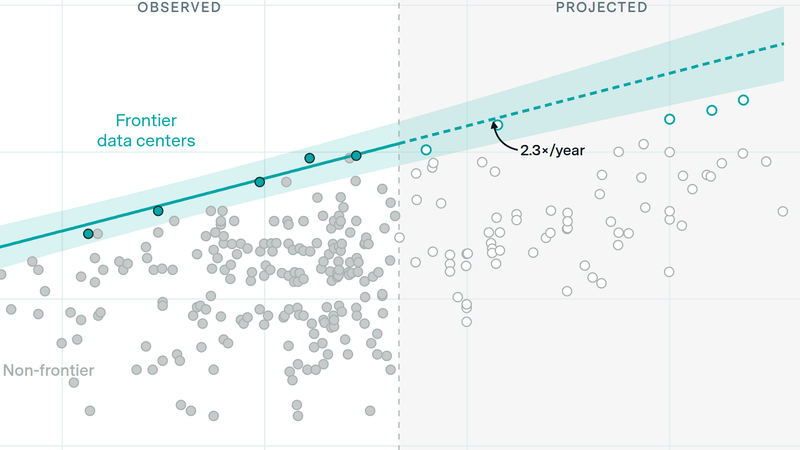
Epoch’s dataset covers more than 500 AI supercomputers from 2019–2025. Leading systems’ performance grew about 2.5-fold annually, combining roughly 1.6-fold growth in chip counts with 1.6-fold improvement per chip.
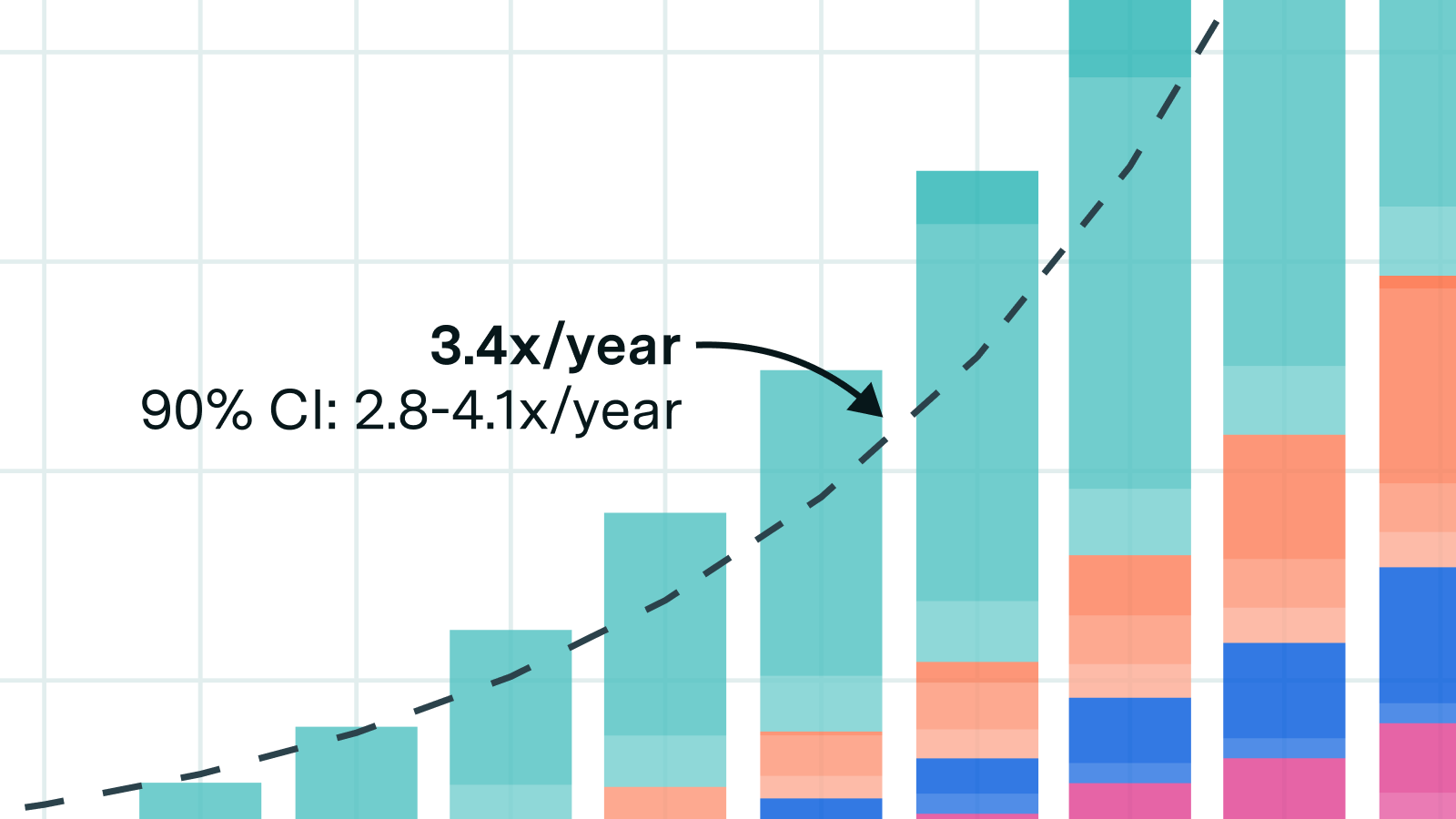
Leading systems’ power needs grew about 2-fold per year and hardware costs about 1.9-fold. Performance per watt improved 1.34-fold annually, so efficiency gains accompanied rather than eliminated rising power requirements.
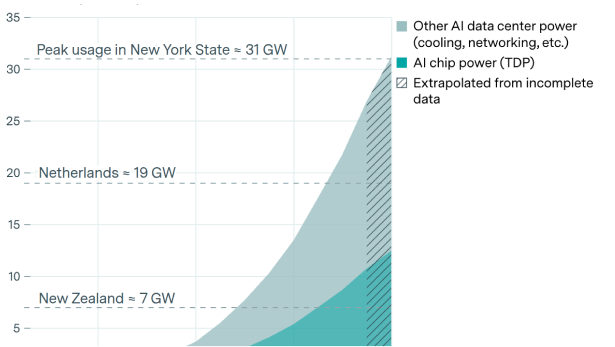
If observed trends continue, Epoch projects a leading system in June 2030 would use 2 million chips, cost $200 billion and require 9 GW. These are extrapolated requirements, not completed facilities or demonstrated power availability.
Industry’s share of computing power in the dataset rose from about 40% in 2019 to 80% in 2025, as leading industry systems grew faster than public-sector systems.
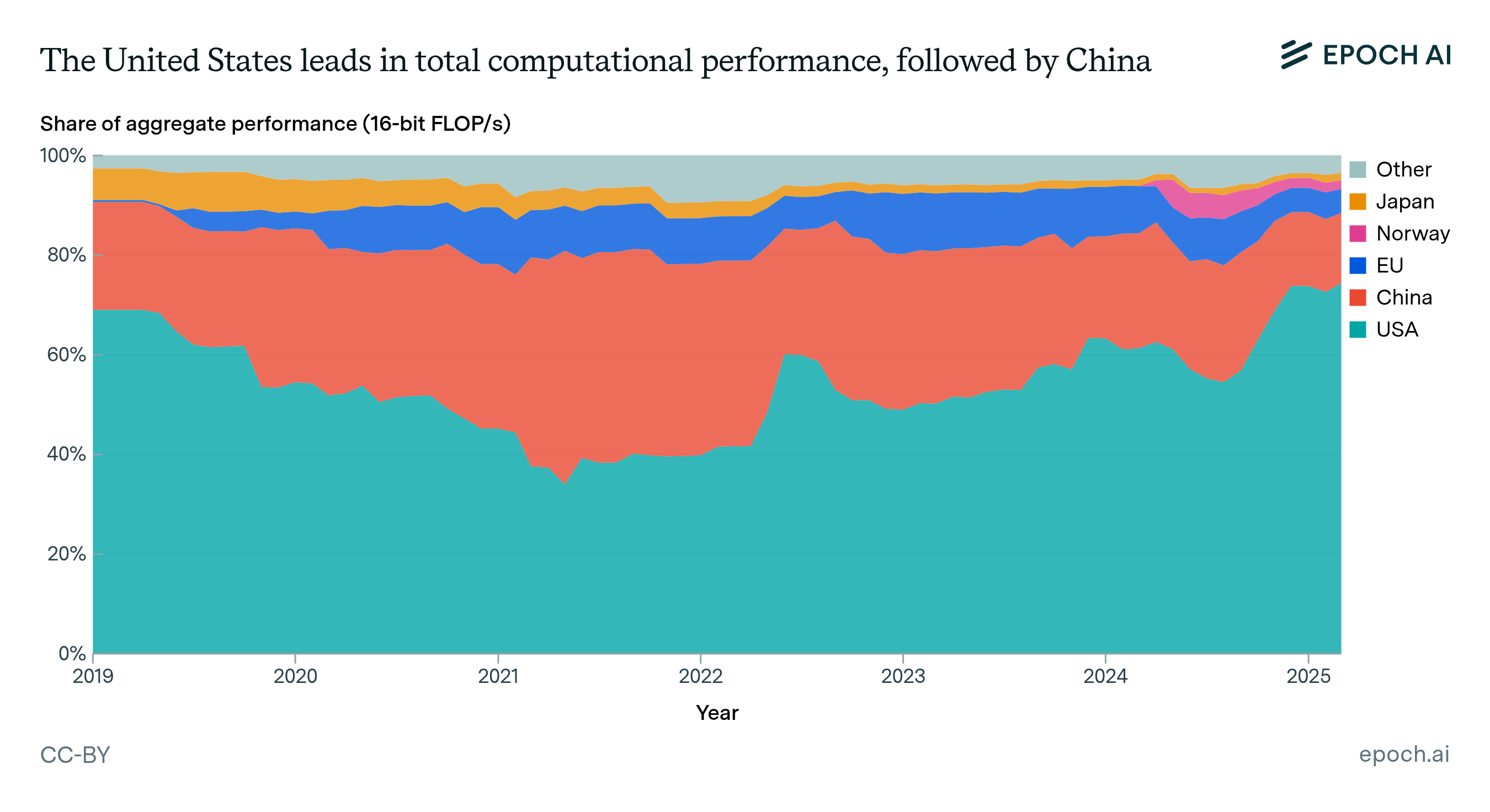
About 75% of the dataset’s computing performance is hosted in the US and 15% in China. A system’s location does not necessarily identify its users, because cloud access can be remote.