Shows how open-weight releases erode API pricing power and how Chinese labs monetize, which helps predict model pricing and availability.
Key takeaways · AI-distilled
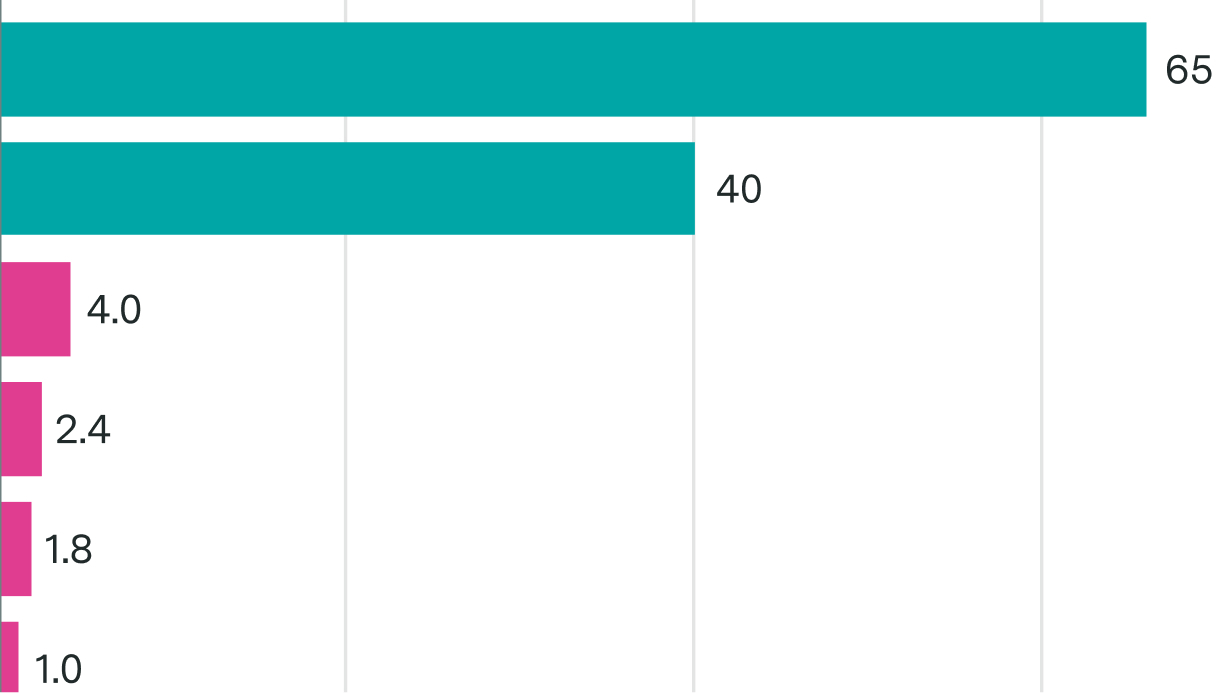
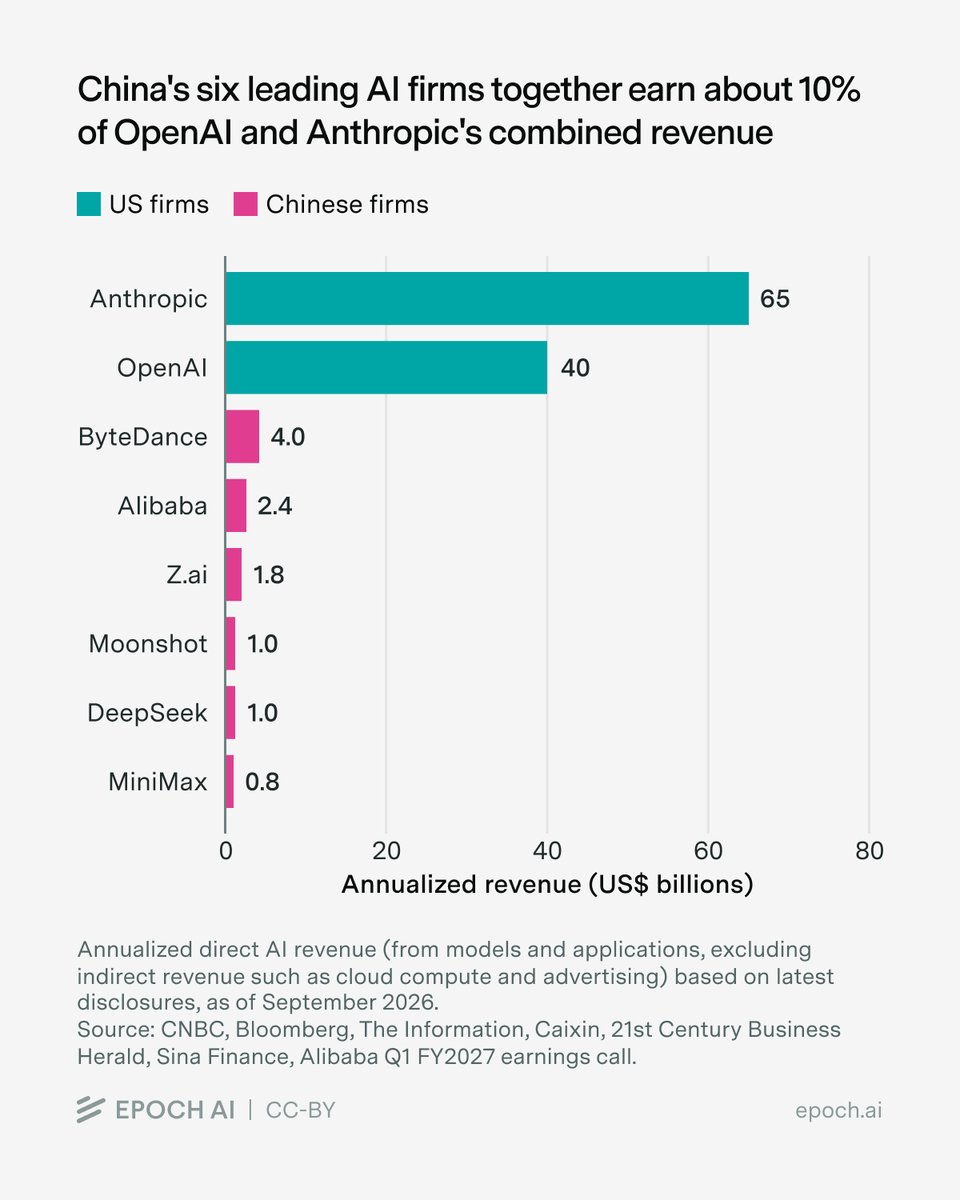
Epoch estimates that as of September 2026, China's six leading AI firms together earn about 10% of OpenAI and Anthropic's combined AI-related revenue.
Consumer apps attract users but have low gross margins: MiniMax's AI-native apps had a 4.7% gross margin in the first nine months of 2025, likely because only a small fraction of users pay and those who do pay small amounts.
open weightsA model whose trained parameters are published for anyone to download and run — unlike API-only models you can access but never possess.Full definition → erode API pricing power: Z.ai's share of GLM 5.3 Flash tokenThe chunk of text a model reads and writes in — roughly three-quarters of a word — and the unit AI usage is billed in.Full definition → on OpenRouter fell from 88% to 22% within 20 days of releasing the weights.
Enterprise and government solutions generate meaningful profits but may be hard to scale. Citing high maintenance costs, Z.ai has deliberately shifted away from them, and on-premise deployments' share of its revenue fell from 73.7% in 2025 to 13.5% in H1 2026.
For conglomerates, the payoff can be indirect: Epoch says Alibaba's and ByteDance's model releases support their existing compute sales and advertising revenue.
Terms in this piece · Glossary
open weights — A model whose trained parameters are published for anyone to download and run — unlike API-only models you can access but never possess.
token — The chunk of text a model reads and writes in — roughly three-quarters of a word — and the unit AI usage is billed in.