How NVIDIA NVLink 6 Delivers Multi-Layer Resiliency for AI Factories
- Source
- developer.nvidia.com
- Author
- Elizabeth Goodman
- Date
Context
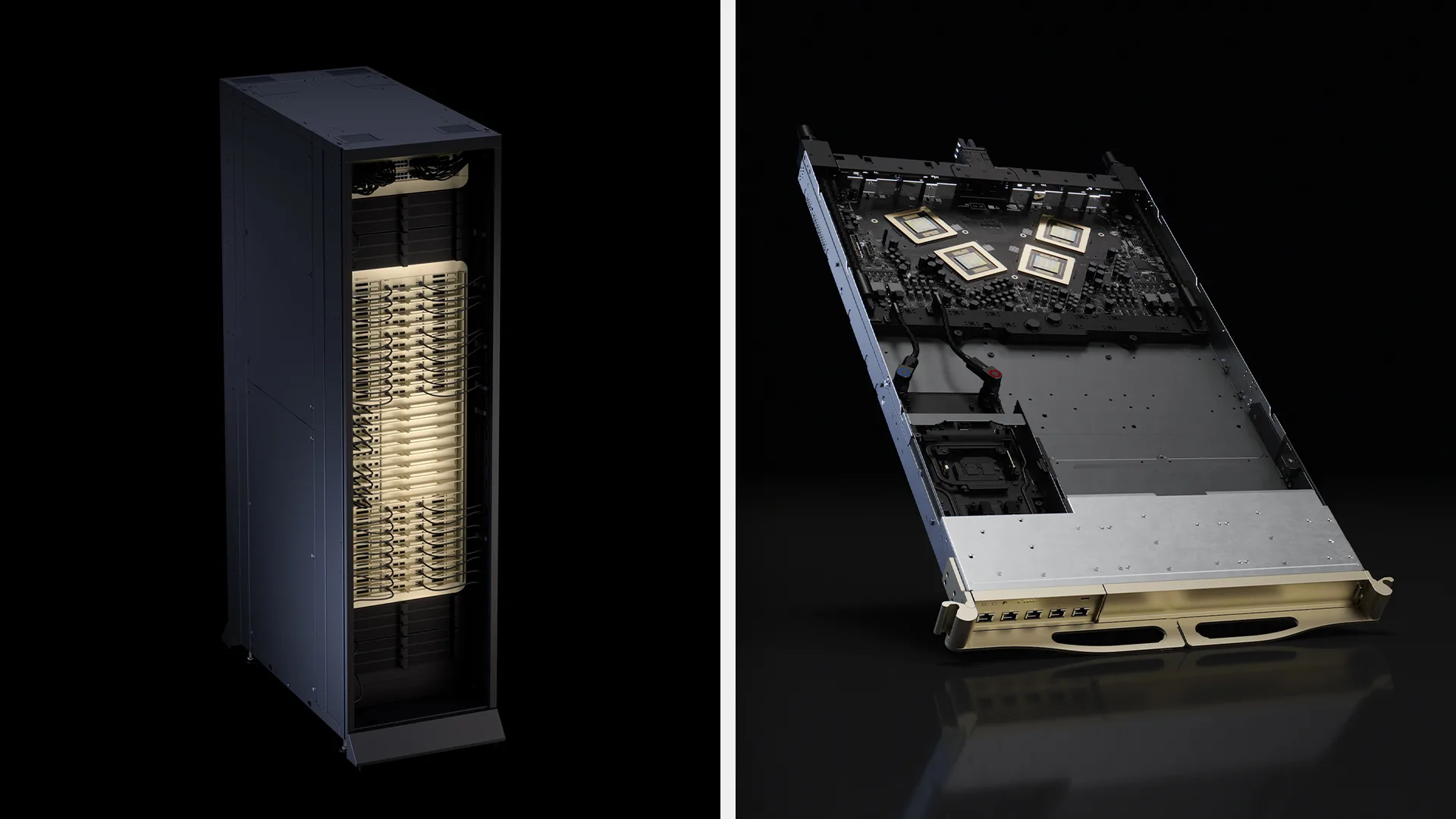
NVIDIA's NVLink resiliency design addresses both damaged communication and the software restart that a severe failure can trigger. Hardware mechanisms correct or retry transfers, while credit-based flow control sends data only when the next hop has room for it. The technical account explains how these layers contain different failure types.
If a failure still aborts an engine, Dynamo's Shadow Engine Recovery keeps an initialized standby process with its own communication setup. NVIDIA reports that this reduced downtime from 283 seconds to 7.3 seconds in B200 GPU deployments. That measurement illustrates the value of preparing recovery in advance; it is a software-recovery result on B200 hardware, rather than a measured uptime guarantee for an entire NVLink 6 installation.
- NVLink uses credit-based flow control, where a sender only transmits once it holds a credit proving the next hop has buffer space, eliminating packet loss by design, unlike Ethernet's reactive Priority Flow Control, which can itself cause head-of-line blocking and deadlocks.
- When an NVLink connection fails mid-inference, Dynamo's Shadow Engine Recovery keeps a pre-warmed idle replica with network connections already established, ready to take over instantly, cutting recovery on B200 GPUs from a 283-second cold restart to 7.3 seconds.
- NVLink's NMX Controller decouples the switch's data-plane forwarding from its management CPU, so an unplanned CPU reset or OS crash doesn't interrupt traffic; if the primary NMX-C controller itself fails, control migrates to another switch tray within seconds.
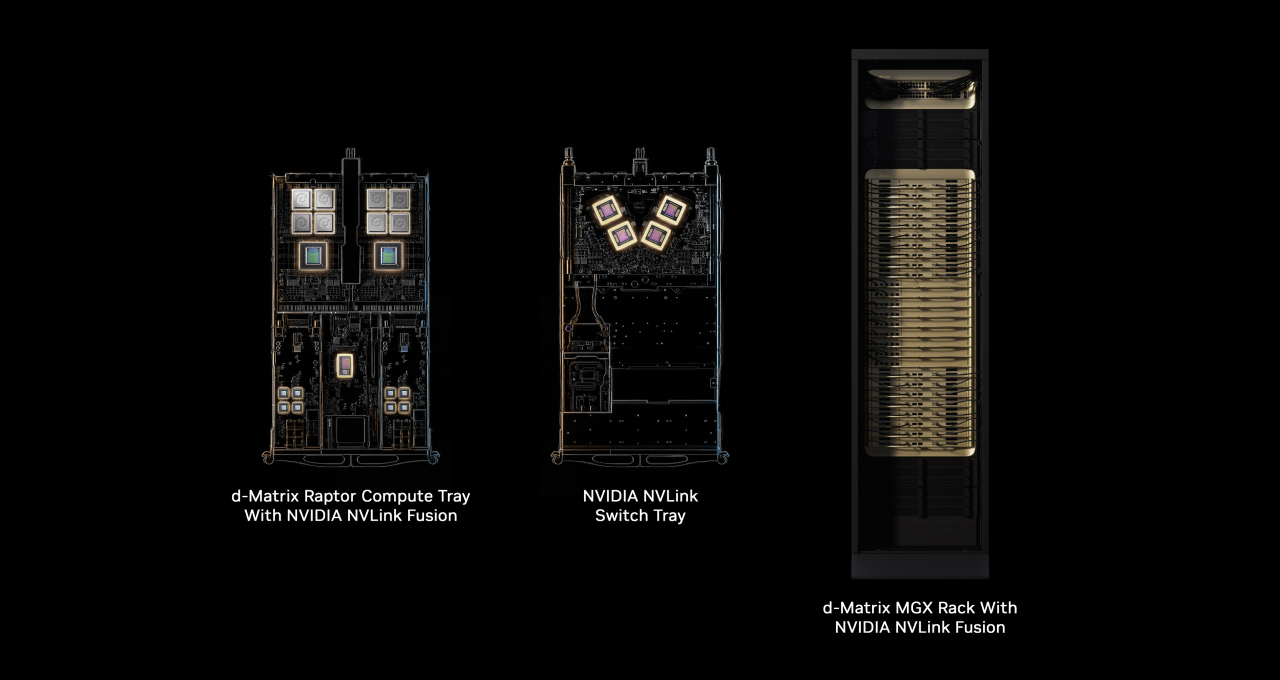
- NVLink Fusion lets third-party custom AI chips plug into the same NVLink scale-up fabric and inherit its full multi-layer fault-tolerance stack, sparing hyperscalers building their own silicon from re-engineering fault tolerance from scratch.
- inference — Running a trained model to get answers — the phase where AI is actually used, as opposed to trained.
 articleHow NVIDIA OpenShell Reference Architecture Secures and Governs AI Agent Workloads at Scale
 articleCode, Test, and Deploy on One Machine with NVIDIA RTX Spark
 articleHow to Rewrite Apache Spark UDFs for GPU Acceleration with AI Agents
 articleLower the Cost of Building and Running Visual AI Agents with NVIDIA VSS Blueprint 3.3
 blogd-Matrix Adopts NVIDIA NVLink Fusion for Rack-Scale XPU DeploymentJesse Clayton
 articleHow NVIDIA DSX MaxLPS Maximizes AI Factory Throughput and EfficiencySarah McKenney
 articleHow NVIDIA Groq 3 LPX Deterministic Execution Drives Power-Efficient High-Interactivity Inference on NVIDIA Vera RubinTanya Lenz
Checking sign-in…
Loading comments…